


The Financial Accountability Office of Ontario has provided insights into the state of homelessness in the province through the Ministry of Municipal Affairs and Housing (MMAH).
A report requested by Ted Hsu, the member of provincial parliament for Kingston and the Islands, reviews Ontario’s homelessness programs. It covers past and expected spending, how many households are being supported, and the estimated number of people experiencing homelessness until 2028-2029.
Hsu pointed out that this report was necessary since the last one was done before the pandemic.
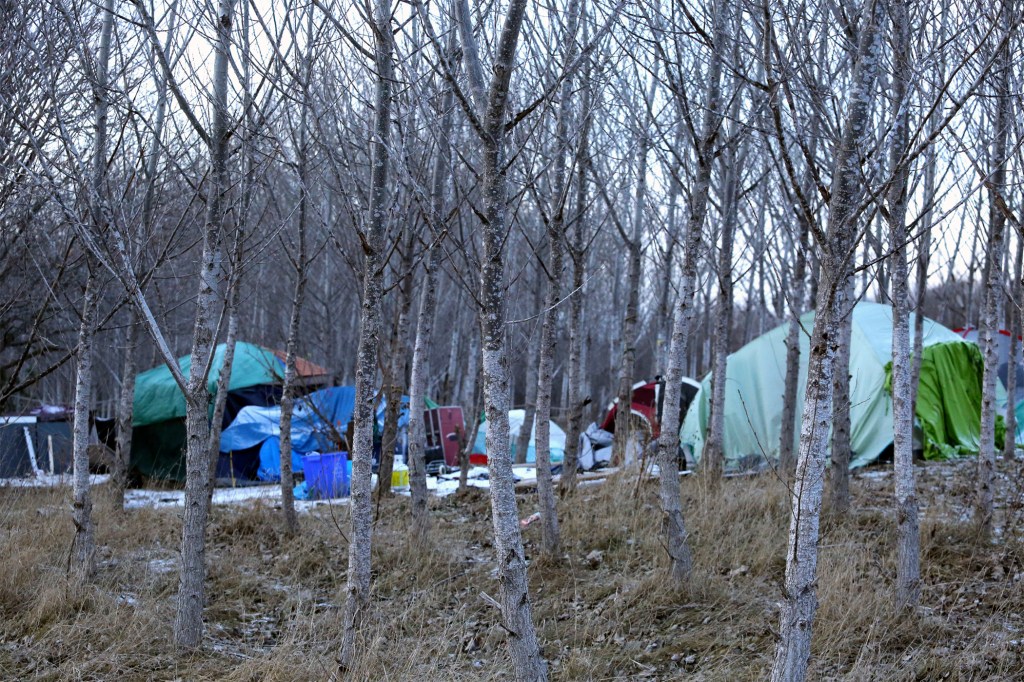
“Everything changed in the pandemic. All these tent communities popped up. Housing prices went up for various reasons in reaction to some of the economic remedies for the pandemic,” said Hsu. “All the data is not relevant anymore.”
Hsu emphasized that given how much time has passed since COVID-19, understanding where Ontario stands regarding homelessness is crucial for moving forward.
We’re not gonna solve homelessness overnight, but at least if it’s going down, we’re making progress.
Ted Hsu Kingston and Islands Member of Provincial Parliament
The report indicates that Ontario’s homeless population is expected to increase from 62,252 individuals in 2022-2023 to 88,859 individuals by 2028-2029. Hsu remarked that this clearly shows more needs to be done to help get people off the streets.
“It’s not acceptable that it’s still projected to go up and that means we still have to look at what are we doing. We’re not gonna solve homelessness overnight, but at least if it’s going down, we’re making progress. Every year it’ll get better and better, but it’s not. That’s not the projection,” he said.
Toronto has the highest number of unhoused individuals (19,462), while Kingston has around 695.
During COVID-19, temporary funding for homelessness programs was introduced to support municipalities and continued with further provincial-municipal agreements. This funding helped shelters, food banks, and outreach services for those in need.
This short-term program amounted to $1.2 billion between 2020-2021 and 2022-2023.
In 2023-2024, Ontario announced new agreements with both Toronto and Ottawa aimed at providing extra support across various services including shelters for those experiencing homelessness. Together these agreements allocated $240 million per year for both 2023-2024 and 2024-2025 as well as potentially $240 million in 2026-2027.
The FAO report indicates that when this emergency funding ends, total provincial spending on homelessness could drop from $948 million back down to a baseline figure of $708 million. Consequently, it’s anticipated that no households will be supported by these temporary programs anymore.
For Hsu, this situation highlights a need for provincial intervention to assist municipalities.
“I think it shows that we still have a lot more work to do,” said Hsu. “There’s some slack in the construction industry and what that means to me is that it’s a good time for government to come in and say, ‘OK, we’re going to put some more money into helping build some of the infrastructure needed transitional housing or supportive housing.’ ”
In Kingston alone there are over 235 supportive and transitional housing units available across more than 28 locations; this includes an additional set of transitional units recently opened at 315 Queen Mary Rd., totaling another 33 units.
Hsu believes it’s these kinds of resources that will aid people in leaving tents behind and moving into homes where they can start becoming independent again.
“I feel like the base program spending probably needs to be boosted a bit until the projected homeless population is either stable or starting to go down,” said Hsu.
According to FAO findings, rising rates of homelessness relate closely with issues surrounding affordability along with increasing population pressures. They noted factors such as escalating rents from now until about mid-decade alongside strong demand from asylum seekers also contribute heavily towards growing numbers among those without homes during this period.
The report also identified common causes leading towards increased numbers facing hardship which include financial struggles , relationship breakdowns , fleeing abusive situations , health-related challenges , relocation issues along with instability within housing arrangements.“It shows you that it’s multifaceted. I’m not saying that money ’s going to solve the problem , but money has to keep up with the problem , let’s put it that way ,” remarked Hsu. “I do think that Kingston is doing something and I think we need to keep working on it , but I do think that the provincial government needs to step in. The province has to step in and say , ‘Homelessness is a provincial level problem.’ ”According To The Report’s Aim Was To Raise Awareness Around The Increasing Cases Of Homelessness Throughout The Province With An Eye Towards Encouraging More Action On This Issue.“I want To Attract Attention To This Problem And I Think The Political Will Is There Because The Average Person Sees The Tents And People Living On The Streets.” Said HSU. “Let’S Just Keep Trying To Find Better Ideas For Tackling Homelessness. It’S Not Acceptable That Numbers Keep Rising ; Something’S Wrong Here And We Need To Figure It Out.”
Editor ’ s Picks


_07_03_2026_03_50_21_133108.jpg?w=1024&resize=1024,1024&ssl=1 "Heal Wellness Expands with New Kitchener Location")