




Alberta’s chief U. S. diplomat believes that a friendly strategy is benefiting his province during the Canada-U. S. trade conflict.
Nathan Cooper, Alberta’s senior representative to the United States, told CBC’s West of Centre that in comparison to provinces taking a more confrontational stance, Alberta is faring better.
“I think the premier’s diplomacy-first approach has really not only been helpful for me, but certainly helpful for the province,” Cooper said.
“If we look at the impact of U. S. tariffs on the Alberta economy, we have a disproportionately low impact.”
Experts have noted that while Alberta’s industries aren’t completely shielded from the trade dispute, they aren’t feeling the direct blow like other provinces are. Despite the ongoing trade war, U. S. imports of Canadian oil continue to rise.
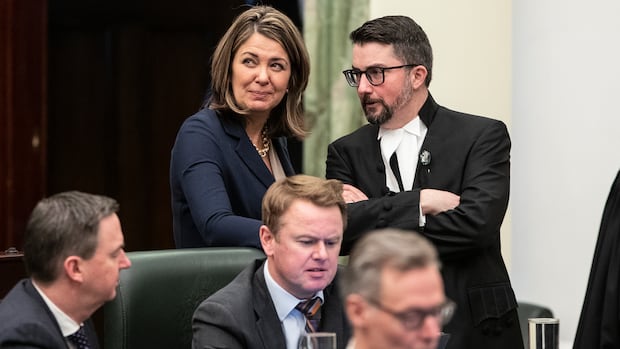
The comments came as Cooper, who previously served as speaker of the Alberta legislature, was in Nashville, Tenn., alongside Premier Danielle Smith last week.
Cooper mentioned that American officials have been “significantly more responsive” to his team than some other provincial representatives.
Alberta remains unique as it has no ban or retaliatory tax on U. S. alcohol imports. Cooper stated that Americans have shown “a real appreciation” for this position from Alberta.
“I believe that that’s actually translated into results for the province of Alberta,” he said.
The premier indicated her visit to Music City was personal but also included meetings with business and tourism leaders while she was there. Before her trip, Smith appeared on U. S. news channels advocating for renewed negotiations.
![Premier Danielle Smith met with business and tourism leaders while on vacation in Nashville.]() Cole Hogan, a strategic communications advisor at Alberta Counsel who has worked on Ford and Kenney campaigns, observed that these different tactics reflect their domestic priorities well.
Cole Hogan, a strategic communications advisor at Alberta Counsel who has worked on Ford and Kenney campaigns, observed that these different tactics reflect their domestic priorities well.
“Ford’s approach makes many people feel good … but it hasn’t produced similar outcomes as Smith’s strategy here in Alberta.” “They both pursue different political goals – each serving distinct industries.”
Source link
Sweet or Sour?
Not everyone agrees with Alberta’s method. After Smith’s visit to Mar-a-Lago last year, she faced criticism for not aligning with a unified “Team Canada” response. This summer, Premier Doug Ford called on Canadian leaders to adopt a tougher stance and suggested cutting off energy exports to the U. S. Smith’s predecessor Jason Kenney proposed considering a modest tax on oil exports as leverage against the president. However, Smith has dismissed both suggestions and maintained that focusing on diplomacy is more effective. “I think in this scenario, maybe Premier Smith is seen as a dissenting voice or not quite on script,” Evan Menzies, vice-president of Crestview Strategy said in an interview.“Ford’s approach makes many people feel good … but it hasn’t produced similar outcomes as Smith’s strategy here in Alberta.” “They both pursue different political goals – each serving distinct industries.”
Anxiety Over Separation
This all occurs amid discussions about an upcoming election in Alberta regarding whether to hold a binding referendum on separation-something gaining attention among U. S. officials lately. The topic has been used by representative Andy Harris to bolster calls for making it a 51st state and Commerce Secretary Howard Lutnick sees it as an indication of disunity and stalled trade discussions. In practice though, Cooper stated he doesn’t often hear about the referendum when meeting with American officials. “At the end of day one of my key jobs is trying to distinguish between signal and noise so I can help focus people on major issues affecting our province.”Source link