


Ontario’s current infrastructure projects are set to change the transportation landscape, enhancing connectivity and easing congestion on busy roads and transit systems. The Ontario Line, Scarborough Subway Extension, and Yonge North Subway Extension will transform how people travel in Toronto and beyond. Additionally, new rail transit systems being developed in Ottawa, Hamilton, and Mississauga will boost capacity on heavily trafficked routes in those cities. Moreover, the GO Expansion project is anticipated to be one of the most significant infrastructure initiatives in Ontario over the past 60 years, supporting the Greater Toronto Area’s growth as a major global city. Once completed, these projects will help accommodate ongoing population and economic expansion while fostering better integration of regional transit with surrounding communities.
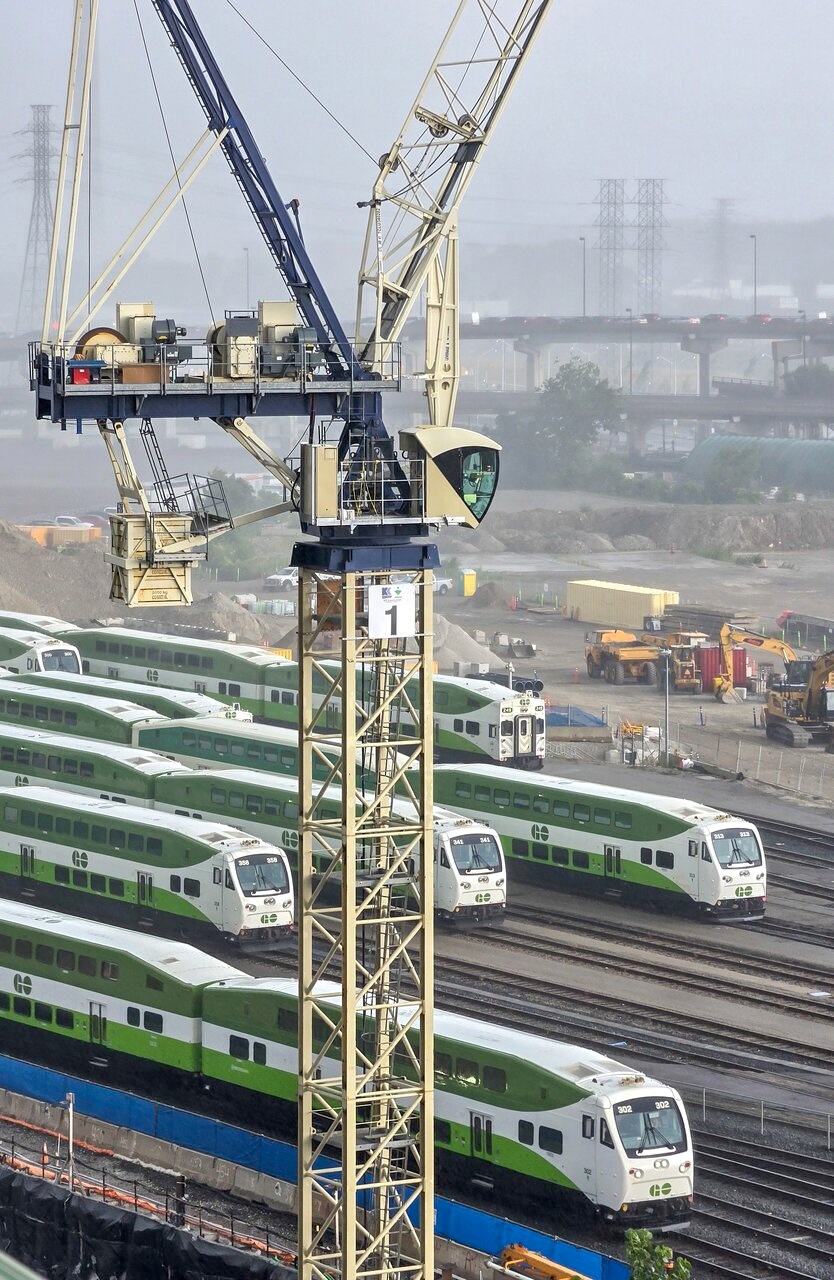
GO trains layover between rush hours at the Don Yard, while a crane related to Ontario Line construction rises in the foreground, image by Urban Toronto Forum contributor globalexpress
However, as these initiatives have been planned and begun construction, they’ve faced various challenges mainly due to the province’s long history of stalled infrastructure development. Toronto has seen minimal new transit infrastructure built for decades (notably marked by a lengthy gap between the opening of the Sheppard subway and Spadina subway extension), which means there isn’t enough local expertise available for designing, building, and managing these large-scale projects currently underway. In contrast, cities like London and Madrid have maintained a steady stream of new projects that keep their local professionals engaged while training new talent for upcoming phases-resulting in some leading experts emerging from these locations. Metrolinx’s heavy reliance on numerous consultants stems from this shortage of local knowledge: if the Greater Toronto Area had not halted subway line construction for so long, then it would have developed homegrown talent capable of successfully completing its current projects instead of sourcing it from regions where transit expansion is consistently happening.
The first fare-paying train on Eglinton Line 5 emerges into the West Don Valley in February 2026; image by Urban Toronto Forum contributor hawc
The many issues surrounding the Eglinton LRT highlight problems stemming from infrequent construction of new transit infrastructure. Being the first project of such magnitude in decades meant that those involved (aside from those who were recruited from other cities) lacked experience with large-scale endeavors; this undoubtedly played a role in its delays. Nonetheless, challenges faced during Eglinton have also provided valuable lessons that can lead to improved delivery conditions for future projects. This is especially clear through changes like updated construction staging methods and modifications to how public-private partnerships are structured (for example, while Eglinton LRT used one comprehensive contract for everything, work on Ontario Line has been split into several smaller contracts).
Piers for the West Don Valley Crossing rise for the Ontario Line under construction in Toronto; image by Urban Toronto Forum contributor kotsy
In terms of long-term impact as initiatives like GO Expansion and ongoing rail network development continue toward completion-these current projects will pave smoother paths for delivering future work within Ontario’s pipeline. The volume of active jobs will encourage local talent growth equipped with skills necessary for future undertakings (reducing dependency on costly consultants). At the same time, lessons learned from earlier projects have given governments clearer insights into effective collaboration with private consortiums. However, achieving this positive outcome hinges on ensuring that these ongoing efforts aren’t just an anomaly amid disappointing recent patterns regarding transit expansion. To retain skilled workers looking forward while preparing further advancements-Ontario’s infrastructure pipeline needs sustained momentum. Upcoming endeavors (like extensions to Sheppard Line 4 subway or improvements along GO Milton line) should ideally be shovel-ready when current developments finish up to maintain a steady flow moving forward. Furthermore-and aside from previously mentioned concerns-it’ll require steering clear from political influences that have hindered regional plans lately. The advantages offered by an uninterrupted transit infrastructure pipeline are tangible benefits benefitting politicians along with professionals-and ultimately improving life quality for everyday citizens.
Exhibition station on Lakeshore West GO line being expanded to also serve Ontario Line 3; image by Urban Toronto Forum contributor kotsy
These challenges haven’t gone unnoticed among those tasked with executing Ontario’s infrastructural goals either. A July event hosted by Aphex-a UK-based planning company now operating its North American headquarters out of Toronto-gathered industry professionals across various sectors; despite competing against one another bidding-wise-there was consensus about needing readiness going forward regardless! This acknowledgment reflects recognition that what’s occurring now marks an unprecedented boom compared previous cycles-hence preparations are well underway! As this unfolds further investigations into industry dynamics at Urban Toronto focus intensively upon gearing up towards delivering transformative outcomes-including details soon shared via an upcoming webinar scheduled this Fall!
* * *
Thomas Bamonte is an urban planner with extensive experience in real estate matters based outta Toronto who shares insights via his blog at https://theurbanistfoodie. substack. com/
* * *
Urban Toronto’s research & data service UTPro provides detailed information covering construction activities throughout Greater Golden Horseshoe-from initial proposals all way through completion stages! Other offerings include Instant Reports offering downloadable location-based snapshots plus daily newsletters tracking developments right after application starts!