



A coalition representing various First Nations throughout British Columbia is urging the federal government and Alberta’s leadership to stop advancing the West Coast pipeline project, arguing that increasing oil production will worsen climate change and lead to disasters.
“The harmful and catastrophic effects of increasing fossil fuel production go far beyond any individual territory,” the Union of British Columbia Indian Chiefs stated in a letter sent to Prime Minister Mark Carney and Alberta Premier Danielle Smith.
“From devastating wildfires to destructive floods and rising sea levels, the effects of climate change are already being experienced across this nation. Every new fossil fuel initiative escalates that crisis.”
This letter was issued on Sunday, just after the B. C. government declared a state of emergency as over 100 wildfires raged throughout the province, forcing nearly 25,000 residents in two communities east of Vancouver to evacuate. Almost half of these wildfires were reported as out of control.
The Indigenous group noted that they are releasing this letter on International Day of the World’s Indigenous Peoples on Sunday to emphasize their opposition to the pipeline due to insufficient consultation and collaboration from the government with First Nations.
WATCH | Canada, Alberta advance West Coast pipeline project: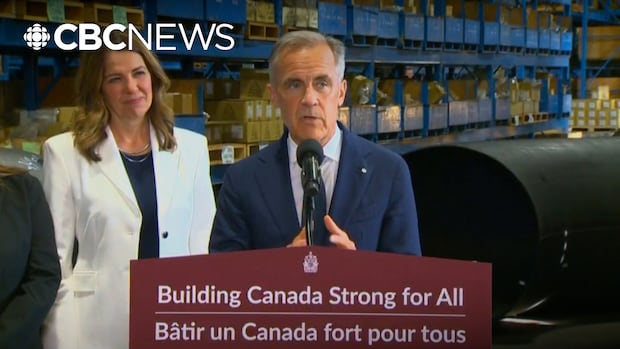
Canada and Alberta advance west coast pipeline project
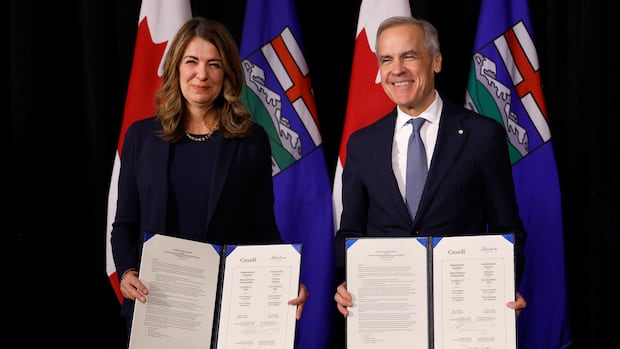
Prime Minister Mark Carney and Alberta Premier Danielle Smith discuss details regarding a proposed pipeline that would transport one million barrels per day to B. C.
The letter mentioned that the government has already created a corridor for the project, identified potential development partners, and is actively promoting its economic benefits.
“Consultation isn’t genuine if First Nations are only invited to talk about how an already decided project will unfold.”
Karah Folk, a representative for Alberta’s Ministry of Indigenous Relations, stated via email to that this project offers “long-term advantages” for Indigenous communities, who will be consulted as it progresses.
“Our government remains dedicated to maintaining an ongoing dialogue with First Nations and all involved parties as we move forward,” Folk added.
Carney and Smith’s offices did not immediately reply when contacted for comments on Sunday.
The approximately 1,250-kilometre West Coast pipeline would transport more than one million barrels of crude oil daily from Bruderheim, Alta., to a port near Delta, B. C., intended for international shipping.
The Alberta government is listed as the proponent for this pipeline project. Ownership would belong jointly between Trans Mountain, the Alberta Petroleum Marketing Commission, and Pembina Pipeline Corp.
WATCH | A closer look at the pipeline route: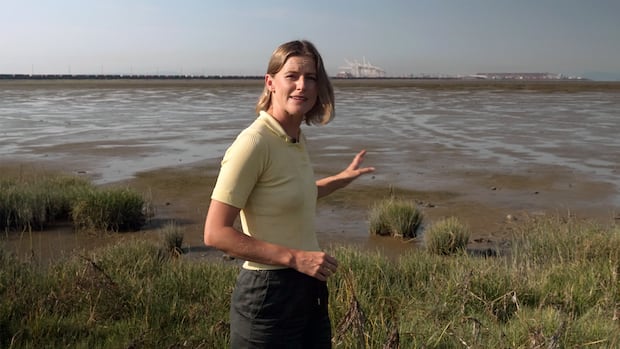
The crowded, muddy reality of Alberta’s new pipeline route
This new southern pipeline from Alberta would mainly follow along with existing Trans Mountain corridors until it reaches Hope, B. C., where it would branch off toward a marine terminal at Roberts Bank; however, as CBC’s Georgie Smyth explains, this seemingly simpler plan won’t be without challenges.
Last week Ottawa took steps towards granting national interest status under the Building Canada Act for this proposed project-this designation allows fast-tracking while bypassing certain environmental regulations.
The federal government mentioned they are open for public feedback regarding this designation until mid-September.
Both Ottawa and Alberta have agreed that progressing with this pipeline is conditional upon implementing a carbon storage initiative called Pathways. Conversely, Pathways must also depend on the success of moving forward with this pipeline. Owned by multiple companies, Pathways aims at capturing emissions resulting from increased oil production before they reach our atmosphere; it includes a network designed to carry carbon emissions from several facilities in northern Alberta into an underground storage hub located near Cold Lake.
However, a think-tank named Canadian Climate Institute claimed back in July that emissions from boosted production facilitated by a new West Coast pipeline significantly outweigh what Pathways could prevent from escaping into our atmosphere.
The West Coast pipeline ranks among several initiatives approved or suggested under Carney’s Major Projects Office based in Calgary.
Ottawa has indicated these projects aim at serving national interests while bolstering Canada’s independence economically; enhancing Indigenous interests; as well as achieving Canada’s climate goals amid swiftly changing global circumstances.
The Building Canada Act outlines regulatory pathways concerning such projects.
More than a year ago Conservatives assisted in passing Building Canada Act legislation allowing three projects so far-including Grays Bay road & port venture in Nunavut; Mackenzie Valley Highway within Northwest Territories; alongside Nuclear Waste Management Organization’s deep geological repository situated within northern Ontario.
Source link