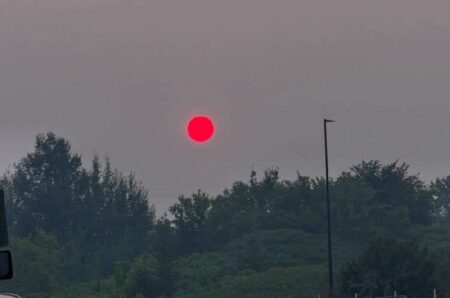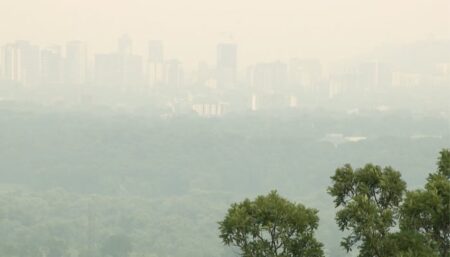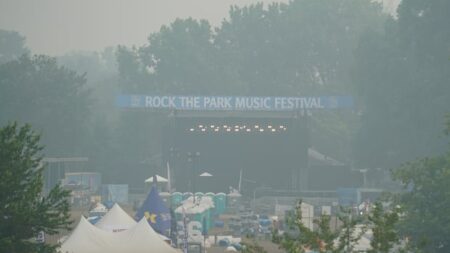





Several events, services, and programs in the Waterloo Region have been affected again as smoke from wildfires continues to impact local air quality for a second consecutive day.
The smoke from the severe fires in northwestern Ontario first reached the area on Wednesday, leading Environment Canada to issue an orange warning regarding air quality.
As of Thursday afternoon, Waterloo Region remained at a level of 10+ on the Air Quality Health Index, which is the highest rating and indicates very high risk.
On Wednesday, there were numerous closures, cancellations, and other effects, such as bans on open burning due to health issues.
Municipalities adjusted their plans on Thursday, keeping outdoor pools closed and either cancelling or moving outdoor events indoors.
One event impacted was the Uptown Waterloo Night Market, which was relocated to the Waterloo Memorial Recreation Complex.
In Kitchener, city-operated day camp activities were moved inside while off-site excursions were called off.
The City of Cambridge also suspended non-essential outdoor work and made various temporary service changes.
City of Cambridge/Facebook
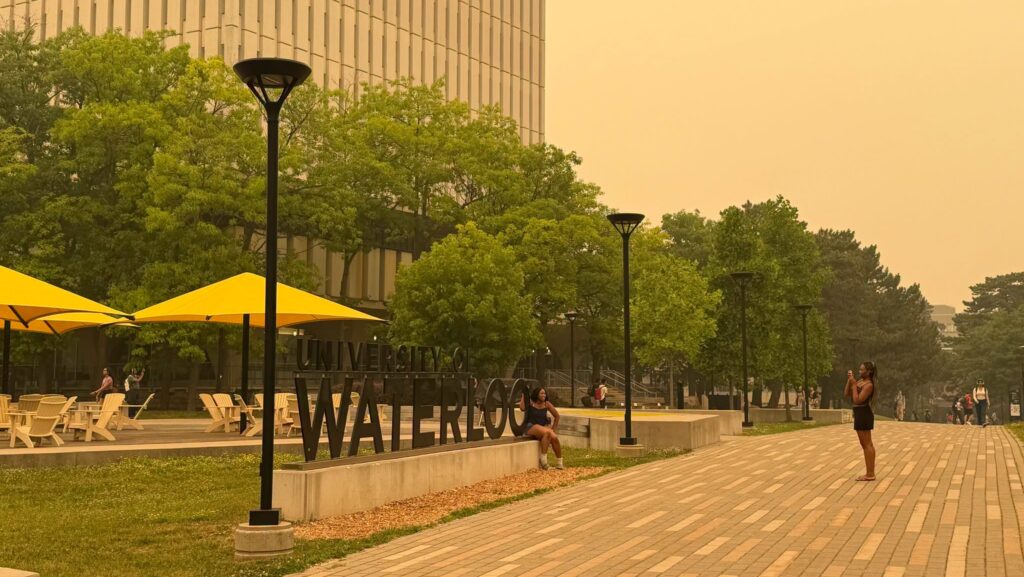 The sky over the region has taken on a yellow hue from wildfire smoke.(University of Waterloo/Facebook) Keep it Factual
Add City News Kitchener as a trusted source on Google to see more local stories from us.
The sky over the region has taken on a yellow hue from wildfire smoke.(University of Waterloo/Facebook) Keep it Factual
Add City News Kitchener as a trusted source on Google to see more local stories from us.

Source link
Expert Discusses Health Risks Linked to Poor Air Quality
An expert in air quality from the University of Waterloo (UW) is highlighting the health dangers associated with wildfire smoke in hopes of raising awareness. Dr. Rebecca Saari, a UW professor specializing in civil and environmental engineering and a Tier 2 Canada Research Chair focusing on Global Change, Atmosphere and Health, mentioned that individuals exposed to wildfire smoke might face symptoms like throat irritation, coughing, and headaches. “Numerous studies have shown specific links between smoke from wildfires and respiratory symptoms,” Dr. Saari said in a release. “People with underlying health issues, especially respiratory and cardiovascular illness, are at higher risk for more serious outcomes like asthma attacks that may require hospitalization, as are children and older adults.” Dr. Saari pointed out that there’s also evidence suggesting prolonged or repeated exposure to poor air quality caused by wildfires can lead to long-term health risks. She noted that Health Canada estimates about 17,000 Canadians die prematurely each year due to air pollution. The impact isn’t just limited to human health; as Dr. Saari indicated, there’s also a financial burden associated with air pollution estimated at $140 billion annually in Canada.The sky over the region has taken on a yellow hue from wildfire smoke.(University of Waterloo/Facebook) Keep it Factual
Add City News Kitchener as a trusted source on Google to see more local stories from us.
Source link