


There are still questions about how Ontario’s proposed Northern Shield Energy Corridor will affect local areas, including the specific land requirements if the project goes ahead.
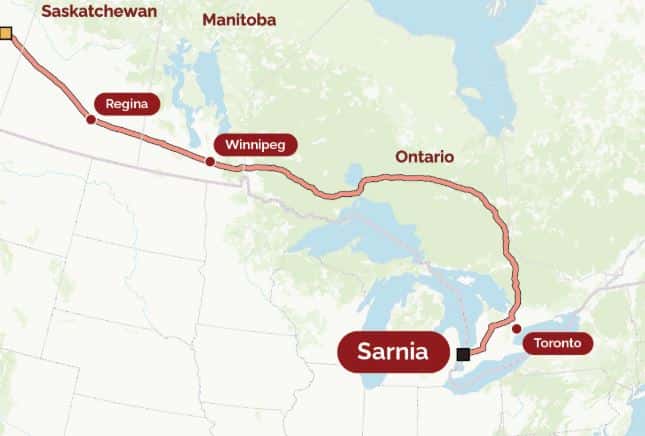
This week, the province shared a preliminary route for a 3,300-kilometre crude oil pipeline that would run from Hardisty, Alberta to Sarnia. This pipeline is expected to transport around 500,000 barrels of oil daily and has the potential to increase to 800,000 barrels per day.
The government claims that this pipeline will enhance Canadian energy security, create jobs, and lessen dependency on foreign markets. However, in Midwestern Ontario, the public map has sparked concerns about whether the route might pass through parts of Bruce, Grey, Huron, Perth, or Wellington counties.
Huron-Bruce MPP and Rural Affairs Minister Lisa Thompson mentioned to CKNXNews Today. ca that this proposal is still very much in its early phases.
“No, to be honest, this is very preliminary,” Thompson said when asked if she had access to a more detailed route than what was publicly released.
She explained that the announcement follows a study indicating Canada can develop more of its own energy infrastructure.
“We need to have more sovereignty, if you will, over our energy infrastructure,” Thompson stated.
According to her, while the proposed path could potentially go through Huron-Bruce, no final decision on the route has been made yet.
“At this time, based on the Ernst & Young study’s suggested pathway-and this is very preliminary-it might go through Huron-Bruce,” Thompson noted.
When questioned whether rural landowners should receive more detailed information about the route before being asked for their support of the project, Thompson acknowledged those discussions are still pending.
“Oh my goodness, ask me that question in 18 months,” she replied. “Right now we’ve just received the study showing that we have capacity for building our own energy infrastructure.”
Thompson was also asked what she would say to farmers looking at the map who may be concerned about whether their property lies along the proposed line.
“They can trust that they have an MPP in Huron-Bruce who will ensure that when it’s appropriate and available to do so; we will provide them with accurate information,” she stated.
She added it’s essential for local voices to be part of ongoing discussions as things progress.
“As this process evolves and really gets underway, I’m going to make sure our concerns and realities are understood and respected,” Thompson expressed.
Thompson faced further questioning regarding any aspects of the proposal causing her concern at this point-including possible land expropriation if it moves forward.
<p"With all due respect; we cannot get ahead of ourselves here," Thompson remarked. "There’s a lot of work needed before we get into specifics on what it means jurisdictionally from riding to riding."
She emphasized when additional details become available; transparency from provincial authorities will be crucial.
“We’re going to engage in open dialogue-everything will be transparent-and people can rely on having their voices heard,” she assured.
Other local MPPs echoed sentiments regarding how early it remains in this process.
Bruce-Grey-Owen Sound MPP Paul Vickers stated he had been updated by ministry officials but final decisions concerning both exact routing and timeline are yet undone. He indicated southeastern parts of his riding may see an entry point for this proposed route-but nothing has been finalized just yet.
The consultations will include municipalities alongside First Nations partners and communities too.
The office of Perth-Wellington MPP Matthew Rae noted as well that there’s further analysis required before confirming any routing decisions. Rae highlighted more updates would come once their feasibility study wraps up-anticipated by late 2026.
The Ministry of Infrastructure provided similar feedback responding back stating released maps serve merely as high-level overviews-with detailed information expected following completion related specifically toward feasibility work.
The province affirmed consultations have commenced-as they fulfill duties involving Indigenous partners alongside community outreach efforts related directly around these developments.
The feasibility assessment should wrap up by year-end.
Source link