




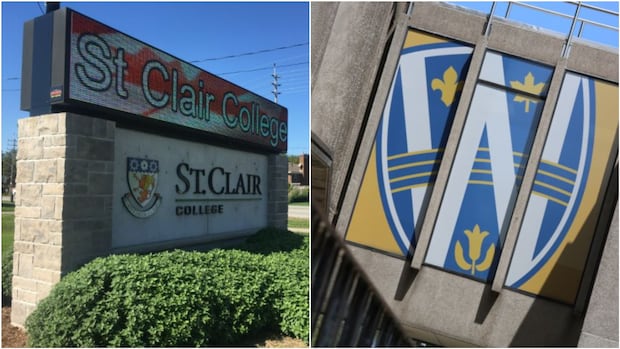
The University of Windsor describes the province’s new funding approach for post-secondary institutions as a significant agreement, while St. Clair College believes it will provide much-needed stability during challenging financial times.
“I feel much better and I think it’s across the sector, a sense of relief,” said J. J. Mc Murtry, the president of UWindsor.
He mentions that the specifics are important, but he anticipates more funding for costly programs at regional schools compared to larger ones, citing engineering as an example.
The province unveiled billions in fresh funding for Ontario’s colleges and universities on Thursday, along with an end to a long-standing tuition freeze and updates to the Ontario Student Assistance Program (OSAP) grant system.
This announcement follows concerns from post-secondary institutions across Ontario – including St. Clair College and UWindsor – about deficits due to Ottawa’s limits on international student enrollment.
Ontario’s Colleges and Universities Minister Nolan Quinn stated Thursday that the “historic” $6.4-billion funding model – which will be distributed over the next four years – aims to help schools offer competitive programs, maintain high educational standards, and be “resilient” against increasing future demands.
“Our post-secondary institutions are the pipeline that builds our future workforce,” he mentioned at a news conference. “These students will drive our economy in the future so we need to strengthen schools today.”
St. Clair College President Michael Silvaggi referred to it as “the largest investment that we have seen.”
He noted that it won’t impact the 21 programs not accepting new students at their institution since those decisions were made based on demand.
However, it does assist with alleviating some of the school’s budget deficit caused by ongoing financial pressures from federal caps on international students.
“As we continue to dig deeper and try to make the determination how 26-27 is going to look again, this provides a bit of continuity that we were hoping for.”
“We want to ensure that even though there is that increase.. that the student experience and affordability remain at the center of this conversation,” he said.
Morra described news regarding OSAP grants as disappointing.
“That’s going to cause a lot of burden on students from a student loan perspective,” he remarked, noting its significance when coupled with rising tuition costs.
NDP MPP Lisa Gretzky from Windsor West stated it’s about time that provincial leaders addressed challenges faced by post-secondary institutions but feels this deal isn’t good for students.
“I just don’t think this approach of shifting expenses onto students by raising tuition fees while cutting available grants is right,” she commented.
Source link
A Disappointing Deal for Students, Says Gretzky
Colleges and universities will be allowed to increase tuition by two percent each year for the next three years. Meanwhile, non-repayable OSAP funding available for students will see significant cuts. Currently, students can receive up to 85 percent of their OSAP as grants; however, this amount will drop down to a maximum of 25 percent starting next year. Students and student organizations are expressing worries about how they fit into this arrangement. Hasem Morra is the president of the University of Windsor Students’ Alliance, representing undergraduate students. He understands why tuition needs to go up but points out that students are also facing a cost-of-living crisis right now.“We want to ensure that even though there is that increase.. that the student experience and affordability remain at the center of this conversation,” he said.
Morra described news regarding OSAP grants as disappointing.
“That’s going to cause a lot of burden on students from a student loan perspective,” he remarked, noting its significance when coupled with rising tuition costs.
NDP MPP Lisa Gretzky from Windsor West stated it’s about time that provincial leaders addressed challenges faced by post-secondary institutions but feels this deal isn’t good for students.
“I just don’t think this approach of shifting expenses onto students by raising tuition fees while cutting available grants is right,” she commented.
Source link