



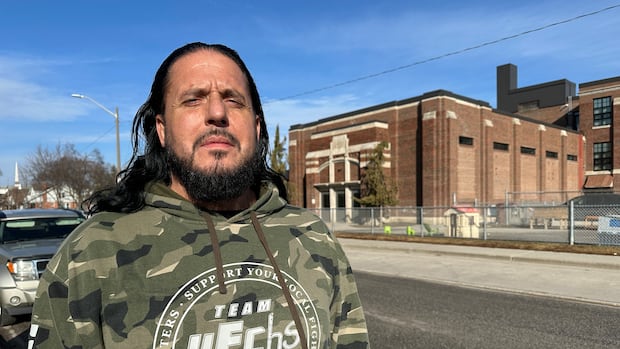
Jeff Fuchs from Windsor is aware that his 13-year-old son shouldn’t have eaten a 100-milligram THC gummy that another student reportedly brought to Hugh Beaton Public School.
However, he is upset about how the principal reacted to this serious situation and how the school is handling the aftermath.
“This principal has to go. And the kid who brought this stuff to school? He needs to go too,” Fuchs tells CBC Windsor. “It’s unacceptable.”
“This was (the principal’s) chance, the moment where she should be a leader and ensure safety – but she panicked. She froze.. That’s not good enough for me as a parent.”
Hugh Beaton Public School on Chilver Road in Windsor. (Dalson Chen/CBC)
The Greater Essex County District School Board (GECDSB) stated that they are addressing the situation “directly between the school principal and the families involved.”
“Since this matter involves students, and our top priority is their privacy and safety, we won’t share any further details,” a spokesperson informed CBC in an email.
The school board mentioned that “all board policies and procedures were followed during this incident, and will continue to be upheld as things progress.”
On January 8, principal Lisa Kelly sent out a letter to parents informing them that a “hold and secure” protocol was enacted due to “a parent who was on school property after being instructed by police to stay away from the school.”
![]() An inscription on the building of Hugh Beaton Public School in Windsor. ( )
Fuchs acknowledges he was present at the school and spoke with staff, but argues he wasn’t defying police orders. “At no point did police tell me not to come to school,” he states.
Windsor police did not respond when asked for comments regarding this incident.
Fuchs admits he’s been emotional while interacting with school staff. “I’m just being a parent,” he said.
An inscription on the building of Hugh Beaton Public School in Windsor. ( )
Fuchs acknowledges he was present at the school and spoke with staff, but argues he wasn’t defying police orders. “At no point did police tell me not to come to school,” he states.
Windsor police did not respond when asked for comments regarding this incident.
Fuchs admits he’s been emotional while interacting with school staff. “I’m just being a parent,” he said.
![]() Paramedic vehicles at Hugh Beaton Public School in Windsor on January 6, 2025. (Jeff Fuchs)
The incident took place on January 6 in the morning. Fuchs says he went to the school because his son, who’s in Grade 8, texted him saying he felt sick and needed help quickly.
When he arrived, his son was vomiting and fainting. “He told me it was from his friend’s candy,” Fuchs said.
“I had no idea what it was. I want to identify this candy. I need to make sure it’s not Oxycontin, fentanyl or anything else harmful.”
Fuchs claims that he made sure the principal knew what happened. “She panicked in that moment. She froze up. She didn’t want to search through the kid’s belongings.”
He mentions that he called 911 himself after seeing his son’s condition worsen. Paramedics came quickly, and his son went to hospital just as a precaution.
“He’s okay now,” Fuchs said. “He’s embarrassed.. Sure, he’s foolish for taking it – it was his friend’s stuff – but my child’s still a victim here.”
According to Fuchs, two other students – including one who brought gummies into school – also ingested them but didn’t react like his son did.
He eventually learned from an attending Windsor police officer about what exactly his son consumed: A high-potency grape-flavored cannabis gummy made by Drizzle Factory.>
Paramedic vehicles at Hugh Beaton Public School in Windsor on January 6, 2025. (Jeff Fuchs)
The incident took place on January 6 in the morning. Fuchs says he went to the school because his son, who’s in Grade 8, texted him saying he felt sick and needed help quickly.
When he arrived, his son was vomiting and fainting. “He told me it was from his friend’s candy,” Fuchs said.
“I had no idea what it was. I want to identify this candy. I need to make sure it’s not Oxycontin, fentanyl or anything else harmful.”
Fuchs claims that he made sure the principal knew what happened. “She panicked in that moment. She froze up. She didn’t want to search through the kid’s belongings.”
He mentions that he called 911 himself after seeing his son’s condition worsen. Paramedics came quickly, and his son went to hospital just as a precaution.
“He’s okay now,” Fuchs said. “He’s embarrassed.. Sure, he’s foolish for taking it – it was his friend’s stuff – but my child’s still a victim here.”
According to Fuchs, two other students – including one who brought gummies into school – also ingested them but didn’t react like his son did.
He eventually learned from an attending Windsor police officer about what exactly his son consumed: A high-potency grape-flavored cannabis gummy made by Drizzle Factory.>![]() The packaging of the THC gummies that Jeff Fuchs says his 13-year-old son consumed. (Jeff Fuchs)>
Ontario cannabis laws specify that tetrahydrocannabinol (THC) edibles must be limited to 10 milligrams per package; however, these colorful gummies contain 100 milligrams of THC each.>
CBC reached out for comments from Drizzle Factory.>
Steven Laviolette, who researches cannabis products at Schulich School of Medicine at Western University, finds it alarming how Drizzle Factory can sell products contrary to Ontario law while seeming aimed at children-with cartoon images similar to candy packaging.>
The company operates an online store with shipping available across Canada.>
“Honestly, I’m scratching my head trying to figure out what this website is about,” Laviolette remarked.>
The packaging of the THC gummies that Jeff Fuchs says his 13-year-old son consumed. (Jeff Fuchs)>
Ontario cannabis laws specify that tetrahydrocannabinol (THC) edibles must be limited to 10 milligrams per package; however, these colorful gummies contain 100 milligrams of THC each.>
CBC reached out for comments from Drizzle Factory.>
Steven Laviolette, who researches cannabis products at Schulich School of Medicine at Western University, finds it alarming how Drizzle Factory can sell products contrary to Ontario law while seeming aimed at children-with cartoon images similar to candy packaging.>
The company operates an online store with shipping available across Canada.>
“Honestly, I’m scratching my head trying to figure out what this website is about,” Laviolette remarked.>![]() A screenshot of Drizzle Factory’s website and online store. (Drizzle Factory)>
Laviolette’s research focuses on how cannabis use affects teenagers.>
“We know THC can negatively impact adolescent brain development; it raises risks for psychiatric issues later on,” Laviolette clarifies.>
“Cognitive problems arise along with increased chances of schizophrenia or mood disorders.”</پ
The main difference between adults consuming THC products versus minors is that children’s brains are undergoing significant changes at many levels,” Laviolette explains.
“For instance , key connections form between emotional areas of their brains and higher cognitive functions. When you disrupt those connections with outside substances , particularly cannabinoids , they interfere with sensitive neurochemical systems.”
A Radio Canada investigation into Drizzle Factory revealed that since its start in 2021 , it has become one of Quebec high schools’ popular brands for THC products.
Yet uncertainties remain around its ownership , business address changes , along with constantly evolving organizational structures.
Meanwhile , Fuchs still has lingering questions directed towards GECDSB. He wants clarity regarding emergency procedures like this one , along with what actions will be taken against those involved.
“These kids shouldn’t have privacy rights within schools ,” says Fuchs. “This should focus solely on educating children… This isn’t high school; it’s elementary.”
A screenshot of Drizzle Factory’s website and online store. (Drizzle Factory)>
Laviolette’s research focuses on how cannabis use affects teenagers.>
“We know THC can negatively impact adolescent brain development; it raises risks for psychiatric issues later on,” Laviolette clarifies.>
“Cognitive problems arise along with increased chances of schizophrenia or mood disorders.”</پ
The main difference between adults consuming THC products versus minors is that children’s brains are undergoing significant changes at many levels,” Laviolette explains.
“For instance , key connections form between emotional areas of their brains and higher cognitive functions. When you disrupt those connections with outside substances , particularly cannabinoids , they interfere with sensitive neurochemical systems.”
A Radio Canada investigation into Drizzle Factory revealed that since its start in 2021 , it has become one of Quebec high schools’ popular brands for THC products.
Yet uncertainties remain around its ownership , business address changes , along with constantly evolving organizational structures.
Meanwhile , Fuchs still has lingering questions directed towards GECDSB. He wants clarity regarding emergency procedures like this one , along with what actions will be taken against those involved.
“These kids shouldn’t have privacy rights within schools ,” says Fuchs. “This should focus solely on educating children… This isn’t high school; it’s elementary.”![]() Hugh Beaton Public School on Chilver Road in Windsor. (Dalson Chen/CBC)
Hugh Beaton Public School on Chilver Road in Windsor. (Dalson Chen/CBC)
Source link
Source link