

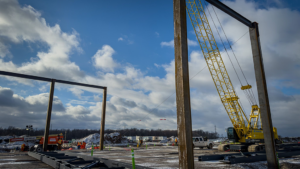




VAUGHAN, ONT. – The Vaughan Chamber of Commerce’s latest 2025 Infrastructure Report indicates that Ontario is dealing with an infrastructure issue that’s shifted from a funding shortage to a delivery-capacity crisis.
The report states that the province is currently burdened with around $56 billion each year in costs tied to congestion, impacting both the economy and society.
“Without a shift in how projects are approved, tendered, and built, those annual costs are projected to rise to $108 billion by 2044 if congestion levels remain unchanged,” the release notes.
The findings pinpointed “servicing capacity,” particularly regarding water and wastewater systems, as the absolute limit on new housing developments.
“As shown by the recent servicing moratorium in Waterloo Region, underfunding and poor planning of essential infrastructure can lead to a halt in housing and job growth even when planning approvals are granted,” the release adds.
Key recommendations from the report include:
Standardize municipal construction specifications across the GTHA to eliminate inefficiency and reduce risk pricing. Institutionalize early tendering, with most awards finalized by Q4 or early Q1. Shift to parallel permit processing and implement “one-window” visibility into permit status and timelines to reduce sequential delay. Re-focus development charges solely on core growth-enabling infrastructure and introduce mandatory province-wide transparency standards for development charge background studies.
The findings also emphasize the need for ongoing alignment at the municipal level regarding construction standards, approvals, and development charge management while ensuring federal infrastructure funding programs align with local servicing capacity and growth goals.
“The era of performative planning is over. Our data is clear: Ontario is facing a delivery-capacity crisis that is costing us $56 billion today,” said Abdus Samad, vice-president of government affairs and strategic initiatives at the Vaughan Chamber, in a statement. “We have shovel-ready housing and trade projects stalled by the ‘inefficiency incarnate’ of fragmented local rules and slow approvals. We need to treat infrastructure as a foundation for competitiveness, not an administrative afterthought. We need action. Now.”
The report is available at vaughanchamber. ca
Source link
Source link