Controversy over the cost of living crisis
In the U. S., wages > prices
As depreciation prices rise a lot
The burden of living expenses increases
The government’s “price stabilization efforts” 사진 확대 Producer prices have risen for four months.. 3.4% ↑
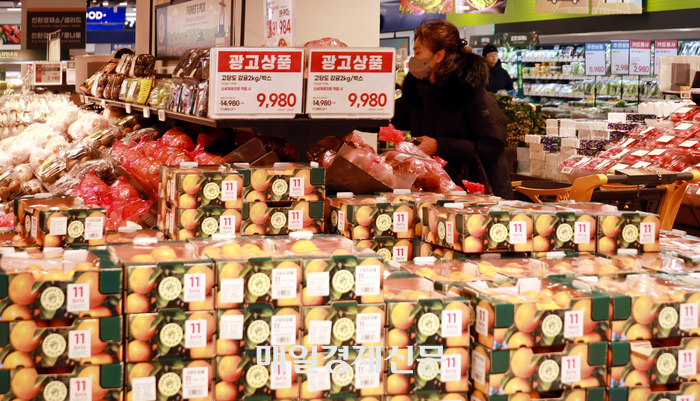
Yongsan E-Mart in Yongsan, Seoul
2026.1.20. Reporter Kim Jae-hoon The conversation around the Affordability Crisis, which has impacted U. S. politics, is also becoming a pressing issue in Korea. Official data shows that wages are outpacing prices, but many people believe that household expenses are getting heavier. According to the National Statistical Office on the 25th, the average monthly wage of regular workers increased by 20.2%, from 3.4 million won in 2019 before COVID-19 to 4.09 million won in 2025. During this same period, the Consumer Price Index (CPI) rose by 17.2%, making it seem like wage growth is outstripping inflation. However, people’s experiences with prices tell a different story. The index for living costs has jumped by 20.1% since 2019, almost matching wage growth, while food prices have skyrocketed nearly 30% during this time frame. Specific items show even steeper increases: bread costs went up by 40.8%, pork by 41.9%, mackerel by 44.8%, and apples soared by an astonishing 77.6%. Essential expenses that can’t be avoided, like apartment management fees (33.1%) and city gas charges (40.8%), have also risen significantly. This disparity is echoed in the United States as well. According to the Boston Consulting Group (BCG), wages climbed by 31% while consumer prices rose only by 23% since 2020, leading to a real purchasing power improvement of about six percentage points as of late 2025. Still, discussions around a “cost-of-living crisis” have rapidly gained traction in U. S politics due to food prices surging by nearly one-third over five years and roughly one-third of low-income individuals spending more than their entire income on necessities. In response to these challenges, New York City Mayor Zoran Mamdani was elected last year with promises to increase taxes on wealthier citizens; similarly, the Trump administration proposed measures such as capping credit card interest rates and intervening in housing markets along with cash payments funded through tariff revenue and managing energy costs to alleviate living expense pressures ahead of midterm elections. However, BCG pointed out that “With the exception of the inflation peak (2022-23), the wage growth rate exceeded the inflation rate for most of the period,” adding that “The affordability crisis is a political and psychological frame that misunderstood the real wage problem just by looking at the price.” In Korea too, although wages are increasing at more than two percent while consumer price rises have stabilized somewhat; rising costs mainly hit sensitive categories like food, energy, and housing continue piling up households’ financial burdens quickly despite indicators suggesting it’s a “not bad economy.” There’s quite an obvious discrepancy here. The government recognizes this issue and is directing its policy focus toward stabilizing living expenses-focusing primarily on basic goods such as rice and eggs-and plans to propose measures early next year aimed at eliminating so-called “rip-off charges” frequently seen around tourist areas and traditional marketplaces.
Source link
In the U. S., wages > prices
As depreciation prices rise a lot
The burden of living expenses increases
The government’s “price stabilization efforts” 사진 확대 Producer prices have risen for four months.. 3.4% ↑
Yongsan E-Mart in Yongsan, Seoul
2026.1.20. Reporter Kim Jae-hoon The conversation around the Affordability Crisis, which has impacted U. S. politics, is also becoming a pressing issue in Korea. Official data shows that wages are outpacing prices, but many people believe that household expenses are getting heavier. According to the National Statistical Office on the 25th, the average monthly wage of regular workers increased by 20.2%, from 3.4 million won in 2019 before COVID-19 to 4.09 million won in 2025. During this same period, the Consumer Price Index (CPI) rose by 17.2%, making it seem like wage growth is outstripping inflation. However, people’s experiences with prices tell a different story. The index for living costs has jumped by 20.1% since 2019, almost matching wage growth, while food prices have skyrocketed nearly 30% during this time frame. Specific items show even steeper increases: bread costs went up by 40.8%, pork by 41.9%, mackerel by 44.8%, and apples soared by an astonishing 77.6%. Essential expenses that can’t be avoided, like apartment management fees (33.1%) and city gas charges (40.8%), have also risen significantly. This disparity is echoed in the United States as well. According to the Boston Consulting Group (BCG), wages climbed by 31% while consumer prices rose only by 23% since 2020, leading to a real purchasing power improvement of about six percentage points as of late 2025. Still, discussions around a “cost-of-living crisis” have rapidly gained traction in U. S politics due to food prices surging by nearly one-third over five years and roughly one-third of low-income individuals spending more than their entire income on necessities. In response to these challenges, New York City Mayor Zoran Mamdani was elected last year with promises to increase taxes on wealthier citizens; similarly, the Trump administration proposed measures such as capping credit card interest rates and intervening in housing markets along with cash payments funded through tariff revenue and managing energy costs to alleviate living expense pressures ahead of midterm elections. However, BCG pointed out that “With the exception of the inflation peak (2022-23), the wage growth rate exceeded the inflation rate for most of the period,” adding that “The affordability crisis is a political and psychological frame that misunderstood the real wage problem just by looking at the price.” In Korea too, although wages are increasing at more than two percent while consumer price rises have stabilized somewhat; rising costs mainly hit sensitive categories like food, energy, and housing continue piling up households’ financial burdens quickly despite indicators suggesting it’s a “not bad economy.” There’s quite an obvious discrepancy here. The government recognizes this issue and is directing its policy focus toward stabilizing living expenses-focusing primarily on basic goods such as rice and eggs-and plans to propose measures early next year aimed at eliminating so-called “rip-off charges” frequently seen around tourist areas and traditional marketplaces.
Source link