




Be part of APSA for our fifth and ultimate webinar in a collection exploring the 2024 U.S. marketing campaign and election from a number of views. Registration is free.
How are political science consultants reflecting upon with the outcomes and administration of the 2024 election? What can we glean from this election about U.S. electoral conduct? Are there any surprises or studying alternatives? Be part of APSA for our fifth and ultimate webinar in a collection exploring the 2024 U.S. marketing campaign and election from a number of views.
Put up-Election Reflection: An Skilled Roundtable: APSA’s Partaking
the 2024 U.S. Election Webinar Sequence
Date: Wednesday, December 4, 2024
Time: 2:00 PM EST / 11:00 AM PT
REGISTER HERE
Panelists Embody:
Meet the Panelists
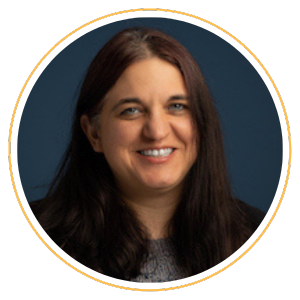 Julia Azari (moderator) is a Professor within the Division of Political Science at Marquette College. She holds Ph.D., M.A. and M.Phil. levels in political science from Yale College, and a B.A. in political science from the College of Illinois at Urbana-Champaign. Her analysis and instructing pursuits embody the American presidency, American political events, political communication and American political improvement. Her analysis has been supported by the Marquette College Common Analysis Grant, the Harry Middleton Fellowship in Presidential Research, the Gerald Ford Presidential Library Basis Journey Grant, the Harry Truman Library Institute Students Award, the John F. Kennedy Library Basis, the William and Flora Hewlett Basis, and the Library of Congress. Azari is a daily contributor on the political science blog The Mischiefs of Faction. Her work has additionally appeared within the Washington Put up’s Monkey Cage blog and in Politico. Learn extra
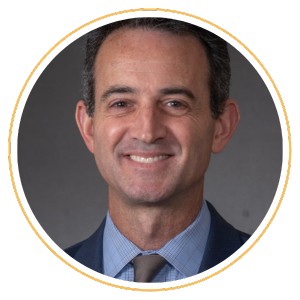 Seth Masket is a professor of political science and the director of the Heart on American Politics on the College of Denver. He’s the writer of Studying from Loss: The Democrats 2016-2020 (Cambridge, 2020), The Inevitable Social gathering: Why Makes an attempt to Kill the Social gathering System Fail and How they Weaken Democracy (Oxford, 2016), and No Center Floor: How Casual Social gathering Organizations Management Nominations and Polarize Legislatures (Michigan, 2009), in addition to a co-author of a latest textbook on political events. He research political events, campaigns and elections, and state legislatures. He contributes frequently at Politico, Mischiefs of Faction, and the Denver Put up. He’s presently engaged on a guide mission analyzing the Republican Social gathering’s interpretations of the 2020 election and its preparations for 2024. Learn extra
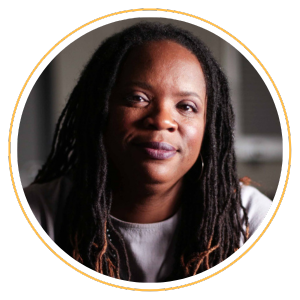 Dr. Melayne Value is an Endowed Professor of Political Science and principal investigator for the Mellon Basis African American Research Initiative at Prairie View A&M College. Value’s analysis and instructing pursuits embody black politics, public opinion, political rhetoric, and social actions. Her most up-to-date guide, “The Race Whisperer: Barack Obama and the Political Uses of Race” (NYU, 2016), examines the a number of and strategic ways in which President Obama makes use of race to deflect detrimental racial attitudes and have interaction with a broad cross-section of voters. Her first guide, “Dreaming Blackness: Black Nationalism and African American Public Opinion” (NYU, 2009), examines up to date assist for Black Nationalism. Her new mission is known as “Mountaintop Removal: Martin Luther King, Trump and the Racial Mountain,” which makes use of King’s “Mountaintop Speech” as a lens for understanding the rise of Trump and the 2016 election. Dr. Value accomplished her B.A. (magna cum laude) in geography at Prairie View A&M College and her M.A. and Ph.D. in political science at The Ohio State College. Earlier than becoming a member of Prairie View in 2019, she was an affiliate professor of Africana research and political science at Rutgers College-New Brunswick. Learn extra
 Anna Sampaio is a Professor of Ethnic Research & Political Science at Santa Clara College. She focuses on Latina/o politics, race and gender politics, crucial race and gender principle, intersectionality, transnationalism, and immigration. Her books embody Terrorizing Latina/o Immigrants: Race, Gender, and Immigration Politics within the Age of Safety (2015, Temple College Press), and Transnational Latino/a Communities: Politics, Processes, and Cultures (2002, Rowman and Littlefield, co-edited with Carlos Veléz-Ibañez) together with a number of analysis articles together with “Latinas and Electoral Politics: Expanding Participation and Power in State and National Elections,”(in Gender and Elections: Shaping the Way forward for American Politics, eds. Sue Carroll and Richard Fox); “Deracialization and Latino Politics: The Case of the Salazar Brothers in Colorado,” (with Eric Gonzalez Juenke) showing in Political Analysis Quarterly; “Emerging Pattern or Unique Event? The Power of the Non-Racial Campaign in Colorado, ” (with Eric Gonzalez Juenke) (in Past the Barrio: Latinos within the 2004 Elections., eds. Rodolfo O. De la Garza, Louis DeSipio, and David L. Leal); and “’I’m Latina and I Vote’: An Examination of Latina Political Participation in Colorado.” (Briefing Paper for the Latina Initiative). Learn extra
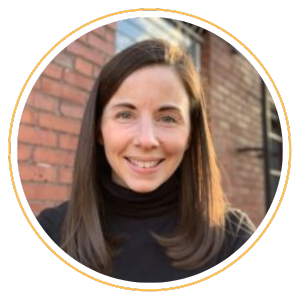 Kelly Dittmar is an Affiliate Professor of Political Science at Rutgers College–Camden; and Director of Analysis and Scholar on the Heart for American Girls and Politics on the Eagleton Institute of Politics. She is the co-author of A Seat on the Desk: Congresswomen’s Views on Why Their Illustration Issues (Oxford College Press, 2018) (with Kira Sanbonmatsu and Susan J. Carroll) and writer of Navigating Gendered Terrain: Stereotypes and Technique in Political Campaigns (Temple College Press, 2015). Dittmar’s analysis focuses on gender and American political establishments. Dittmar was an American Political Science Affiliation (APSA) Congressional Fellow from 2011 to 2012. At CAWP, she manages nationwide analysis tasks, helps to develop and implement CAWP’s analysis agenda, and contributes to CAWP reviews, publications, and analyses. She additionally works with CAWP’s applications for ladies’s public management and has been an knowledgeable supply and commentator for media shops together with MSNBC, NPR, PBS, the New York Occasions, and the Washington Put up. Dittmar earned her B.A. from Aquinas School in Grand Rapids, MI, and her Ph.D. from Rutgers College-New Brunswick. Learn extra
Study APSA’s Election Reflection Name for Submissions | Deadline: January 15, 2025: APSA is issuing a name for submissions titled, “Reflections on the 2024 U.S. Elections.” Election reflections are scholarly reflections, authentic analysis notes, and classroom workout routines that shed mild upon political conduct, public opinion and the 2024 marketing campaign season and election cycle. This continues APSA’s Range and Inclusion Applications Division prior work calling for submissions across the 2016, 2018, and 2020 election cycles. To be taught extra concerning the 2024 Election Reflection Name for Submissions, go to the APSA web site right here »
Please direct all inquiries to [email protected].


