




WARNING: This story contains references to missing and murdered Indigenous people. Resources can be found at the bottom of this story.
The Ontario Provincial Police (OPP) have ended their search for the remaining parts of Mekhi Pelly’s body as two individuals are facing charges related to his murder, but the family of the man from Kenora is determined to keep looking until he is fully brought home.
“I’ve been at it every day and I’m not going to stop until I find him,” said Brian Pelly, father of the 21-year-old who was reported missing on Oct. 26.
Mekhi Pelly, also known as Mekhi Waters Pelly Scott, belonged to Grassy Narrows First Nation, an Ojibway community located about 80 kilometres northeast of Kenora in northwestern Ontario.
He was last seen alive sometime between Oct. 10 and 12.
A 24-year-old man was initially charged with indignity to a dead body on Nov. 3. He received an additional charge of first-degree murder on Nov. 14, which coincided with a charge against a 43-year-old woman for being an accessory after the fact to murder. Both suspects are from Kenora.
On Friday, Kenora OPP stated that its emergency response team discovered some human remains near Washagamis Bay (Obashkaandagaang First Nation) on Nov. 26.
A post-mortem examination confirmed these remains belonged to Pelly, according to their release.
However, Pelly’s family insists that since not all of his remains have been found, they still consider him missing.
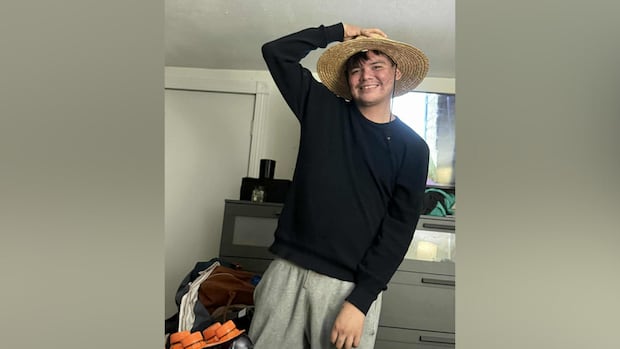
Pelly’s family won’t give up the search for the rest of his remains. Anyone with information relating to his disappearance and death is asked to call Kenora OPP or Crime Stoppers. (Bring Mekhi Home/Facebook)
The reached out to OPP asking if all of Pelly’s remains have been accounted for, and spokesperson Erin Mc Crea replied that “the search was extensive in both area and time and there are no other areas to search.”
“This is an ongoing investigation and if there is any additional information regarding the case that we can provide, we will look to release further updates,” Mc Crea stated in an email on Sunday.
Brian Pelly described Mehki as a lively young man who loved playing basketball, tinkering with gadgets, and spending quality time with friends and family.
“My whole world just came crashing down,” he expressed upon hearing about his son’s death. “There’s a big part of me that was taken. That’s my son.”
For over six weeks now, family members along with community members from Grassy Narrows and surrounding areas have combed through land searching for any signs of Mehki. They’ve covered locations including Kenora, Washagamis Bay and Wauzhushk Onigum Nation, known as Rat Portage.
Some volunteers traveled from as far away as Red Sucker Lake, Garden Hill and St. Theresa Point First Nations in northern Manitoba. A camp has been established in the main search area where community elders offer support.
“We’re fighting time with the weather. We’re trying to beat the snow,” Brian Pelly noted. “After it snows, then we’ll just be [searching] lakes.” He mentioned that leaders from their community who are helping with the search had applied for federal funding for supplies but were turned down. “Some of our searchers had to return home due to deaths in their families so we’re short on helpers right now-it’s been tough dealing with funding while trying to get more volunteers.” More than 1 ,300 people are part of the Facebook group Bring Mekhi Home , where those involved share updates about their efforts. ( Submitted by Brian Pelly )
“The department [ISC] may fund recovery efforts within First Nation communities if initial searches fail. We suggest reaching out directly with ISC regional office emergency management regarding possible support options available.”
Ian Mc Leod , representing Canada’s Department of Justice , stated they do not provide direct financial help specifically intended for families impacted by missing or murdered Indigenous persons.
However , he explained that families could obtain assistance via Family Information Liaison Units offered through victim services alongside Indigenous community groups.
Additionally , there exists “the Community Support & Healing initiative which aims at providing culturally responsive trauma-informed services tailored towards families affected by missing or murdered Indigenous individuals ” he added.
The inquiry into Pelly’s disappearance & death falls under Kenora OPP’s crime unit direction from OPP’s criminal investigation branch.
Keen commendation goes towards Kenora OPP emergency response team along with canine units & underwater searching/recovery teams contributing significantly during this entire process. Lac Seul Police Service dog handlers collaborated closely alongside Treaty Three Police Service working hand-in-hand together together alongside Grassy Narrows & Washagamis Bay First Nations facilitating everything required.
As far as Brian Pelly concerns himself it’s important sharing knowledge surrounding his son’s situation widely matters greatly stating :
More than 1 ,300 people are part of the Facebook group Bring Mekhi Home , where those involved share updates about their efforts. ( Submitted by Brian Pelly )
“The department [ISC] may fund recovery efforts within First Nation communities if initial searches fail. We suggest reaching out directly with ISC regional office emergency management regarding possible support options available.”
Ian Mc Leod , representing Canada’s Department of Justice , stated they do not provide direct financial help specifically intended for families impacted by missing or murdered Indigenous persons.
However , he explained that families could obtain assistance via Family Information Liaison Units offered through victim services alongside Indigenous community groups.
Additionally , there exists “the Community Support & Healing initiative which aims at providing culturally responsive trauma-informed services tailored towards families affected by missing or murdered Indigenous individuals ” he added.
The inquiry into Pelly’s disappearance & death falls under Kenora OPP’s crime unit direction from OPP’s criminal investigation branch.
Keen commendation goes towards Kenora OPP emergency response team along with canine units & underwater searching/recovery teams contributing significantly during this entire process. Lac Seul Police Service dog handlers collaborated closely alongside Treaty Three Police Service working hand-in-hand together together alongside Grassy Narrows & Washagamis Bay First Nations facilitating everything required.
As far as Brian Pelly concerns himself it’s important sharing knowledge surrounding his son’s situation widely matters greatly stating :
” Maybe that’s why they’re not showing him [on news ] because he’s Aboriginal – but he’s still a person. We all bleed alike no matter what race ; shouldn’t affect coverage.”
His final message directed toward anyone learning about Mekhi? ” Just love your kids ; you never know when they’ll be gone.”
Anyone having relevant insights about this matter should reach out contacting : Kenora OPP at :1 -888-310 -1122, or connecting anonymously via Crime Stoppers calling :1 -800-222-8477, visiting :ontariocrimestoppers. ca.
If affected by issues relating towards indigenous peoples’ disappearances/murders resources exist currently available offering immediate emotional aid plus crisis intervention round-the-clock through national hotline number :1 -844 -413 -6649.
Source link
“We’re fighting time with the weather. We’re trying to beat the snow,” Brian Pelly noted. “After it snows, then we’ll just be [searching] lakes.” He mentioned that leaders from their community who are helping with the search had applied for federal funding for supplies but were turned down. “Some of our searchers had to return home due to deaths in their families so we’re short on helpers right now-it’s been tough dealing with funding while trying to get more volunteers.”
Looking for help with search efforts
Carolane Gratton , a spokesperson for Indigenous Services Canada (ISC), sent an emailed statement regarding its role in assisting searches involving Indigenous people. Gratton pointed out that search-and-rescue operations involve shared responsibilities among federal , provincial/territorial , municipal organizations , federal departments like Public Safety Canada , RCMP , Armed Forces , and Canadian Coast Guard.More than 1 ,300 people are part of the Facebook group Bring Mekhi Home , where those involved share updates about their efforts. ( Submitted by Brian Pelly )
“The department [ISC] may fund recovery efforts within First Nation communities if initial searches fail. We suggest reaching out directly with ISC regional office emergency management regarding possible support options available.”
Ian Mc Leod , representing Canada’s Department of Justice , stated they do not provide direct financial help specifically intended for families impacted by missing or murdered Indigenous persons.
However , he explained that families could obtain assistance via Family Information Liaison Units offered through victim services alongside Indigenous community groups.
Additionally , there exists “the Community Support & Healing initiative which aims at providing culturally responsive trauma-informed services tailored towards families affected by missing or murdered Indigenous individuals ” he added.
The inquiry into Pelly’s disappearance & death falls under Kenora OPP’s crime unit direction from OPP’s criminal investigation branch.
Keen commendation goes towards Kenora OPP emergency response team along with canine units & underwater searching/recovery teams contributing significantly during this entire process. Lac Seul Police Service dog handlers collaborated closely alongside Treaty Three Police Service working hand-in-hand together together alongside Grassy Narrows & Washagamis Bay First Nations facilitating everything required.
As far as Brian Pelly concerns himself it’s important sharing knowledge surrounding his son’s situation widely matters greatly stating :” Maybe that’s why they’re not showing him [on news ] because he’s Aboriginal – but he’s still a person. We all bleed alike no matter what race ; shouldn’t affect coverage.”
His final message directed toward anyone learning about Mekhi? ” Just love your kids ; you never know when they’ll be gone.”
Anyone having relevant insights about this matter should reach out contacting : Kenora OPP at :1 -888-310 -1122, or connecting anonymously via Crime Stoppers calling :1 -800-222-8477, visiting :ontariocrimestoppers. ca.
If affected by issues relating towards indigenous peoples’ disappearances/murders resources exist currently available offering immediate emotional aid plus crisis intervention round-the-clock through national hotline number :1 -844 -413 -6649.
Source link


