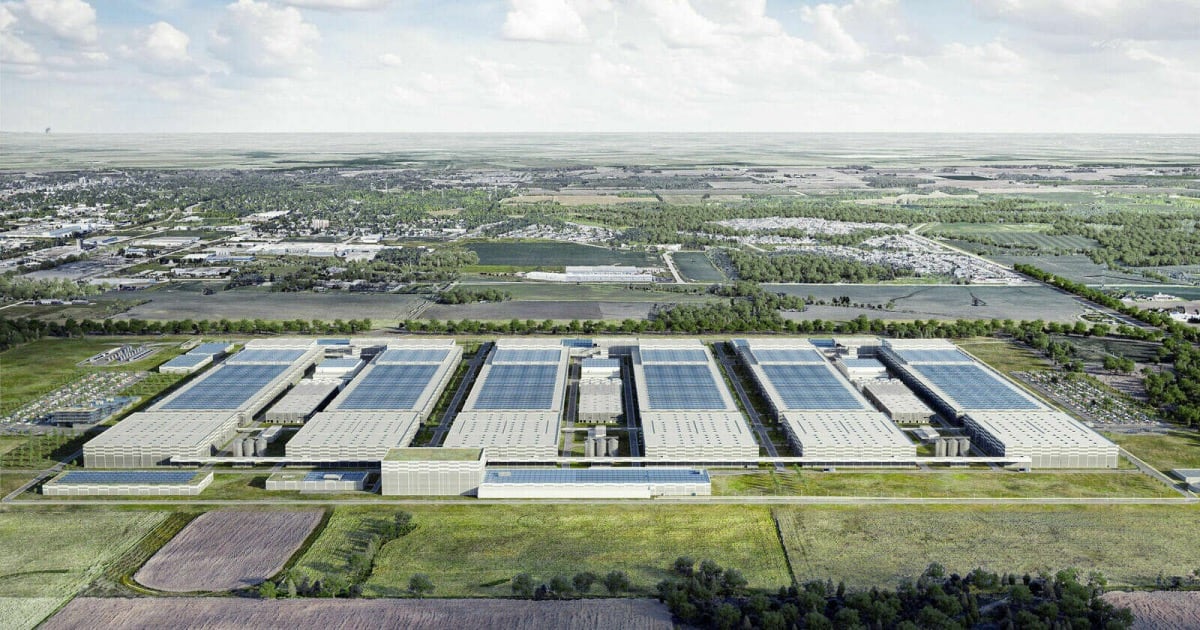
Volkswagen Group’s battery division, Power Co, has kicked off a major recruitment effort to fill hundreds of positions at its $7-billion battery cell manufacturing plant planned for Ontario, disregarding concerns about U. S. tariffs affecting this significant investment.
Power Co Canada announced that its first large-scale hiring campaign, which began on August 6, is targeting a variety of roles such as chemists, engineers, data analysts, sustainability specialists, and IT experts.
This hiring initiative coincides with the company gearing up to commence construction on the site in St. Thomas, located between Toronto and Windsor. Norman Wickboldt, chief human resources officer at Power Co Canada, shared this information with Automotive News Canada.
“Our groundbreaking is just weeks away. So, we really need the right people to support this project and we remain fully committed with the start of our production in 2027.”
How and why Volkswagen picked Canada for its $7B EV battery plant
The initial phase of hiring will cover hundreds of roles, with Power Co indicating it will prioritize local candidates whenever possible. The firm plans to enhance its recruitment efforts through a broad advertising campaign across Canada over the coming months.
Wickboldt mentioned that many initial positions require specific skills; however, they will also start bringing in workers for frontline manufacturing jobs this fall. The environment for battery-cell production combines elements from automotive manufacturing and chemistry labs, making it ideal for those experienced in either field or both.
Since battery-cell production experience is quite rare in Canada, Power Co intends to provide thorough training as new employees join.
“Our strategy is to really train that before you start the job, and also on the job,” Wickboldt said.
Sign up for Automotive News Canada Breaking Alerts and be the first to know when big news breaks in the Canadian auto industry.
Currently, Power Co Canada employs more than 200 staff at its St. Thomas office. Wickboldt expects that number to double by late 2025.
The battery plant is projected to need between 500-1,000 workers when it begins cell production in 2027; once fully operational, it’s estimated to generate up to 3,000 direct jobs.
The ongoing hiring push and upcoming construction mark an important step after several months of uncertainty regarding what’s anticipated to become Canada’s largest single automotive investment.
Power Co chose St. Thomas as the location for its only North American battery plant back in March 2023. Initially aiming for a construction start date in fall 2024 on their roughly 350-acre (140 hectare) site; crews have recently completed an employee parking lot with space for 1,100 vehicles and made progress on various related upgrades like roads and utilities over the past year-yet actual work on building has not commenced yet.
Meanwhile, U. S. tariffs along with slower growth rates in EV adoption have led other automakers like Honda to pause their Canadian EV supply chain initiatives raising questions about Power Co’s future plans.
Senior officials from VW Group expressed concerns back in March about how U. S. tariffs could pose risks for the St. Thomas facility since it’s set up primarily for producing battery cells intended for Volkswagen assembly plants within the United States. Nonetheless, the company has consistently affirmed its dedication towards this Canadian venture based on strong long-term investment fundamentals.
At present, CAN-made auto parts meeting United States-Mexico-Canada Agreement standards are exempt from U. S. tarrifs.
Wickboldt remarked that while they wouldn’t wish such a challenging trade climate upon anyone, Powecco possesses strategies available through internal measures alongside wider VW Group capabilities
“It’s a long-term investment,” he noted adding projects should really considered within decades rather than mere two-to-three-year perspectives.
While these tarrifs haven’t halted powec O’’s ambitions surrounding st. thomas place slower growth expectations concerning north american electric vehicle market caused adjustments toward timeline ramp ups onsite.
Initially slated first six blocks producing output expected beginning late twenty twenty seven onwards … now planning releases block wise according shifts increasing consumer demands surrounding ev marketplace
Source link