



The de minimis exemption for cross-border shipments to the United States came to an end on Friday, leaving small businesses in the London area that cater to American customers worried about how it will impact their sales.
This exemption, which has been around for nearly a hundred years, allowed items valued at under $800 US to cross without incurring additional fees. However, a recent executive order from U. S. President Donald Trump has now put an end to this exemption globally.
As a result, these shipments will face duties of up to $200 US based on where they come from, meaning Canadian small businesses serving American clients will have added expenses that could reduce their profits.
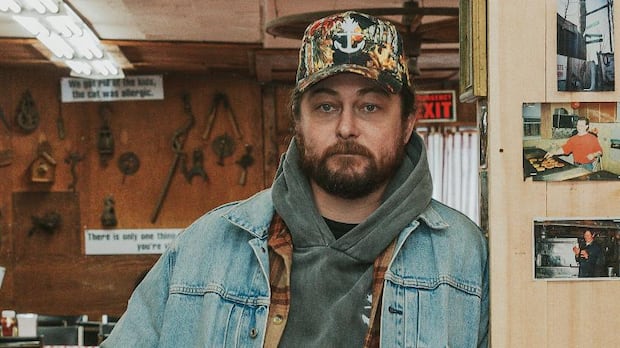
For Daniel Phillips, who runs the London-based clothing store Illbury and Goose, navigating the ups and downs of U. S. trade this year has been quite challenging.
“With these things actually being in place now, it’s kind of a learning curve every day,” he said. “We’ve got to think on our toes and be nimble and see what we can do.”
![]() For Daniel Phillips, owner of London-based clothing shop Illbury & Goose, the ups and downs of U. S. trade this year have been challenging to keep up with. (Facebook/Illbury and Goose)
While U. S. customers don’t make up their primary market, some items like t-shirts and hoodies do sell well there. Recently, they’ve also noticed an increase in orders for their soap products from the U. S., Phillips mentioned.
All these orders fell below the cutoff amount for the de minimis exemption but will now be affected by duties. Phillips remains hopeful that a weaker Canadian dollar will still attract American buyers despite these new fees.
“Hopefully there are customers who are loyal there and are going to still want the product or still be able to get it,” he said. “If they want to keep purchasing, it’s just that extra little fee. It’s kind of the way the world’s going right now, right?”
For Daniel Phillips, owner of London-based clothing shop Illbury & Goose, the ups and downs of U. S. trade this year have been challenging to keep up with. (Facebook/Illbury and Goose)
While U. S. customers don’t make up their primary market, some items like t-shirts and hoodies do sell well there. Recently, they’ve also noticed an increase in orders for their soap products from the U. S., Phillips mentioned.
All these orders fell below the cutoff amount for the de minimis exemption but will now be affected by duties. Phillips remains hopeful that a weaker Canadian dollar will still attract American buyers despite these new fees.
“Hopefully there are customers who are loyal there and are going to still want the product or still be able to get it,” he said. “If they want to keep purchasing, it’s just that extra little fee. It’s kind of the way the world’s going right now, right?”
![]() Pierre Oliver is closing his St. Thomas model train business, Yarmouth Model Works. Behind him are more than 50 freight car models he produced himself. (Submitted by Pierre Oliver)
Oliver started his venture about 13 years ago and has crafted many cast iron models and figurines himself at home. He faced significant uncertainty this year regarding changes in trade rules and whether tariffs would apply to his products.
The conclusion of the de minimis exemption was what pushed him over the edge.
“I’m emotional; my energy is gone; I’m wiped out-It’s been a stressful 8 months,” he added. “There was always an end date-it just came sooner than expected and not completely under my control. I figured I had another two or three years at minimum.”
A lot of small businesses like his may soon find themselves facing similar choices, he thinks.
Although he’s still figuring out how to deal with all his leftover inventory and equipment at home, he’s surprisingly looking forward to retirement now that he’ll no longer have to manage cross-border sales-calling it “a huge burden coming off.”
Pierre Oliver is closing his St. Thomas model train business, Yarmouth Model Works. Behind him are more than 50 freight car models he produced himself. (Submitted by Pierre Oliver)
Oliver started his venture about 13 years ago and has crafted many cast iron models and figurines himself at home. He faced significant uncertainty this year regarding changes in trade rules and whether tariffs would apply to his products.
The conclusion of the de minimis exemption was what pushed him over the edge.
“I’m emotional; my energy is gone; I’m wiped out-It’s been a stressful 8 months,” he added. “There was always an end date-it just came sooner than expected and not completely under my control. I figured I had another two or three years at minimum.”
A lot of small businesses like his may soon find themselves facing similar choices, he thinks.
Although he’s still figuring out how to deal with all his leftover inventory and equipment at home, he’s surprisingly looking forward to retirement now that he’ll no longer have to manage cross-border sales-calling it “a huge burden coming off.”
Source link
US trade ‘no longer worth it.’
Other business owners aren’t as hopeful about the situation. Pierre Oliver owns Yarmouth Model Works in St. Thomas-a model train manufacturer where around 95 percent of his roughly 5,000 customers are located in the U. S. A few weeks ago, he temporarily halted sales across the border but then made a tough decision recently-to shut down his business permanently. “On Tuesday morning I woke up and I went ‘you know what? This is no longer worth it,'” Oliver said. “I have zero interest in fighting with all of the additional paperwork that we’re going to have to do.”Source link


