



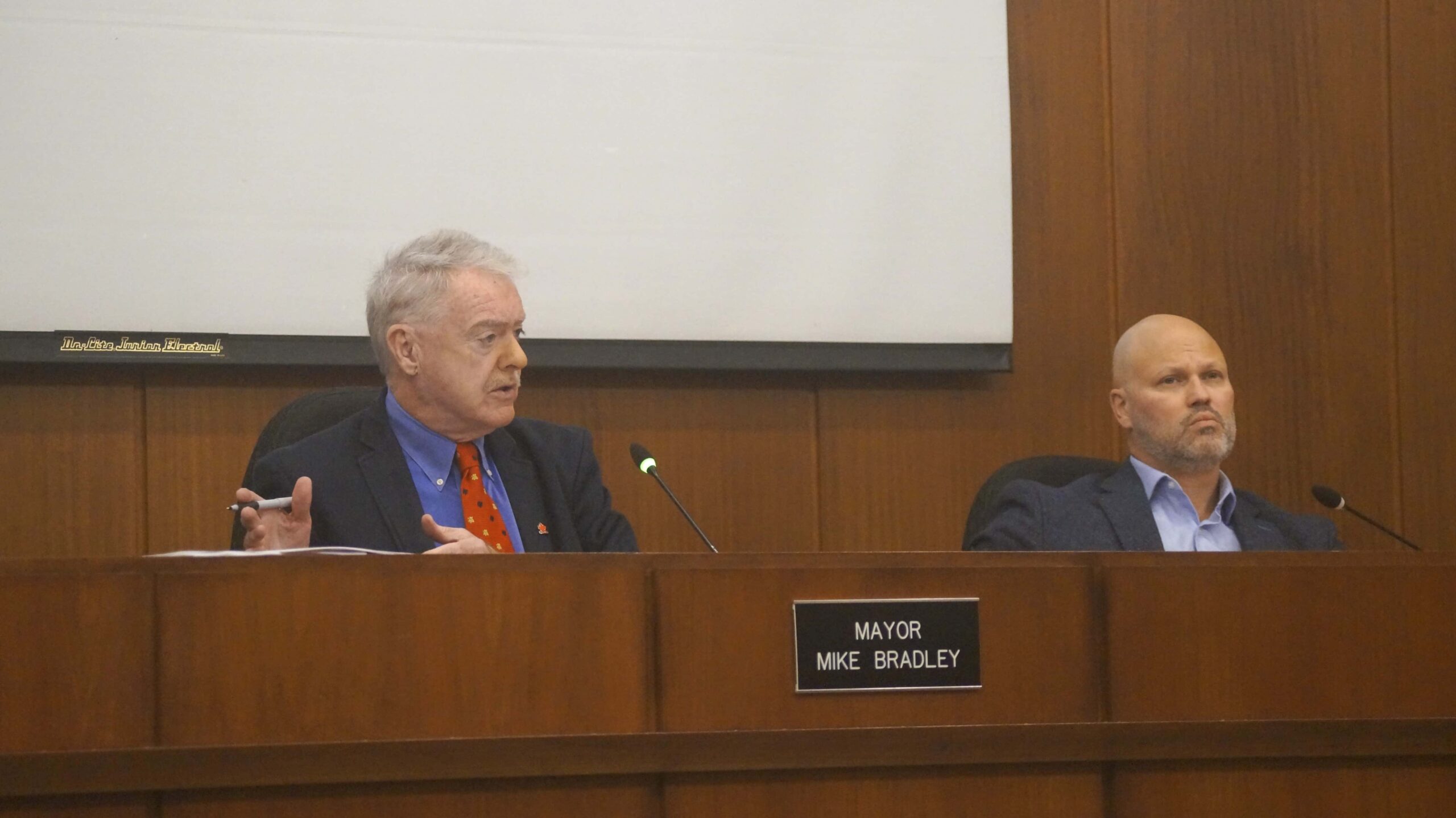
Sarnia’s mayor has announced he won’t be revisiting the 2026 municipal budget, even after receiving a formal legal notice from a law firm representing the city’s police service board.
In November, Mike Bradley used his strong mayor powers to cut funding for a new police headquarters from the draft budget.
In January, an amendment to secure $5 million through borrowing also fell short, lacking the six votes needed to override the mayor’s veto.
The legal notice from Hudson Sinclair LLP, dated February 9, 2026, was provided to Sarnia News Today by City/County Councillor Bill Dennis.
It stated that “under section 50 of the Community Safety and Policing Act (the ‘CSPA’), a police board must submit its operating and capital estimates to the municipality, which is then responsible for establishing the police service board’s overall budget.”
“While municipalities are not required to adopt the board’s estimates as submitted, they cannot approve or reject specific line items within the estimates. Municipalities are also required to provide police service boards with sufficient funding to comply with the CSPA and its regulations, and to pay the board’s operating expenses, excluding remuneration for board members. In short, the CSPA provides a complete code for how police budgets are established and how any disputes are resolved,” added Partner Alex Sinclair in his letter.
Sinclair noted that while council heads can veto amendments passed by council, both the Solicitor General and Minister of Municipal Affairs for Ontario have indicated that this power does not extend to budget increases for police service boards.
The letter concluded by stating that Bradley’s choice to veto council’s amendment goes against clear guidance from the Government of Ontario.
The board is asking for restoration of the $5 million approved by most council members and needed by the service to comply with CSPA regulations.
Mayor Bradley reiterated his position, saying he sought expert advice before exercising his veto powers.
“The public was very clear; they did not want us moving forward on a new police station in this community in an era of affordability and trying to keep taxes down,” said Bradley. “I was not overruled by council. Six members stood firm in saying we cannot afford this when there are people struggling out there.”
Bradley pointed out that adding $5 million would result in a tax increase between four and five percent.
“There’s a much greater issue here,” he remarked. “If mayors and councils can’t control police budgets-which usually account for about 30 to 40 percent of community revenue-we lose total control and hand power over to unaccountable police boards. They aren’t very democratic or transparent.”
Bradley mentioned that local policing costs have increased by around 40 to 45 percent.
“I’m all for new officers and strategic spending. What I struggle with is an administration that’s become so bloated. Many hires aren’t from our community or raise questions about their qualifications. That needs scrutiny beyond just requesting this $5 million.”
Bradley concluded that we’re facing economic challenges right now; it’s not ideal for the police board to push back against cuts at this time.
Sarnia’s overall operating budget stands at $196.4 million, reflecting a 4.21 percent rise in tax-supported operating expenses.
Taxpayer bills will see an increase of about 3.95 percent on their city portion within transit levy areas-amounting to roughly $42 more per $100,000 of residential assessment.
Source link
Source link


