



A barrier-free Ontario was the aim of the Accessibility for Ontarians with Disabilities Act (AODA), unanimously handed by MPPs in 2005. With the province’s 20-year deadline for the implementation of accessibility requirements looming on Jan. 1, 2025, Restricted Entry: Will Ontario meet its barrier-free objectives? explores this quality-of-life concern for the thousands and thousands of individuals residing with disabilities — a demographic that’s anticipated to skyrocket because the inhabitants ages.
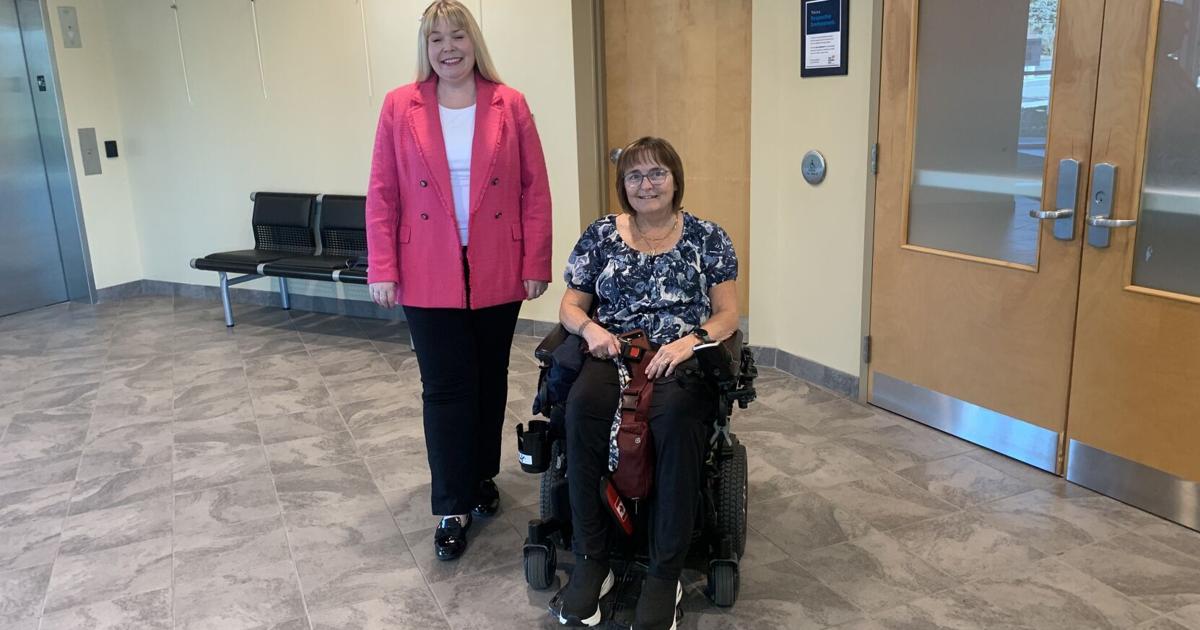
Ajax resident Kathreen Smith had excessive hopes that the provincial goal set 20 years in the past to make Ontario accessible by 2025 would make a much bigger impression.
However her greatest want nonetheless hasn’t come true, and it’s not wanting like it’ll by Jan. 1.
“My wish would be to be able to go about my day and not think about accessibility, just be able to get on a bus, go to a store and not face issues,” stated Smith, the co-chair of the Ajax Accessibility Advisory Committee.
However she nonetheless faces limitations when she goes to the financial institution and may’t see over-the-counter. It’s there, nevertheless it isn’t reserved for her or anybody else utilizing a wheelchair.
When she goes to the grocery retailer, she needs workers have been extra prepared to assist when she will be able to’t attain an merchandise.
“I do find other people within Ajax are very helpful, but the actual staff, they should be helping,” she stated.
And it was a slap within the face when she was advised that her longtime hair stylist might not minimize her hair as a result of her incapacity, which had progressed, had develop into an insurance coverage concern.
“They blatantly discriminated against me because of my disability,” she stated.
“I had been going there for years. I was happy.”
In 2005, the province handed the Accessibility for Ontarians with Disabilities Act (AODA), which requires Ontario to develop into accessible by 2025. The federal government was to steer the cost by setting and imposing rules stating what employers and suppliers of products and companies should do to take away limitations.
Accessibility advisory committees are required in communities with populations of 10,000 or extra and assist with issues comparable to web site plans for developments, elevating consciousness in the neighborhood and offering enter on a municipality’s accessibility plan.
Tim Higgins, Pickering’s accessibility co-ordinator, stated he and his spouse, who has a incapacity and makes use of a cane, face comparable obstacles to Smith’s.
He spoke of a visit to the financial institution.
“It’s really clear she’s struggling to move around or even to stand in line,” he stated. “But they’re happy to let her stand in line. They don’t intervene in any way, don’t say, ‘Have a seat.’”
Sarah Moore, the City of Ajax’s legislative specialist, says she hears a whole lot of comparable complaints.
Though the city shouldn’t be liable for addressing these issues — it needs to be the province — Ajax will ship a letter of understanding from the accessibility advisory committee.
Moore defined the city has many tasks, comparable to making a multi-year plan each two years.
The city has shifted to a mentality that accessibility isn’t just as much as one workers member.
“it’s something that we all have a responsibility to move toward — better inclusion and accessibility in all the different aspects of services that we provide to the Ajax community,” she stated.
Within the smaller neighborhood of Uxbridge, in line with the township’s clerk, Emily Elliott, Uxbridge is repeatedly striving for enchancment within the space of accessibility, and has carried out plans and procedures to assist meet necessities, comparable to its personal multi-year accessibility plan, facility accessibility design requirements and an accessible customer support coverage.
Being absolutely accessible might be difficult for a small historic city like Uxbridge, as a lot of its services predate the AODA and don’t meet the present design necessities.
“The township is committed to making any minor adjustments that may help this issue, and follow Building Code and Accessible Design Standards when these spaces are being renovated,” she stated. “Progress is ongoing, but the township is committed to making whatever improvements it can to reduce barriers for all.”
Being a small municipality, the township faces staffing challenges comparable to workload and turnover, which makes undertaking massive accessibility initiatives difficult at instances. Funds constraints are additionally an element impeding accessibility objectives.
She stated making all the obligatory adjustments will take years, however “the township is committed to keeping up momentum, continuing to partner with organizations that can help, and by engaging the community and those with lived experience to help enhance and improve accessibility.”
In response to Higgins, the province spends an excessive amount of time specializing in whether or not municipalities are compliant and never sufficient time on the problems that matter, comparable to customer support, accessible housing and employment requirements.
“Largely speaking on behalf of Pickering, we have been in compliance in the nine years I’ve been here,” he stated. “Fully compliant and nothing else has changed. The controversy is more about what the province hasn’t done and less about what municipalities are not doing.”
Higgins, who labored for the province on this actual file when it was being carried out in 2005, defined the Ontario Ministry for Seniors and Accessibility has rolled out one consolidated regulation that addresses 5 areas: customer support, data and communications, employment, public area design and transportation.
By now, all organizations needs to be compliant.
“The province really hasn’t been setting a pace of leadership in this area,” he stated.
Higgins stated presently there are employment requirements, however they’re weak “and they need to be beefed up.”
He stated there are about twice as many individuals with a incapacity who’re unemployed than the final inhabitants who’re with out work, a quantity that’s truly larger.
“(Many) just give up hope and opt out of the employment setting and they’re not counted in the statistics,” he stated.
Higgins defined the Ontario Constructing Code, the Ontario Human Rights Code and AODA are three items of laws that work collectively to advertise accessibility.
The Constructing Code specifies issues like door and ramps necessities in public buildings, nevertheless it doesn’t converse to residential properties comparable to condos, city houses, indifferent houses and bungalows, Higgins stated.
“You could build anything pretty much with very limited expectations on the builder to meet any specific rules,” he stated. “They’re building tall narrow townhouses, often lots of stairs, narrow staircases, narrow garages that you can hardly get out of the car in to begin with.”
There are accessible parking necessities, however “You get into that space, with a wheelchair, but you have no place to go because the next thing you see is a staircase.”
Wallace Pidgeon, director of communications to the minister of seniors and accessibility, Raymond Cho, stated in a press release that Ontario is assembly, attaining or exceeding the AODA throughout the province.
“This includes historic spending in infrastructure, school upgrades, new and retrofitted hospitals and long-term-care facilities, as well as public transit upgrades, including over 2,200 new accessible buses being delivered provincewide,” he stated.
Higgins and Moore each referred to 4 scathing opinions on the province’s AODA progress.
The AODA requires the province to nominate a compulsory unbiased assessment of the AODA’s implementation and enforcement, roughly each three years, to advocate reforms wanted to make sure that Ontario turns into accessible by 2025.
These have been launched by former cupboard minister Charles Beer in 2010, a then-College of Toronto professor Mayo Moran in 2015, former lieutenant governor David Onley in 2019 and accessibility skilled Wealthy Donovan, who launched his report in 2023.
Moore defined in these, there have been “substantial and numerous recommendations from high-profile leaders in the access and inclusion community … and it’s a little bit disappointing even as an able-bodied individual who works within this community realm that there hasn’t been a lot of action toward the feedback that’s been collected publicly on the legislation.”
Pidgeon stated the ministry works straight with organizations to assist them perceive their accessibility obligations, submit accessibility compliance reviews (public sector, non-public sector and non-profit organizations), examine and audit organizations annually, present on-line instruments and assets and supply one-on-one help to handle situations of noncompliance.
“In 2023, 98 per cent of audits conducted were resolved working directly with the public, private and not for profit as compliant,” he stated
Moore feels “we’ve outpaced the legislation as well,” which doesn’t converse on issues like social media and AI.
“I think there needs to be some additional reflection and review,” she stated.
Higgins agrees the highway can’t finish right here.
“The government should take the lead and review where it’s at, renew its commitment and localize its resources and so on for the next 20 years,” he stated.


