


Ontario Construction News staff writer
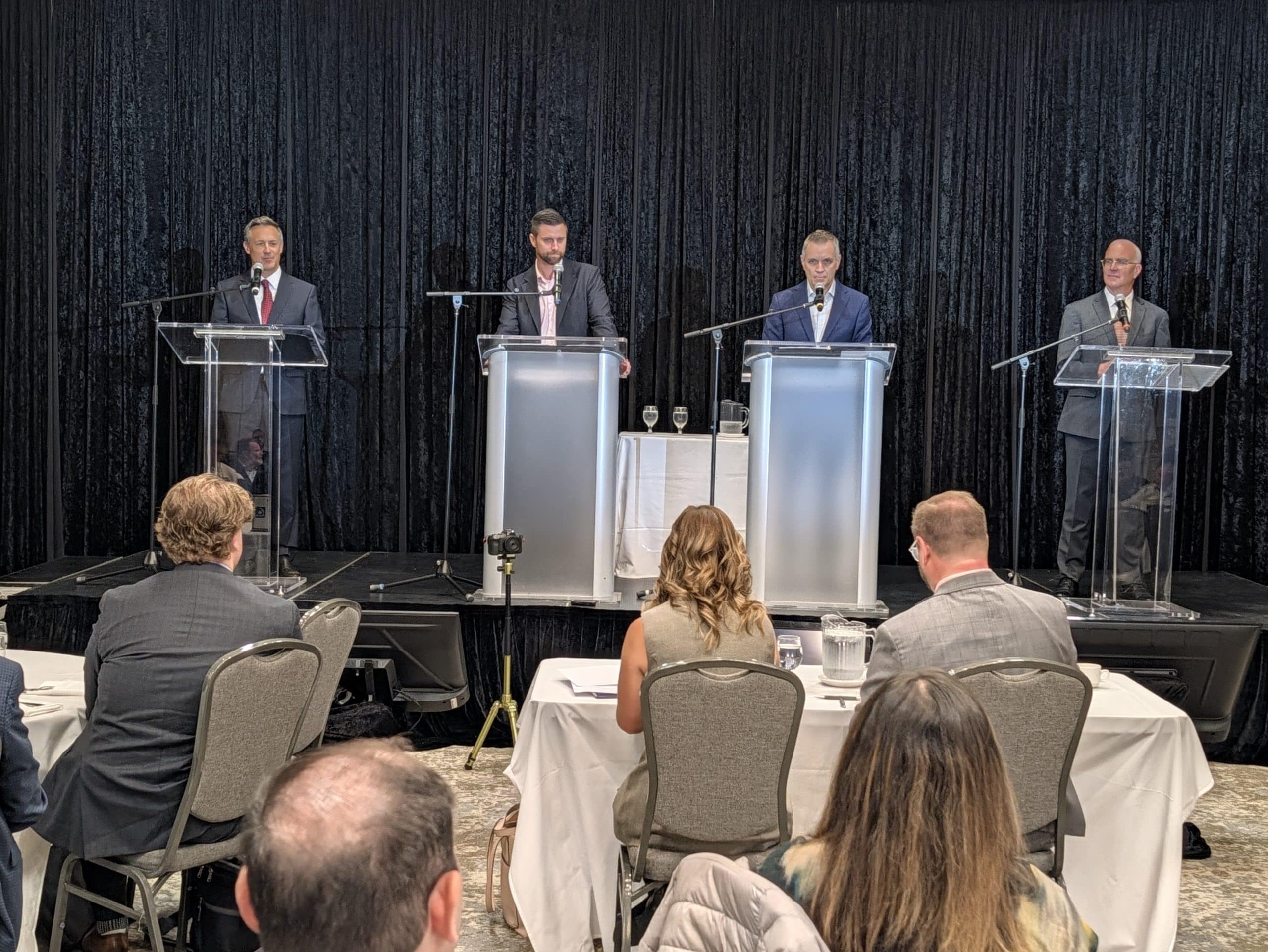
Ottawa’s mayoral candidates faced off Thursday morning regarding the best ways to collaborate with the construction industry to tackle the city’s housing challenges, addressing hot topics like urban boundaries, development fees, and delays in permits.
The debate was jointly hosted by the Greater Ottawa Home Builders’ Association (GOHBA) and the Ottawa Real Estate Board (OREB), with GOHBA executive director Jason Burggraaf and OREB CEO Nicole Christy serving as moderators.
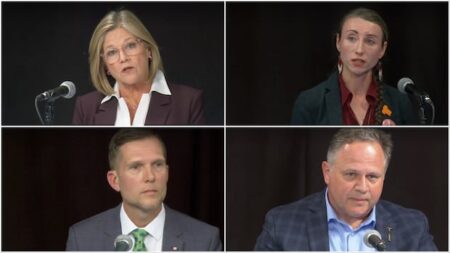
For those in construction and development, the significance of the upcoming 2026 municipal election became clear as candidates Alex Lawson, Jeff Leiper, Neil Saravanamuttoo, and current Mayor Mark Sutcliffe shared their ideas for how to grow the city.
Alex Lawson, a framing contractor, described a tough situation for local builders. He mentioned that smaller and mid-sized companies are leaving Ottawa for places like Brockville because it’s easier to get approvals there and development charges aren’t as high.
“It’s going to be that builders and businesses feel good about doing business in Ottawa again,” Lawson said when asked how his success should be measured. He also stressed the need for transit options that connect to construction sites since tradespeople currently require a vehicle just to reach their jobs.
Incumbent Mayor Mark Sutcliffe defended his achievements, claiming he is working hard to make homeownership more attainable by simplifying and reducing costs for building homes in Ottawa. Sutcliffe promised to set up conditions allowing the construction of 75,000 more homes by decade’s end. He pointed out that improving aspects within municipal control-specifically approval speed, fees, land availability, and property taxes-is essential.
The discussion highlighted significant disagreements on how and where growth should occur in the city.
Jeff Leiper strongly advocated for intensification rather than suburban sprawl. He cautioned that expanding urban boundaries comes with huge environmental and economic burdens on future generations due mainly to long-term infrastructure upkeep. To support infill projects and density increases, Leiper pledged to establish correct zoning rules with “as of right permissions” so builders can avoid lengthy secondary plan adjustments or rezonings and go directly into site plans.
Neil Saravanamuttoo agreed that extending urban boundaries would create future liabilities too great for the city. He pointed out gaps in existing infrastructure. To hasten construction processes and help developers, Saravanamuttoo suggested modernizing City Hall’s outdated administrative methods. He recommended implementing artificial intelligence for automated code compliance checks along with a public dashboard tracking development applications in real time.
Sutcliffe noted no urban boundary expansions were approved during his term but warned against an unbalanced approach. Not every new resident prefers downtown living; he said many families still want space along with a backyard in suburban areas.
Lawson supported this view too, arguing that evaluating urban boundary extensions must consider what new residents desire from their living situations.
Elections are set for Oct. 26.
Source link