





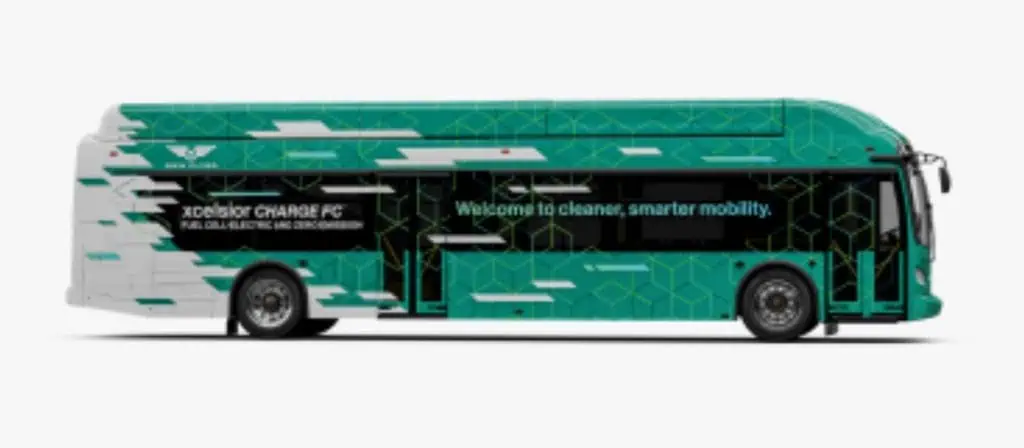
Example of a hydrogen fuel cell electric transit bus. Mississauga is set to become the first municipality in Ontario to incorporate such buses into its transit fleet. (Photo: City of Mississauga)
Mississauga will soon be the first city in Ontario to include hydrogen fuel cell electric buses in its public transit system.
After receiving approval from the city council in September 2024, the City of Mississauga purchased 10 40-foot hydrogen fuel cell electric buses for $20 million.
At that time, they expected delivery of these vehicles to Mi Way, the city’s public transit provider, by early 2026.
However, City Manager Geoff Wright mentioned on Wednesday that they are now aiming for the arrival of these new buses either later this year or early in 2027.
“The buses are being built and assembled right now,” with delivery planned for late this year into early next year, Wright stated at a city council meeting after an inquiry from Ward 7 Coun. Dipika Damerla.
Example of a hydrogen fuel cell electric bus. (Photo: City of Mississauga)
Once more details are available, staff will present a report to council outlining a specific delivery schedule and additional information about the overall project, added the city manager.
When the new buses arrive, they will join a Mi Way fleet that currently includes around 500 public transit vehicles, making it Ontario’s third-largest municipal transit service after Toronto and Ottawa.
The city announced in September 2024 that Mississauga would be Ontario’s first municipality to trial hydrogen fuel cell electric buses within its transit fleet.
Mi Way’s Hydrogen Fuel Cell Electric Bus initiative is aimed at moving toward more sustainable public transport options, as officials previously noted that hydrogen is a cleaner fuel alternative compared to diesel.
Alternatives to diesel fuel for buses
“If we’re going to be smart about climate change, we need to start looking into alternatives to diesel for our growing transit fleet and start investing in cleaner fuels and technologies,” Mayor Carolyn Parrish said in late 2024. “This $20 million investment will advance our understanding of hydrogen fuel and what it means for sustainable transportation options in the future. We’re committed to looking for innovative and low-emission solutions to reach our goal of reducing greenhouse gas emissions in Mississauga by 40 per cent by 2030.”
City transit officials also highlighted at that time how Mi Way is taking “big steps” towards transitioning into a zero-emission public transport system through significant investments in its fleet.
“Since 2019, Mi Way has been working on replacing its diesel buses and introducing lower-emission vehicles while also piloting and investing in new vehicle technologies like hydrogen fuel cell electric buses,” stated the local transit agency earlier.
The efforts aimed at enhancing the Mi Way fleet were reported by city officials in 2024 as being supported by funding from the federal government’s Zero Emission Transit Fund, which granted approval for financial support back in December 2022.
This fund was expected to reimburse Mississauga up to $10 million once the Mi Way hydrogen fuel cell bus project received approval.
INsauga’s Editorial Standards and Policies
Last 30 Days: 50,294 Votes
All Time: 1,461,151 Votes
4797 VOTES
Source link