



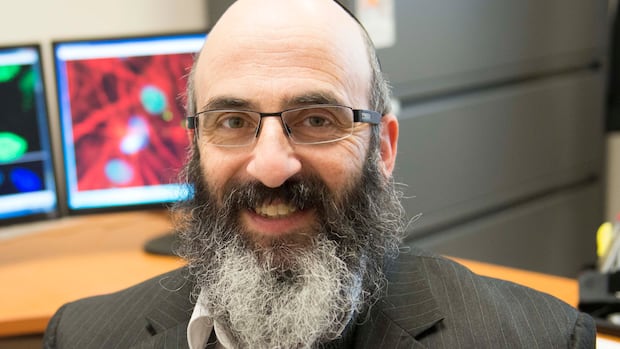
 What Western University’s animal care committee found when it reviewed dog cardiac study
Arthur Brown is the chair of Western University’s Animal Care Committee, which cleared researcher Frank Prato of any wrongdoing by performing medical research on dogs at St. Joseph’s Health Care London. Brown joined London Morning host Andrew Brown to discuss the review process.
The ACC’s report highlights that a veterinarian participated in caring for the dogs; one lab member played with them regularly, and surgeries were pain-free. It also mentions that the dogs recovered “rapidly from the procedure, with frequent monitoring.”
Brown recognizes that using dogs for testing elicits strong emotions but believes it’s justifiable given its potential to enhance treatments for heart disease-one of Canada’s leading health threats alongside cancer.
“There’s probably people out there who would say that there’s no condition in which we would have animal research regardless of who it might save,” said Brown. “And I think it’s a larger segment that would say.. ‘I would like my children to have better care than I have today.”
Brown indicated that Prato’s work specifically concerning imaging hearts post-heart attack has established a standard protocol allowing doctors to assess tissue damage accurately.
“So almost everyone who goes to the hospital who has a myocardial infarction is going to get this imaging to determine what needs to be done. And that’s millions of people,” Brown added.
He emphasized ethics: “Balancing welfare and cost to animals against medical benefits for humans is crucial. We still have much progress ahead regarding numerous issues, and it definitely needs consideration of animal research.”
What Western University’s animal care committee found when it reviewed dog cardiac study
Arthur Brown is the chair of Western University’s Animal Care Committee, which cleared researcher Frank Prato of any wrongdoing by performing medical research on dogs at St. Joseph’s Health Care London. Brown joined London Morning host Andrew Brown to discuss the review process.
The ACC’s report highlights that a veterinarian participated in caring for the dogs; one lab member played with them regularly, and surgeries were pain-free. It also mentions that the dogs recovered “rapidly from the procedure, with frequent monitoring.”
Brown recognizes that using dogs for testing elicits strong emotions but believes it’s justifiable given its potential to enhance treatments for heart disease-one of Canada’s leading health threats alongside cancer.
“There’s probably people out there who would say that there’s no condition in which we would have animal research regardless of who it might save,” said Brown. “And I think it’s a larger segment that would say.. ‘I would like my children to have better care than I have today.”
Brown indicated that Prato’s work specifically concerning imaging hearts post-heart attack has established a standard protocol allowing doctors to assess tissue damage accurately.
“So almost everyone who goes to the hospital who has a myocardial infarction is going to get this imaging to determine what needs to be done. And that’s millions of people,” Brown added.
He emphasized ethics: “Balancing welfare and cost to animals against medical benefits for humans is crucial. We still have much progress ahead regarding numerous issues, and it definitely needs consideration of animal research.”
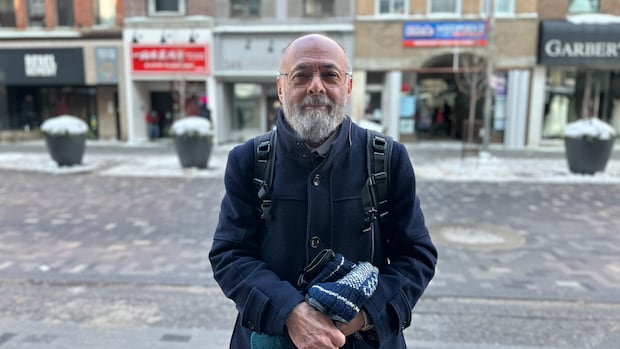
London researcher explains why he was testing on dogs
Frank Prato discussed his controversial studies inducing heart attacks in canines during an exclusive interview with CBC’s London Morning host Andrew Brown while defending his research importance along with disputing whistleblower claims.“That’s a better way to advance human medicine than using any animal model,” he stated.
If so, does he mean researchers should find volunteers willing to restrict blood flow during studies? No-but Fenton wants more proof showing Prato’s approach couldn’t include patients already suffering from heart disease or those who’ve had previous heart attacks instead of relying solely on healthy canine subjects without consent.
“Pondering ‘Was this necessary?’ comes into play here because we’re inflicting harm upon these animals,” explained Fenton.
He noted there’s an ethical principle within medical ethics regarding animals known as “duty to repair.” He feels all tested animals within Lawson’s studies should ideally be adopted out afterward.
“If we hold onto them waiting for another use or euthanizing them then we’re stripping everything away instead providing some benefit,” he pointed out.
During discussions with others, Prato confirmed they eventually euthanized all participating dogs utilized throughout their trials.
“We’ve had unfortunately euthanized because you can’t develop new technology if you don’t analyze tissues accurately,” stated Prato elaborating further saying: “You can’t just apply findings directly onto humans hoping outcomes align; solid proof must exist.”
Source link


