




What Sierra Colvin needs this season is someplace heat the place she will be able to stick with the folks she trusts most — her group from the streets.
Colvin, 29, lives unhoused in Hamilton.
“I might prefer to get off the road, particularly in wintertime,” she instructed CBC Hamilton on a bitterly chilly day in early December. Colvin was visiting with associates on a sidewalk close to Metropolis Corridor and the Hamilton YWCA.
It may be a tough option to determine between staying in an encampment with the individuals who help her and sleeping inside at a shelter, the place genders are separated and there is not all the time sufficient area to accommodate associates collectively.
“If I am in a shelter with all of the folks I’ve on these streets proper now, I’d truly actually recognize it,” Colvin mentioned.
Sierra Colvin, 29, lives unhoused in Hamilton, and says she would keep in a shelter if she may very well be there together with her associates. (Saira Peesker/CBC)
In December, Mayor Andrea Horwath mentioned the town will probably be trying to put an finish to tents in parks after a choose dominated Hamilton’s earlier encampment ban wasn’t infringing on Constitution rights. The town’s strategy centres on plans to accommodate extra folks in an expanded shelter system.
“What our metropolis is doing is making an attempt to get to a spot the place we not have tents in parks,” Horwath mentioned.
However encampment residents say lack of availability is not the one factor retaining them out of the shelter system.
On a current go to to a number of encampments in downtown Hamilton with volunteers from the Substance Overdose Prevention and Training Community (SOPEN), round half a dozen residents instructed CBC Hamilton they face obstacles to utilizing shelters that embody:
Concern of theft, some based mostly on previous expertise. Issues over being separated from companions, pets or shut group members. Being on shelter exclusion lists associated to drug use or previous incidents. Lack of awareness of the place there’s availability and methods to entry companies. 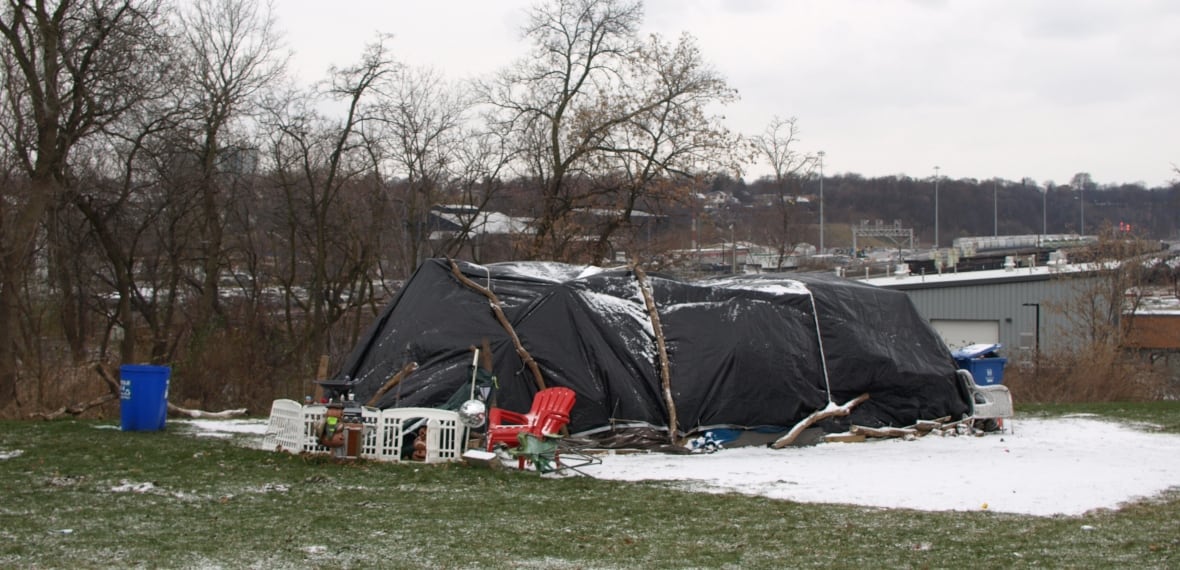 An encampment at Bayfront Park is seen on a chilly day in December 2024. Hamilton mayor Andrea Horwath says the town goals to finish park encampments. (Saira Peesker/CBC)
Colvin mentioned being surrounded by group can typically be extra necessary than a mattress.
“A few of these encampments are heat, they’re homey they usually’re capable of truly [understand] you,” she mentioned.
‘I do not even know methods to get on the record’
In 2024, Hamilton council accepted 272 new shelter beds, though solely 107 are operational to date, in keeping with the town’s web site as of Dec. 23. But to return are one other 85 in indoor shelters and a deliberate 80-person out of doors website that includes tiny houses geared to {couples} and other people with pets, which was initially slated to be prepared in December however has confronted a number of delays.
As soon as accomplished, the town could have 612 shelter beds in whole, basic supervisor of wholesome and secure communities Grace Mater instructed reporters at a information convention in December. In response to metropolis information, there are 1,592 identified people who’re at present “actively homeless.”
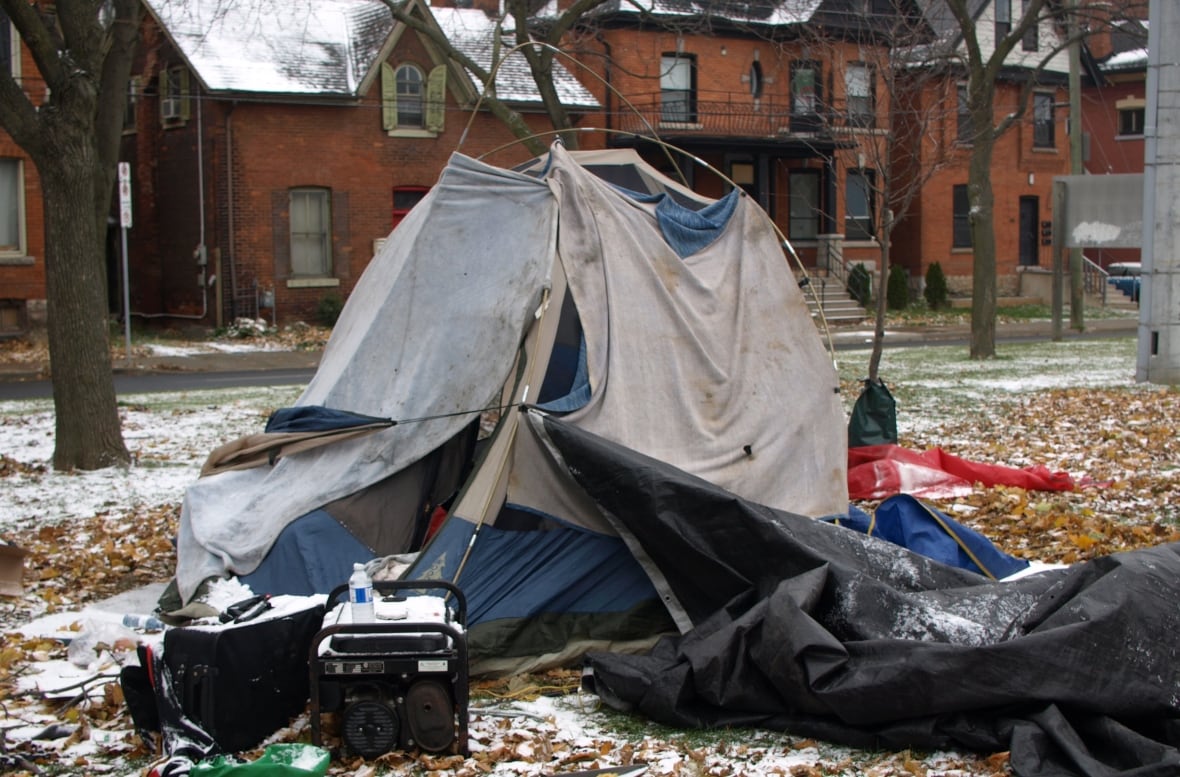 A generator sits beside a tent in disrepair at an encampment on the base of the Claremont Entry in Hamilton. (Saira Peesker/CBC)
Not one of the encampment residents who spoke with CBC Hamilton in December knew in regards to the new indoor shelter beds. Some had heard in regards to the tiny houses however did not know methods to apply.
Kimmy Taylor, 52, lives in a tent close to Metropolis Corridor, and has been on the streets since 2014 after fleeing an abusive husband with nowhere to go. Her two kids are additionally on the streets, and the household was separated once they initially tried to hunt shelter, so now “house is a tent,” she mentioned.
Taylor, who had simply gotten out of the hospital after per week as a result of an antibiotic-resistant staph an infection in her leg, says she has been assigned to “each kind of outreach employee.” She says none have been capable of finding her and her kids housing. “It is simply moving into a giant circle of nothing,” she mentioned.
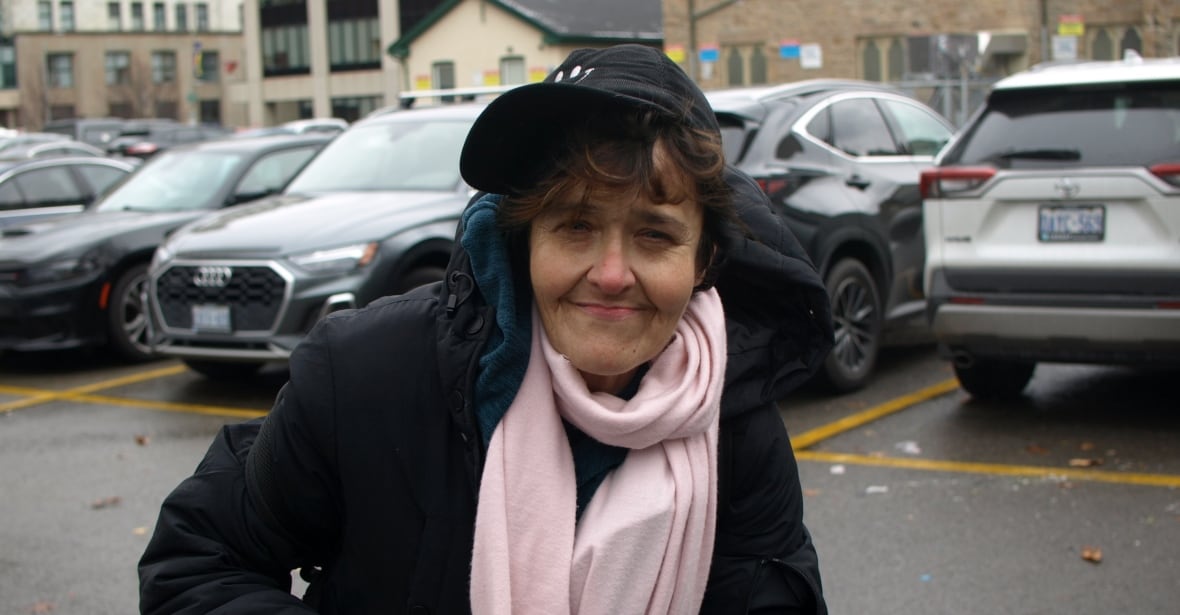 ‘House is a tent’ for Kimmy Taylor, 52, however she’d love to maneuver into the town’s new tiny-house shelter together with her children when it opens. (Saira Peesker/CBC)
She’s heard in regards to the out of doors shelter and would “love” to reside in a tiny house together with her kids. “I do not even know methods to get on the record.”
Metropolis spokesperson Lauren Vastano instructed CBC Hamilton in an e mail that “outreach workers attend every encampment recurrently to attach with people, guarantee websites are compliant, share info, and help them of their housing journey.”
She mentioned the town’s Housing Centered Avenue Outreach Crew is triaging referrals to find out who will get positioned within the tiny houses.
‘Persons are left with little or no selection’
CBC tagged together with SOPEN volunteers Kim Ritchie and Aaron Simkin that day, as the 2 visited encampment residents, handing out hurt discount provides in addition to Tim Hortons present playing cards, winter hats and t-shirts that mentioned “Good folks use medication.”
 Aaron Simkin was unhoused, and now advocates for others in that place, and volunteers with the Substance Overdose Prevention and Training Community in Hamilton. (Saira Peesker/CBC)
Ritchie would strategy a tent yelling one thing pleasant, like “anyone house?”
As a rule, she was met by silence, however typically somebody would reply, and was nearly all the time grateful for a few of what the volunteers have been providing. A number of folks she spoke with appeared unwell, or had been woken up from sleeping. Most didn’t wish to be recognized in an article.
One woman instructed Ritchie that her husband, who was inside their tent, had a damaged hip. One other resident reported {that a} neighbour’s tent had just lately burned down. Ritchie mentioned these dwelling in tents are sometimes pressured to decide on between freezing to dying and the risks that include a heater, which embody fires but additionally carbon dioxide poisoning. She mentioned the tents she visits common about 4 occupants every, for physique warmth.
“Sleeping in tents and dwelling a life like that’s actually laborious on the physique, however individuals are left with little or no selection,” mentioned Ritchie, who grew to become homeless as an adolescent after her mom died and lived on the streets for about 15 years.
“Shelters usually have actually restrictive insurance policies and guidelines that some folks cannot abide by. Exterior of that, folks do not wish to depart their spouses. Individuals do not wish to depart their animals.”
 Some encampment residents mentioned they don’t search shelter areas as a result of they consider there’s an excessive amount of theft inside them. (Saira Peesker/CBC)
‘I did not fail, society failed me’
Ritchie mentioned many drug customers do not go into shelters as a result of they cannot use medication there, one thing unlikely to alter with the shelter system growth.
Metropolis spokesperson Vastano shared that the brand new out of doors shelter was designed to accommodate individuals who face obstacles – “this consists of lodging for {couples}, pets, and safe storage for belongings” – however didn’t reply to questions on drug use.
Ritchie added that unhoused drug customers, already closely stigmatized, face even additional marginalization now that Hamilton’s secure consumption website is slated for closure by March 31 following a provincial edict.
“If we do not have a secure place to make use of, you are going to use the place you’ll be able to,” she mentioned. “I can let you know for myself, as an individual who’s a former intravenous drug person, that this metropolis was my… injection website. And if I had entry to a secure injection website, I would not have the scars on my physique or the bodily well being stuff I do now.”
 Kim Ritchie was unhoused for 15 years, and says there are such a lot of extra obstacles to ending encampments past opening new shelter areas. (Saira Peesker/CBC)
Ritchie and Simkin mentioned they do not consider shelter areas or new restrictions can achieve eliminating park encampments, suggesting as an alternative a set of different measures addressing the basis causes of homelessness, together with low-barrier housing, social help charges that really cowl lease with some cash left over, and serving to marginalized folks construct and preserve communities.
“It is unhappy that we’re heading to this place the place we’re going again to, ‘If you happen to’re poor, we’ll positive you and we’ll provide you with trespass notices,'” mentioned Ritchie.
“Being houseless is not a private failing, it is a societal one, and I really want folks to get grounded in that. I wasn’t a failure as a toddler who was orphaned and misplaced all my acquainted kin and was on the road. I did not fail, society failed me in these moments.”


