



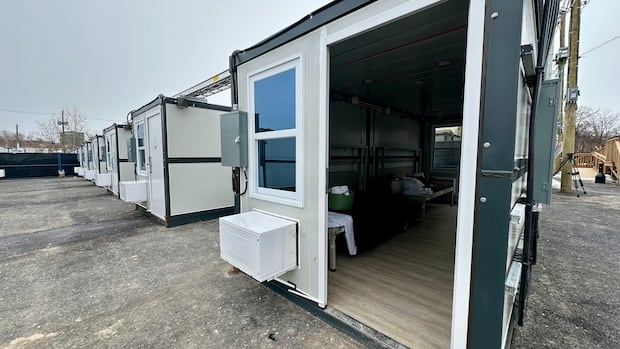
A review of Hamilton’s outdoor shelter project revealed that during the construction of the shelters, “urgency overrode the importance of due diligence and good governance.”
As stated by Hamilton’s Office of the Auditor General (OAG), the project faced challenges including “a lack of accountability, governance and control mechanisms,” poor oversight regarding expenses, and an inability to effectively understand and manage risks.
Poor contracts along with insufficient oversight and experience “created a permissive environment where vendors had the opportunity to ‘make a meal’ of the project while the city and its taxpayers absorbed the financial and operational fallout,” according to the OAG.
The audit, which included 11 recommendations for city managers, was made public on Thursday in advance of a Jan. 15 Audit, Finance and Administration Committee meeting.
A report prepared for that committee by the OAG suggests directing the city manager to respond to these recommendations and report back by July “on the nature and status of actions taken in response.”
Ultimately, it will be up to the 10 councillors on that committee to decide whether or not to approve this recommendation.
CBC Hamilton reached out to city officials for their response regarding the audit findings. In a statement released Friday evening, city representatives mentioned they would review the report with council and “discuss findings as well as opportunities for improvement through appropriate channels.”
They also defended their efforts on this project, stating “it is important to recognize that this was a large, complex initiative aimed at addressing immediate homelessness and housing crises. Decisions were made in good faith based on available information at that time with an intent to serve community needs,” shared spokesperson Lauren Vastano via email on behalf of the city.
}’document. body. style. background Color = “black”‘}}
Audit started in 2025 after complaints
This delayed initiative led to establishing an outdoor compound on Barton Street W., intended as temporary housing for up to 80 individuals who couldn’t use traditional emergency shelters. Social service provider Good Shepherd oversees operations there. The facility fully opened last March and includes multiple pre-fabricated cabins along with common buildings. It represents Hamilton’s first such effort but follows similar projects across communities like Kitchener-Waterloo and Kingston centered around tiny homes. In May, CBC Hamilton reported that capital costs skyrocketed from $2.8 million nearly tripling to $7.9 million – resulting in being $5.1 million over budget. City councillors previously raised concerns about Micro Shelters, which supplied tiny homes; it was discovered that this Brantford-based company sourced units from China through an American company. The auditor general initiated a value-for-money audit in 2025 following a surge of complaints about fraud and waste related to this project, according to their office. The aim is for “the city will capitalize on experiences gained and lessons learned,” they noted. The audit utilized various information sources including reviews of council reports, contracts, invoices, communication records, construction documents along with interviews with staff members conducted under oath. A legal opinion concerning contract management was also part of this audit but isn’t being released publicly by the city. The OAG summarized its findings into themes such as inadequate research efforts, planning deficiencies, insufficient risk understanding plus delays communicating updates with city council members. The OAG highlighted how Hamilton’s Housing Services project team lacked experience managing construction initiatives while pointing out numerous oversight problems – noting that their contracting strategy was “not optimal” likely leading to rising costs overall. The purchase order used for acquiring shelter units instead lacked proper contractual structure leaving little room for holding vendors accountable according to the OAG;.., moreover being vulnerable to uncontrolled cost increases due to inadequate contract terms laid out originally regarding monitoring expenses incurred throughout construction activities….... The City paid nearly $1 million prior any staff physically assessing whether units met safety requirements enabling them legally established standards when receiving final payment totaling approximately $2.3M without having inspected anything beforehand confirming what had been delivered aligns accordingly as specified within agreements entered into place beforehand!..beyond expectations arrived needing costly modifications subsequently recognized several months later upon realization..”}.:::::</em>< em>< em>nn##“{some text}”nn At least all involved parties admit there were difficulties encountered during execution phases considering urgency forced quick decisions ultimately failing adequately carrying through required processes expected overseeing major undertakings!The associated reference can be reviewed here.>.>.;). / >;)


