



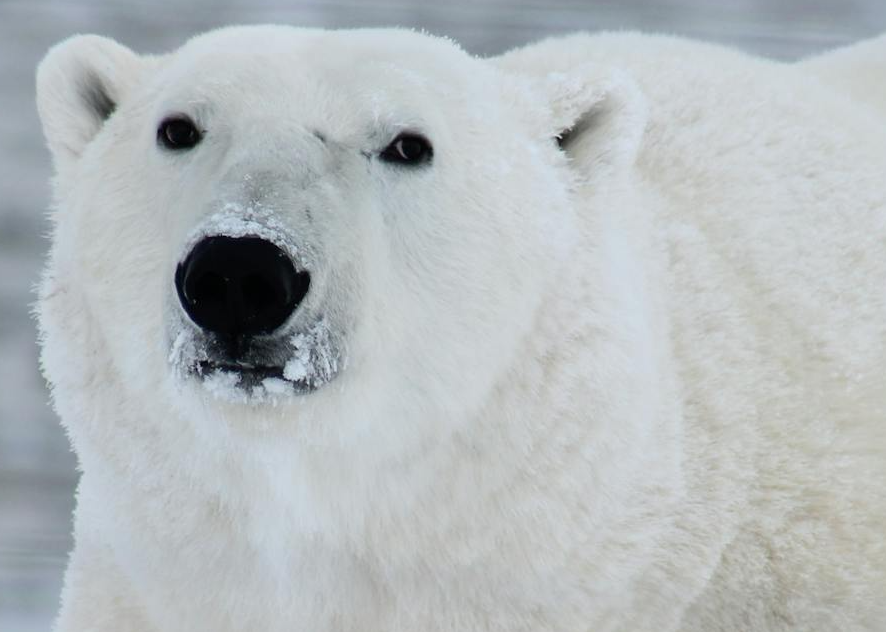
Who would have thought {that a} landlocked college in southern Ontario could be residence to a stay polar bear for 5 years
You’ll by no means assume {that a} landlocked college in southern Ontario would create a marine biology division on campus, a lot much less home a dwelling polar bear for 5 years. However that’s precisely what the College of Guelph did throughout the1960’s and 1970’s.
Throughout the zoology division, underneath what would ultimately change into the School of Organic Sciences (CBS), professor Keith Ronald began with putting in a tank for one seal and one otter in an space referred to as the seal ponds in 1966.
The seal ponds and one other constructing behind the OVC housed as much as 26 seals throughout its 30 years of operations from 1966-1997 (At Guelph, 1983.
The seals turned the main target of worldwide consideration when the college hosted the primary Worldwide Symposium on the Biology of the Seal in August 1972. The work that professor after which dean Keith Ronald printed, in addition to quite a few different researchers from their work with the seals, has been invaluable to the worldwide analysis neighborhood. Guelph’s seal analysis program resulted in about 200 tutorial papers and drew some 40 graduate college students to review at Guelph.
When School Royal was in its fifty fifth yr the seals have been on show to most of the people.
One article within the Guelph College Information Bulletin from March 8, 1979 highlighted a uncommon occasion.
One of many three captive harbor seals on campus was anticipating. This was the primary of its variety in a scientific laboratory facility. This system went on to have many extra seals born in these services earlier than this system folded.
Whereas the seals are a outstanding story in their very own proper and this system “made Guelph the leading centre for marine mammal research in the world” in keeping with dean Ronald, it is probably not widespread data to these outdoors the CBS neighborhood.
Whereas the muse of this story lies within the historical past of seals, the actual story is about Huxley.
Whereas taking an environmental sciences class, I first heard the hearsay {that a} polar bear named Huxley had as soon as lived within the seal ponds among the many bushes in a caged space. After some investigation, these rumours appear true.
Canadian Wildlife Providers numbered him CWS007, however regardless of a quantity that may lead you to imagine he was a secret spy, Huxley as he got here to be, was something however that. He was named after Julian Huxley, who was the godfather of researcher Robin Finest, who tragically handed away in his 30’s. To maintain Huxley from being euthanized by the Toronto Zoo, Robin labored with him when he was delivered to Guelph.
Huxley’s outstanding story started within the olar bear capital of the world in Churchill, Manitoba, again within the early 1970’s. I had the pleasure of talking with James Raffan, writer of Ice Walker, printed in 2020. He labored with Huxley throughout his time in CBS alongside Robin Finest and dean Keith Ronald amongst many others.
He instructed me that Huxley was a nuisance bear who had spent a while in bear jail in Churchill. That is widespread apply in a neighborhood the place folks could be harm or killed by a polar bear that’s not deterred by the people that stay in these areas. The bear jail is a humane means of conditioning a bear to concern being captured after which releasing them additional away to hunt and hopefully not return to the city. Sadly, the rationale the bears come into city within the first place is the supply of meals that they discover within the city dump, so it nonetheless attracts them regardless of this deterrent.
A New York Instances article written by Jay Walz in October 1971 talked about that 24 polar bears had change into a nuisance within the city and have been airlifted to distant places over 200 kms away. This was performed by the Worldwide Fund for Animal Welfare to maintain the bears from being euthanized by the federal government of Manitoba.
Surprisingly, inside 15 days, two of the bears had made their means again to city. Polar bears journey at a typical price of 8 km per day, however these two had averaged 16 km per day to return to their feeding floor, the city dump. Jack Howard, appearing chief of the wildlife operations for the Manitoba authorities at the moment was astonished by the “speed and stamina displayed by the returning animals”.
Whereas I can not verify that Huxley was one of many two returning bears, he was thought of one of many nuisance bears throughout that reporting, and would have been euthanized had the College of Guelph not stepped in.
In February 1973 the U of G Information Bulletin reported that Huxley had made worldwide headlines the yr earlier than, probably alluding to the truth that he and one other bear on this story have been in reality the 2 who had returned. It went on to state that he was now “working for the University of Guelph”.
The 4 yr outdated male weighing virtually half a ton turned a analysis venture together with one other bear. He underwent a collection of checks in a Churchill check facility to measure his physiological responses throughout varied actions. A few of these on a 4,000 pound customized constructed treadmill that would produce speeds as much as 20 miles per
hour that was made in Cambridge and shipped to Churchill (Acton, 1975).
The analysis was to find out variations in response to temperature change and stress in a altering arctic surroundings. The venture was collectively financed by the Canadian Wildlife Service, authorities of Manitoba, World Wildlife Fund Canada and the Canadian Nationwide Sportsmen’s Present. It was reported that after the checks have been carried out he could be launched again into the sub-Artic or retired to the newly established Toronto Zoo.
On June 7, 1973, the Toronto Zoo acquired Huxley, together with the opposite polar bear named Mr. Pooh. His new residence was going to be opening its doorways in 1974, however poor Huxley didn’t get together with the opposite bears that had been donated to the zoo.
On Oct. 26, 1974, Huxley was shipped in a wood crate westbound throughout the 401 and dropped on the U of G’s doorways. His polar bear companion, Mr. Pooh was later shipped to the San Antonio Zoo in April of 1978, the place he lived out his days till he handed in April 1999.
In an article printed within the Acton Free Press newspaper on Feb. 19, 1975 there was a plea made for donations to construct a cage for Huxley. If the cash couldn’t be raised the Toronto Zoo would euthanize him . One other article within the Waterloo Area File requested for a similar factor. This text additionally talked about that Huxley had been dwelling in his crate for a while (Waterloo Area File, 1975).
An nameless former worker instructed me that Huxley resided inside the seal ponds in a secured enclosure, however that his roaring was attracting an excessive amount of consideration and it turned a security concern. One other individual confirmed Huxley lived there for a short while as effectively.
Finally Huxley had a cage made for him and he was moved as soon as once more to a secured constructing behind the OVC referred to as the Zoology Annex III constructing. When James Raffan started his research in marine biology it was across the time Huxley was saved from being euthanized and delivered to Guelph. James performed gentle checks with the bear and the bear was taught to nudge a sure or no paddle to acknowledge if he noticed the sunshine or not.
The constructing he was housed in was secured with a double door entry and Huxley was inside a steel cage.
James deeply regrets watching Huxley develop increasingly agitated because the time glided by, and ultimately left the lab surroundings to analysis polar bears within the wild. To today it’s one thing that he deeply regrets and he devoted his novel to Huxley.
Info from 1975-1979 has been more durable to come back by as many of the researchers who labored straight with Huxley have sadly all handed. Every little thing was performed to spare Huxley from being euthanized, and any ethics board we’d have had again in these days would have oversight into how Huxley was handled, and I’d wish to imagine that therapy was as humane because it might be.
I can verify that Huxley was lastly put to relaxation in 1979. I’m instructed his pores and skin hangs inside the partitions of the vertebrate laboratory constructing on campus, though I’ve been unable to view it.
Huxley was a outstanding examine topic, and his time with the college ought to be acknowledged formally together with the seals within the seal program. The seal ponds, the place he resided for a short time nonetheless stays, however is in a dilapidated state.
It was lately found right here that quite a few animals are making the fenced off grounds their habitat, together with a uncommon spatterdock darner dragonfly that “is likely to be listed as threatened or endangered in the future”. The dragonflies use the seal ponds for breeding, so overlaying them over would intervene with the survival of their offspring.
Previous suggestions have been prompt for this website as talked about within the 2004 Arbortetum Grasp Plan the place it was acknowledged that it’s “decommissioned, undergo landscape restoration and revert to Arboretum use”.
The positioning ought to be reviewed for additional conservation efforts to guard the biodiversity current, together with the uncommon dragonfly, and likewise to fund an academic program to honor Huxley and the seal progam, together with plaques and knowledge indicators. Conversations at current time are pointing to a course of to do exactly this at a later date, however nothing formally has been put into plan.
Will probably be an honor for me and others to see the world represented as an academic website that gives homage to a bear who gave his freedoms for the pursuit of science.
Sarah Everley is a graduate of the College of Guelph


