




politics
The Canadian Navy’s patrol ship HMCS Harry Dewolf in the Davis Strait during Operation Nanook-Tuugaalik. Brendan Gamache / the Canadian Armed Forces
Canadian Foreign Minister Anita Anand is urging NATO to create a security and defense plan for the Arctic. According to a researcher, this call stems mainly from actions taken during the Trump administration.
“70% of Canada’s coastline lies in the Arctic, making the region critical to our sovereignty and national security. As threats in the Arctic continue to evolve, Canada is advocating for a strong NATO strategy to safeguard the region,” Canadian Minister of Foreign Affairs Anita Anand recently stated on X.
In an interview with the Globe and Mail, Anand mentioned that this strategy should be based on a comprehensive threat assessment for the area, particularly concerning Russia.
“There is one country that has 17 military bases in the Arctic and has been approaching Canada’s airspace and maritime domain consistently, and that is Russia,” she emphasizes.
However, it’s not just Russia that poses a threat; Rob Huebert believes it’s also about how the Trump administration behaved that inspired this initiative from Canada.
He is a professor of political science and director of the Centre for Military, Security and Strategic Studies at the University of Calgary.
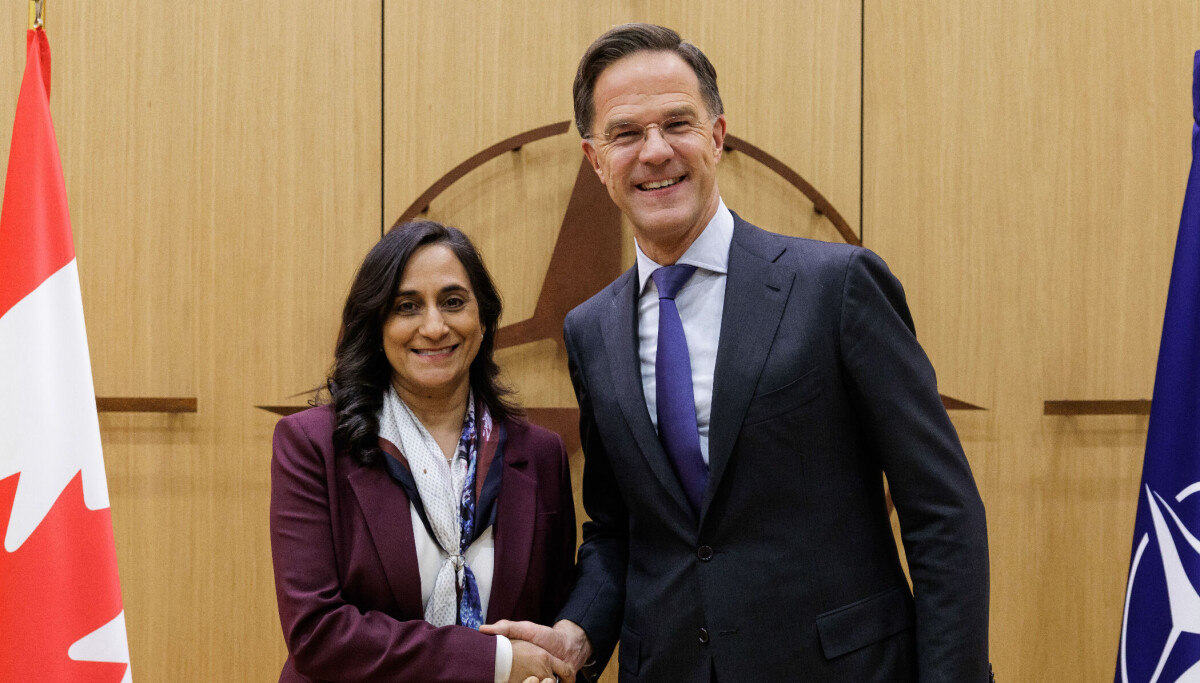
Canada’s Foreign Minister Anita Anand together with NATO Secretary General Mark Rutte. NATO
Changed threat landscape
“Canada is now calling for a NATO strategy for the Arctic mainly because of disruption caused by Trump’s policies,” Huebert tells High North News as he continues:
Rob Huebert, Professor of Political Science and Director of the Centre for Military, Security and Strategic Studies, University of Calgary. University of Calgary
“Traditionally, Canada has been against focusing NATO on the Arctic due to worries about sovereignty. European nations have sometimes argued that all open Arctic waterways should be considered international waters. These positions clash with Canada’s view that Northwest Passage falls under internal waters.”
“Later on, Trump’s remarks about annexing Canada along with U. S. economic policies towards Canada made politicians believe that America could be a bigger threat to Canadian Arctic sovereignty. Meanwhile, Canadian policy documents like revised Defense Policy and Arctic Foreign Policy still recognize threats posed by Russia and China in this area.”
NATO Support Likely
The professor thinks other NATO countries will likely support Canada’s push.
“Considering Trump’s comments regarding Greenland and Denmark, I think European nations-especially those in Northern Europe-will welcome an increased role for NATO in the Arctic,” he states.
“We must remember that NATO has always had involvement in this region. During Cold War times, both Canada and Britain were responsible for providing military assistance if Norway faced an invasion from Soviet forces. Later on, Norway tried to shift NATO’s focus more towards the Arctic but didn’t find much acceptance.”
This time around though, he feels there could be wider support available.
NATO Collaborating with NORAD
<p huebert also suggests that NATO should strengthen its connection with North American Aerospace Defense Command (NORAD), which oversees aerospace warnings for North America jointly operated by both countries.
“The real challenge facing Nordic countries along with North America is figuring out how they can upgrade their military capacities while dealing with long-term Russian threats-and simultaneously addressing short-term disruptions caused by American policy,” he points out before adding:
“What we truly need here-as I see it-is better integration between NORAD & NAT O. With advancements happening quickly regarding Russian missile capabilities plus lessons learned from Ukraine’s situation , ensuring smooth collaboration between these two organizations will greatly enhance North Atlantic security efforts. Before issues raised by Trump emerged , attempts were underway aimed at improving Greenland’s role within NORAD. Those initiatives need continuance.”
Source link