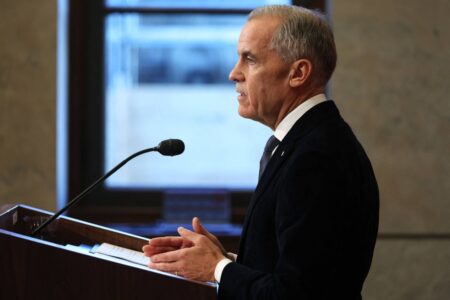
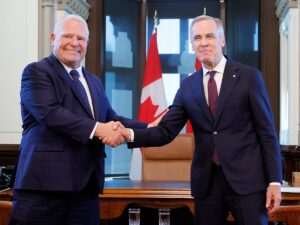




Canada’s prime minister says the U. S. aimed to limit Canada’s ability to make trade agreements with other nations.
President Donald Trump’s recent trade dispute with Canada has a distant influence at its core: China.
As Washington urges Ottawa to do more to block Chinese steel, aluminum, and other products from entering the U. S. market through North American supply chains, Canada is looking to strengthen economic relationships with Beijing, adding a new challenge to already strained trade discussions.
The main issue in this conflict is transshipment – moving goods through another country, sometimes after minimal processing, before they reach their final destination. U. S. officials worry that steel and aluminum made in China or elsewhere could be processed in Canada or Mexico and then enter the United States as regional content.
TRUMP JUST EXPANDED HIS TARIFF PLAYBOOK WITH A POWERFUL TRADE WEAPON NO PRESIDENT HAS EVER USED
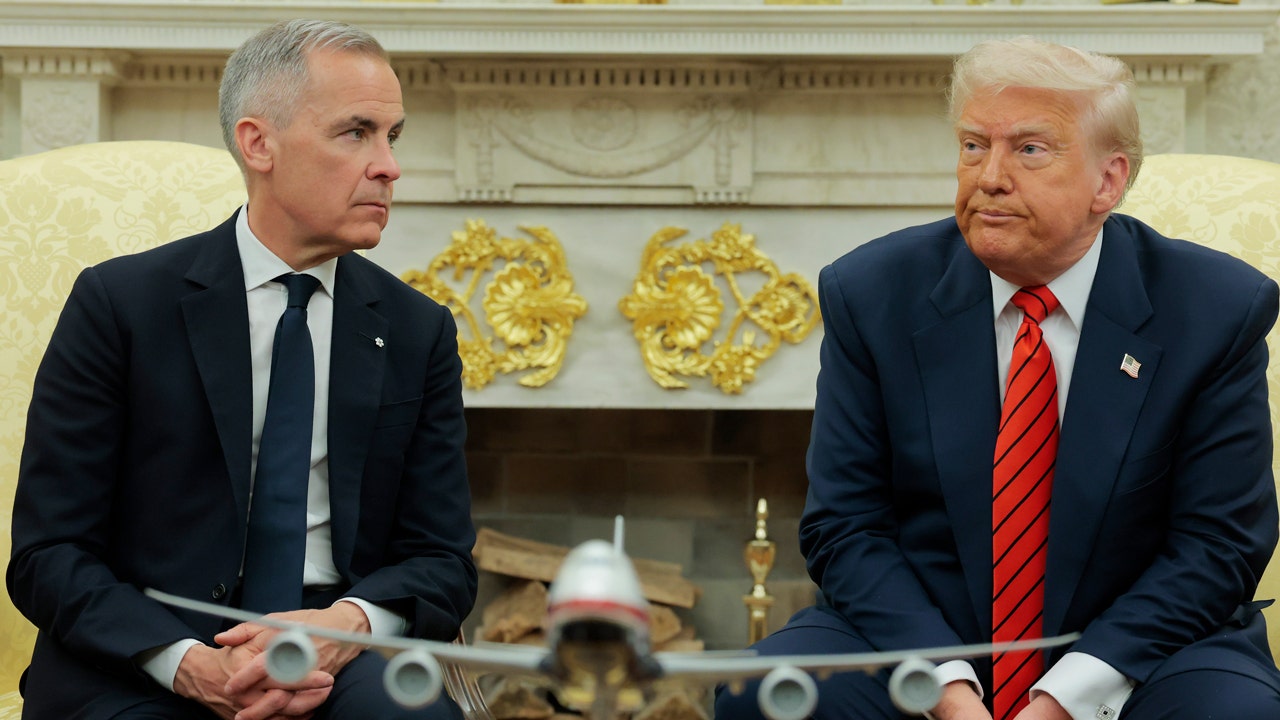
President Donald Trump and Canadian Prime Minister Mark Carney have exchanged criticism following the breakdown of U. S.-Canada trade talks. (Anna Moneymaker/Getty Images) / Getty Images)
The U. S. and Canada addressed that concern in a 2019 joint statement resolving an earlier dispute over steel and aluminum tariffs. The two countries agreed to stop steel and aluminum made outside the U. S. or Canada from being transshipped into either nation, stating they could differentiate between steel melted and poured in North America versus steel produced elsewhere.
U. S. trade advocates now argue that Canada should accept stricter protections as Washington tries to limit China’s involvement in vital manufacturing supply chains.
Canada insists it’s already taking steps to prevent foreign steel from overwhelming its market. Ottawa restricts some steel imports from countries without a free-trade agreement, including China, and imposes a 50% surcharge once those limits are surpassed.
A POPULAR COCKTAIL HAS A TRUMP TRADE PROBLEM YOU PROBABLY DIDN’T KNOW ABOUT
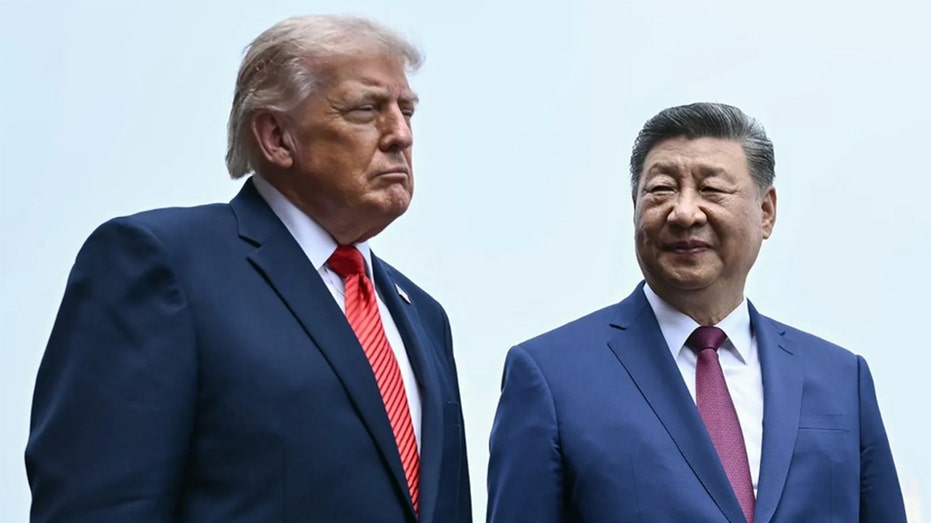
China’s President Xi Jinping and President Donald Trump visit the Temple of Heaven on May 14, 2026, in Beijing, China. (Brendan Smialowski/Pool/Getty Images / Getty Images)
However, Canada has also taken steps to boost its trade ties with Beijing.
This past March, China agreed to reopen its market for various Canadian farm products and seafood exports like canola, peas, lobster, and crab. In return, Canada set an annual quota of 49,000 vehicles for Chinese electric vehicles at the 6.1% most-favored-nation tariff rate while removing its previous 100% surtax.
Additionally, Canada extended tariff relief for certain Chinese steel and aluminum items it claims are scarce. Officials state this is part of a larger effort to diversify Canada’s trading relationships since China is Canada’s second-largest merchandise trading partner.
CLICK HERE TO DOWNLOAD THE FOX NEWS APP
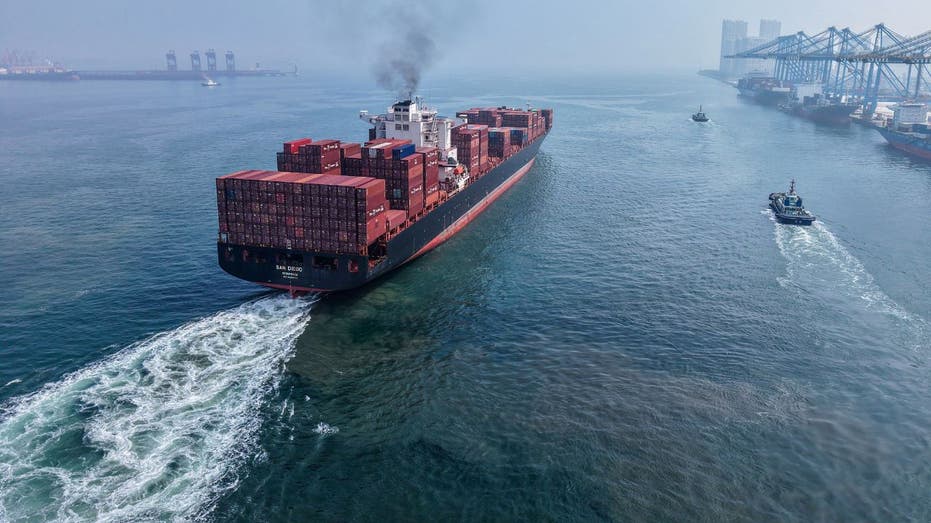
A container ship sails out of the port in Qingdao in China’s eastern Shandong province on August 7, 2025. (STR/AFP/Getty Images / Getty Images)
This situation has sparked criticism from Washington that Canada seems to be going against the Trump administration’s goal of creating a more China-resistant North American trading bloc.
The pressing question for Trump is whether Canada will adopt a similar stance – or if its efforts to enhance trade with Beijing will become yet another point of tension in an already fraught relationship.
Source link