





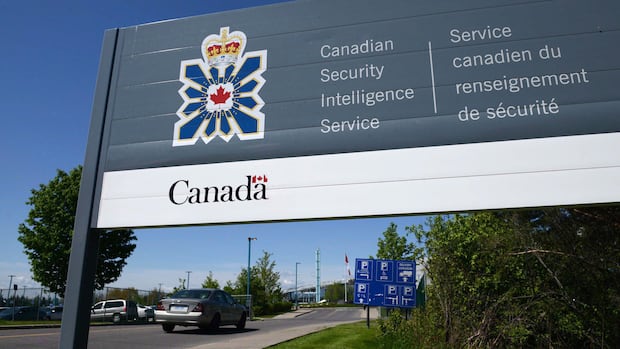
The Canadian Security Intelligence Service is revamping its hiring approach to better align with operational needs, as indicated by internal emails – a clear sign that the agency is still grappling with recruitment challenges.
CSIS implemented a variety of changes earlier this year to “meet operational needs and emerging demands,” according to documents obtained by through an access to information request.
“These changes represent a shift in how we recruit, classify, deploy and empower our people,” reads one of several emails sent to managers at CSIS.
“These developments and initiatives will enable us to be more efficient and effective … and better positioned to meet the demands of our changing, more challenging environment.”
Most of the adjustments are focused on tackling “structural bottlenecks,” boosting external hires, and modifying processes to reduce the time from recruitment to operational deployment, as noted in the documents.
This includes forming a new team specifically for external recruitment aimed at bringing in talent “efficiently and responsibly,” according to the documents.
As of March 2026, CSIS’s hiring ratio stands at 85 percent internal appointments compared to 15 percent external hires, the documents reveal. The emails advise managers to seriously consider external candidates for certain specialized roles.
Unlike other government jobs, most positions at CSIS necessitate enhanced top secret clearance – an extensive process that deeply investigates a candidate’s background, character, family history, and financial status that can take between 12 to 18 months.
CSIS aims for more outsourcing
While some parts of the documents were heavily redacted, they also indicate a move towards quicker deployments.
The updates would allow candidates to apply directly for their preferred regions which CSIS claims would facilitate targeted hiring for local vacancies. They are also adjusting official language requirements “where appropriate” and shortening training sessions,” according to the documents.
“It will empower us to recruit individuals who can fill critical vacancies in regions that will augment our operational capacity,” states one of the emails.
The documents suggest that this usually secretive agency is considering outsourcing certain recruitment tasks including preliminary screening, targeted recruiting efforts, and psychological assessment services.
WATCH | Canada’s security screening questioned after alleged spy arrested:
Canadian NATO spying suspect raises questions about country’s security screening
A investigation has identified Biwei Zhang as the Canadian woman recently arrested on suspicion of spying at NATO’s military headquarters in Belgium. According to her online resume, Zhang previously worked for both the Canadian Space Agency and Statistics Canada before her NATO internship. This case has sparked concerns over Canada’s security screening process for sensitive government roles.
The service has already ramped up its use of outsourced standardized testing tools intended to make the assessment process smoother. It’s also rethinking how it transitions co-op students into full-time roles, it stated.
CSIS is exploring options for acquiring new technology that “enables recruitment,” although details about what this might entail remain scarce.
The agency didn’t specify how many employees it aims to hire but mentioned it’s looking to fill vacant positions such as intelligence officers, engineers, analysts, IT professionals, communications experts “and more.”
“CSIS faces growing demands due to evolving security threats including espionage, foreign interference and terrorism,” said spokesperson Magali Hébert.
“So far, CSIS has continued attracting high numbers of qualified applicants for its work and has seen positive outcomes from its recruitment efforts.” p >
Staff shortages present risks: former analyst
Stephanie Carvin , a former CSIS analyst now teaching at Carleton University , pointed out that recruitment and retention have been significant concerns within the service for quite some time. p >
“Its unique value is that it has human intelligence officers going out , speaking in the community , getting information , developing relationships , developing sources. It can’t do that without people ,” she stated. p >
“When you have staff shortages , you have people working overtime , they burn out , they get tired , and that’s a risk for the organization.” p >CSIS Director Dan Rogers has made cultural change one of his main priorities at the spy agency. (Sean Kilpatrick/The Canadian Press)
As an intelligence agency partnered with Five Eyes , onboarding at CSIS will always be lengthy and demanding according to Carvin ; however ,”efforts towards efficiency are welcomed.” p >
“Someone can quit with two weeks’ notice; however it can take anywhere from one year up until two years before they’re replaced given security requirements ,” she added. p >
“The demands on service may have never been higher but simultaneously , their abilityto bring people in remains largely unchanged sincethe1980s.” p >
Another indication of concern regarding staffing levels is their initial decision against allowing employees access tothe government’s early retirement incentive. As reportedby in April,. CSISandothersecurityagencies like Communications Security Establishment communicatedtoemployees they’dnot accept applications citing”continuedoperationalpressuresandgrowthrequirements.” p >
Accordingtoan insiderwho spoke withthe Post., Privy Council Clerk Michael Sabia then intervened leadingboth agencies toretracttheir stance. Sabia views early retirement offersas”a golden opportunity tofreshen upthe mid- toseniormidlevelsforthepublicservice whilepromotingyounger bureaucrats.” p >