



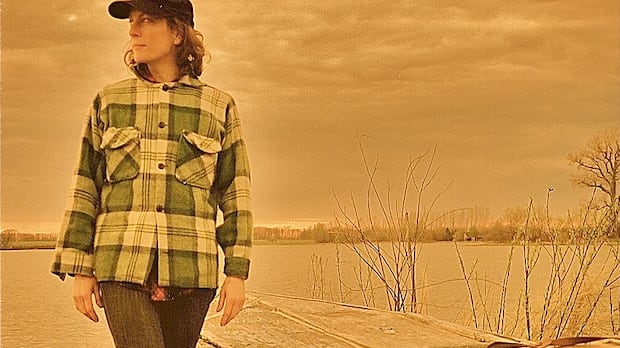
As singer-songwriter Sarah Harmer gets ready to accept the key to the City of Burlington – largely for her efforts in opposing quarry expansion on Mount Nemo – the outcome of that quarry situation is now up to the Ontario Land Tribunal (OLT).
Harmer will be celebrated by her hometown at a ceremony taking place at the Burlington Performing Arts Centre on April 16 at 7 p. m. This recognition follows her receiving the Humanitarian Award at the 2025 Juno Awards in March.
The award “recognizes an outstanding Canadian artist or industry leader whose humanitarian contributions have positively enhanced the social fabric of Canada and/or whose impact can be felt worldwide.”
“In 2005, Harmer co-founded Protecting Escarpment Rural Land (PERL), to stop a massive crushed rock quarry on Mount Nemo, part of the Niagara Escarpment, a UNESCO World Biosphere Reserve,” states the Junos’ website.
“In 2012, PERL played a key role at the Ontario Joint Board hearing, stopping Lafarge/Nelson Aggregates from destroying endangered species habitats, significant headwater wetlands, and safe and abundant drinking water.”
Harmer’s parents own land near the quarry site, which is next to the Mount Nemo Conservation Area where she spent her childhood.
The quarry, owned by Nelson Aggregates, is situated on the Niagara Escarpment in rural north Burlington, on 2 Sideroad between Cedar Springs Road and Guelph Line.
The proposal currently being considered by the OLT is Nelson Aggregates’ second attempt in two decades to expand its operation.
The OLT hearing began on March 4 and is set for a total of 60 days of hearings.
On Thursday, day 22 of these proceedings, Harmer was among many observers watching closely. The hearing includes expert testimonies backing Nelson Aggregates as well as local municipalities and advocates opposing expansion.
Harmer, who wrote “Escarpment Blues” about this issue, shared that she got involved through her mom and feels strongly about protecting nature.
![]() The Nelson Aggregates quarry in Burlington is seen from above in this drone shot. (Supplied by Reform Gravel Mining Coalition)
“We put a meeting together in 2005 and have been focused for many years on protecting well water, endangered species, clean air, and all the things we need to survive,” she told CBC Radio’s Here and Now in late March.
The Nelson Aggregates quarry in Burlington is seen from above in this drone shot. (Supplied by Reform Gravel Mining Coalition)
“We put a meeting together in 2005 and have been focused for many years on protecting well water, endangered species, clean air, and all the things we need to survive,” she told CBC Radio’s Here and Now in late March.
![]() Gord Pinard president citizen group Conserving our Rural Ecosystems stands outside entrance Nelso Aggregates quarry Burlington hoping expand.
Gord Pinard president citizen group Conserving our Rural Ecosystems stands outside entrance Nelso Aggregates quarry Burlington hoping expand.
(Saira Peesker/CBC) Pinard mentioned around forty witnesses are expected over coming weeks. Thursday’s proceedings were centered on Dr. Bev Wicks’ work-an ecologist hired by quarry proponents supporting their case. “She covers one significant topic,” noted Pinard; while cross-examination revealed some data used came from trespassing incidents earlier withdrawn testimony.” Pinard wants more people following what happens during these hearings.” “Our concerns revolve around water quality safety communities blasting trucking environmental factors including critical wetlands woodlands endangered species,” he explained.
Source link
Endangered salamander lives nearby
The company first requested an expansion back in 2004 but was turned down by Ontario’s Consolidated Hearings Board (Joint Board) in 2012 because “Nelson had not made sufficient provision for the protection of these unique ecologic and environmentally sensitive areas” which would intrude on habitats for Jefferson salamanders-an endangered species found there. In May 2020, they submitted another application for expansion. This new plan would extend into a field south of their current site and into part of Burlington Springs Golf and Country Club to its west. Alongside concerns regarding salamander habitats, locals worry about blasting happening closer to their homes as well as two nearby pipelines. They also fear extra truck traffic could harm groundwater quality that supplies their wells. Burlington City officials share similar worries. Last year its council unanimously passed a strong motion urging the province to reject Nelson’s proposal. Supporters of this project claim they will safeguard natural heritage sites and groundwater while arguing that benefits from extracting materials outweigh potential downsides. A spokesperson for Nelson Aggregates stated during a CBC Hamilton interview back in 2021 that dolostone extracted from this site is scarce but necessary for building infrastructure like roads and bridges. “It is highest-strength limestone you can get in Ontario… Where we would like to dig is one of few areas licensed for extraction.”40 witnesses scheduled over next two months
The OLT hearing should conclude around mid-June according to Gord Pinard from Conserving our Rural Ecosystems-a group involved with these hearings. This organization has provided information about schedules along with links related online meetings via its website.(Saira Peesker/CBC) Pinard mentioned around forty witnesses are expected over coming weeks. Thursday’s proceedings were centered on Dr. Bev Wicks’ work-an ecologist hired by quarry proponents supporting their case. “She covers one significant topic,” noted Pinard; while cross-examination revealed some data used came from trespassing incidents earlier withdrawn testimony.” Pinard wants more people following what happens during these hearings.” “Our concerns revolve around water quality safety communities blasting trucking environmental factors including critical wetlands woodlands endangered species,” he explained.
Source link


