



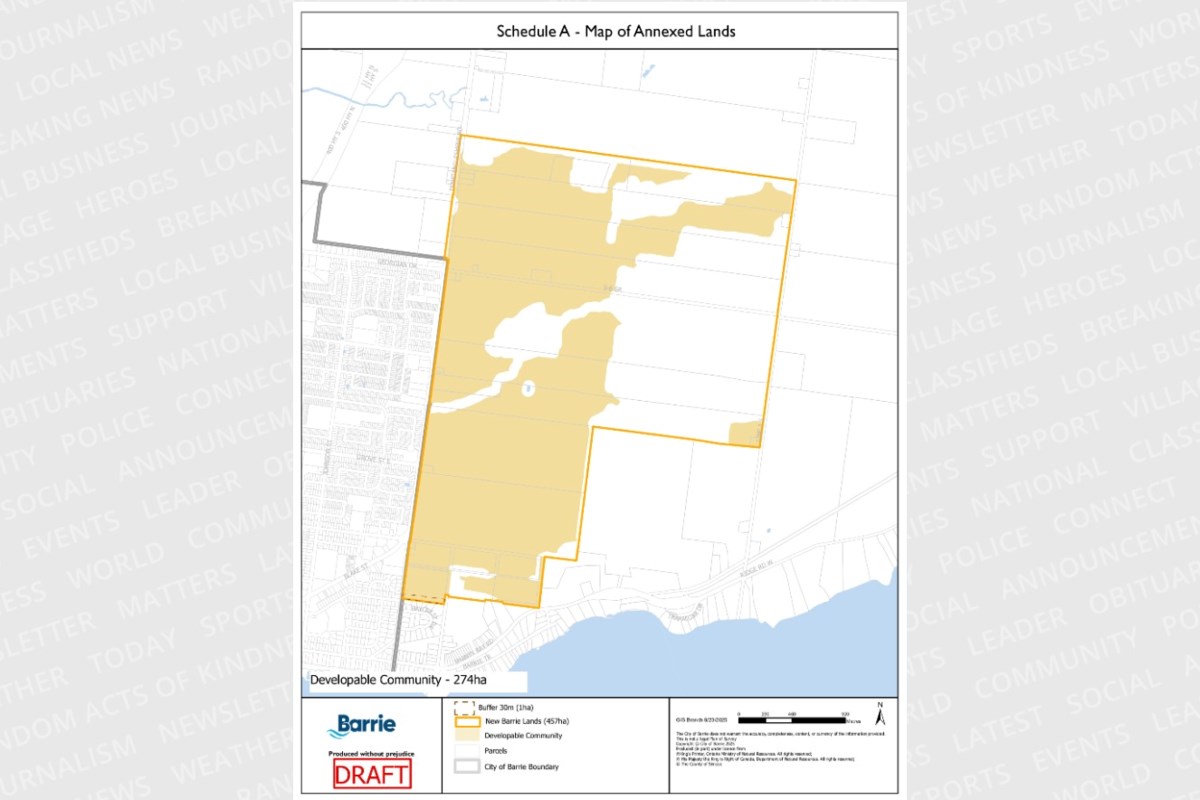
Over 4,000 acres of land in Springwater and Oro-Medonte townships would be added to Barrie if Bill 76 is passed.
Parts of Springwater and Oro-Medonte townships may soon become part of Barrie.
Today, the province presented Bill 76, known as the Barrie-Oro-Medonte-Springwater Boundary Adjustment Act, 2025.
This bill had its first reading in the Ontario legislature today, and a second reading has been scheduled.
The legislation allows for the annexation of sections from Oro-Medonte and Springwater townships into the City of Barrie, effectively concluding two years of discussions involving the three municipalities, the province, and Simcoe County.
Barrie Mayor Alex Nuttall expressed gratitude to the province for supporting this initiative aimed at bolstering the region’s economy.
“For too long, many Barrie residents have had to leave our community every day to find good-paying jobs,” he said. “This proposed legislation gives us the land we need to change that.
“It will help attract new employers, expand our local job market, and create the kind of long-term, stable employment opportunities that allow families to build their lives right here at home,” Nuttall said.
If Bill 76 becomes law, more than 4,000 acres from Springwater and Oro-Medonte would be included in Barrie’s limits.
“To support this growth, our government is working with the Townships of Springwater and Oro-Medonte and the City of Barrie through this legislation to transfer 1,673 hectares of unused land.”
“This transfer will unlock 8,000 homes and ensure Simcoe Region can continue to expand infrastructure while encouraging economic development for families looking to settle here in future years.”
An additional 803 hectares of undevelopable land meant for amenities and recreation access will also be transferred. Most of this non-development land comes from Springwater and includes plans for a public park managed by Barrie.
Other undevelopable areas consist of roads/right-of-ways, buffers from active farmland, hazard lands, along with other environmentally sensitive features.
The standard procedure for a government bill from this stage involves scheduling time for a second reading debate in front of all members present in the house.
A vote will follow after some time to refer it to a committee for detailed examination; hearings may occur along with potential amendments.
This process leads back to another vote in-house during third reading before receiving royal assent that finalizes it into law.
Source link
Source link