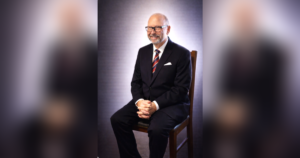






Growing up, Youssef Helwa (MASc’17) was fascinated by the stories his mother shared about her work as a surgeon and the patients she helped. These early discussions ignited the idea that eventually became Fluid AI. The combination of artificial intelligence and health care is advancing quickly, changing how medical professionals diagnose, track, and treat patients. This change is particularly noticeable in post-operative care, where AI helps predict complications early and enhances patient outcomes.
Fluid AI, based in Kitchener-Waterloo, is leading this change by creating AI-driven monitoring systems that improve surgical recovery for patients around the globe.
“Surgeons have long sought a solution to the uncertainties of post-operative complications. Our answer was to develop a hardware platform that uses AI to provide immediate insights right at the bedside,” says Helwa, CEO and co-founder of Fluid AI. “By delivering real-time data directly to the clinical setting, our platform helps facilitate early intervention and better patient care.”
In September 2025, Fluid AI achieved another significant milestone in improving patient care by receiving clearance from the United States Food and Drug Administration (FDA) to bring its product to patients and hospitals in the world’s largest healthcare market.

Shifting focus from hardware to AI-based software
Initially, Fluid AI concentrated on creating a specialized medical device designed to monitor patients for complications after abdominal surgeries. Although this device showed promise in early clinical trials, the company soon realized that integrating health record data could greatly enhance post-operative care beyond just predicting leaks. By combining information from patient health records with unique data collected from its device, Fluid AI significantly boosts accuracy in detecting complications like post-operative leaks. The AI-driven software might also help identify sepsis and respiratory depression – two serious concerns after surgery. Surgeons provided valuable input that fine-tuned the system’s focus. “One of the pivotal learnings was that surgeons needed to know which patients were not going to have a complication so they could be discharged sooner,” Helwa says. “Clearing hospital backlogs and optimizing patient flow are just as crucial as early detection of patients who are more likely to have complications.”Global growth and regulatory achievements
Fluid AI’s success has gone beyond its roots in Waterloo. In Canada, it’s wrapping up its first commercial deployment at St. Michael’s Hospital in Toronto. The company has gained regulatory approvals throughout the Middle East-including Saudi Arabia, the United Arab Emirates, and Qatar-and is actively selling its products there. Regulatory approval in the United States is anticipated this year which will further boost growth for Fluid AI.


