


First Nations team up with provincial utility to remove grid congestion and support growth in Northern Ontario
With mining prospects in Northern Ontario at the forefront of the Ford government’s initiatives, plans are underway for a new high-voltage power corridor that aims to strengthen energy connections between southern and northern Ontario.
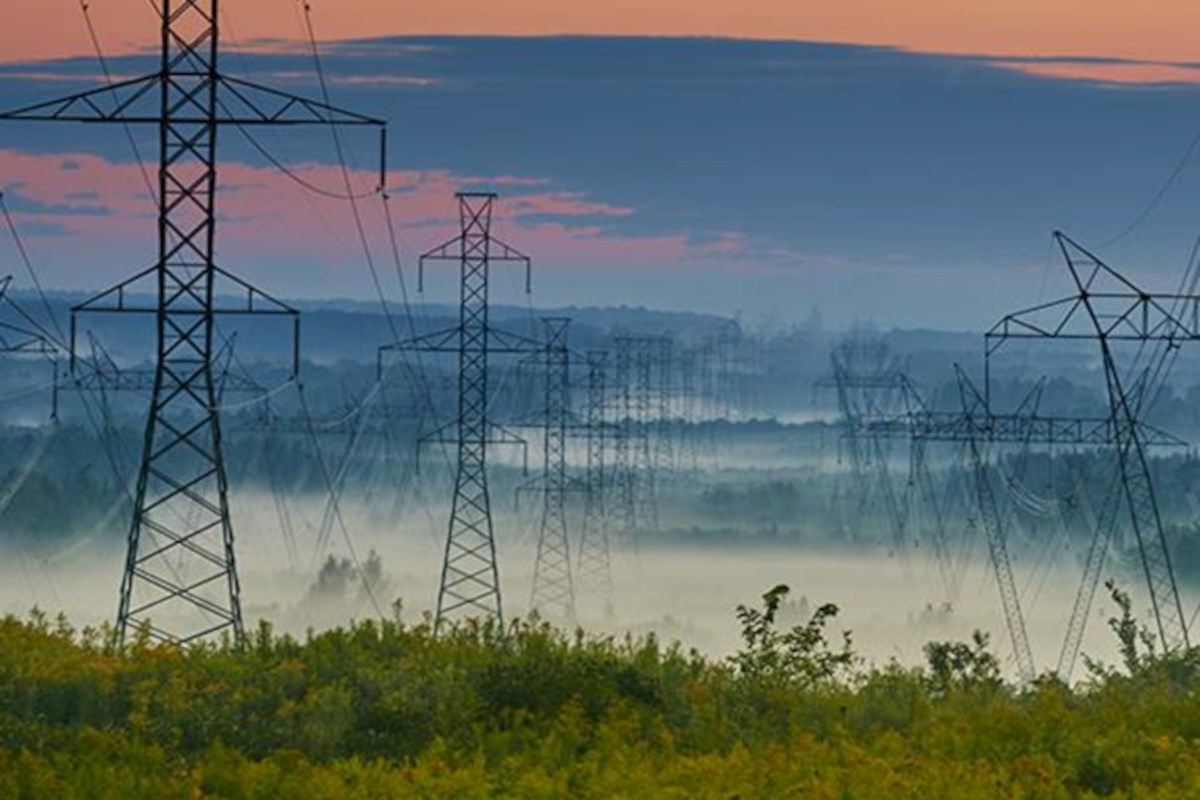
Hydro One Networks has been chosen as the designer and builder for a proposed single-circuit 500-kilovolt (k V) line, which will extend 290 kilometres from its Essa transformer station near Barrie to a transformer station located in Hanmer, on the northern edge of Sudbury.
This project is expected to be operational by 2032.
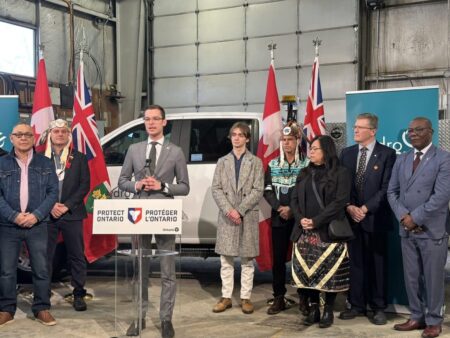
Sam Oosterhoff, associate minister of energy-intensive industries, announced this development during a livestreamed news conference from Barrie on February 9.
The utility has also been instructed to handle the design and development of a second 500 k V line along the same route. No timeline was given for when this second line will be in service.
Similar to its recently introduced Greenstone transmission line, the provincial government is labeling this line as a “priority project” that will be expedited through environmental and project approval processes; however, no start date for construction was provided today.
The government promotes this initiative as part of its broader Energy for Generation plan aimed at expanding transmission infrastructure across Ontario.
They noted that it alleviates a bottleneck within the Ontario grid that was originally built to serve sparsely populated communities and industries rather than supply power for new or growing mines and industrial projects.
Oosterhoff stated that investing in additional power capacity makes sense given projections indicating an anticipated increase in power demand over the next quarter-century.
The government anticipates energy needs in Northern Ontario will rise by 81 percent by 2050, with around 40 new mines expected by 2033.
No cost estimates were shared today regarding the two transmission lines’ expenses.
Megan Telford, Hydro One’s COO, assured an “affordable outcome.”
“It’s too early to give an estimate because that will come at the moment of construction. We can assure you we’re doing this with affordability in mind and Ontarians in mind.”
This project enjoys support from 11 First Nations represented by the Energy Corridor First Nations group, all possessing traditional territories along the proposed routes, including Indigenous communities in areas around Sudbury-North Bay.
By signing a memorandum of understanding (MOU) with this consortium, First Nations will play an active role early on in decision-making regarding corridor design and have input into its construction process.
Telford mentioned Hydro One’s equitable partnership model will ensure First Nations are genuine partners throughout this project.
Shawanaga First Nation Chief Adam Pawis spoke on behalf of the consortium, stating that the planned power line represents essential infrastructure for both the province and local communities. Signing this collaborative MOU establishes an important framework respecting their status as land rights holders while advancing project goals.
Pawis emphasized that any new energy infrastructure within their territories “must be shaped with our leadership, consent and participation from the outset.”
Source link
Source link