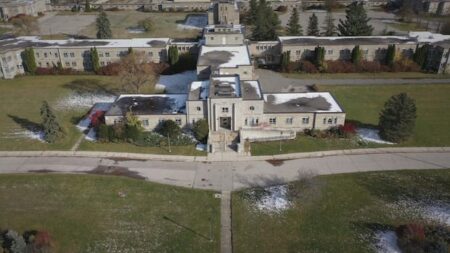





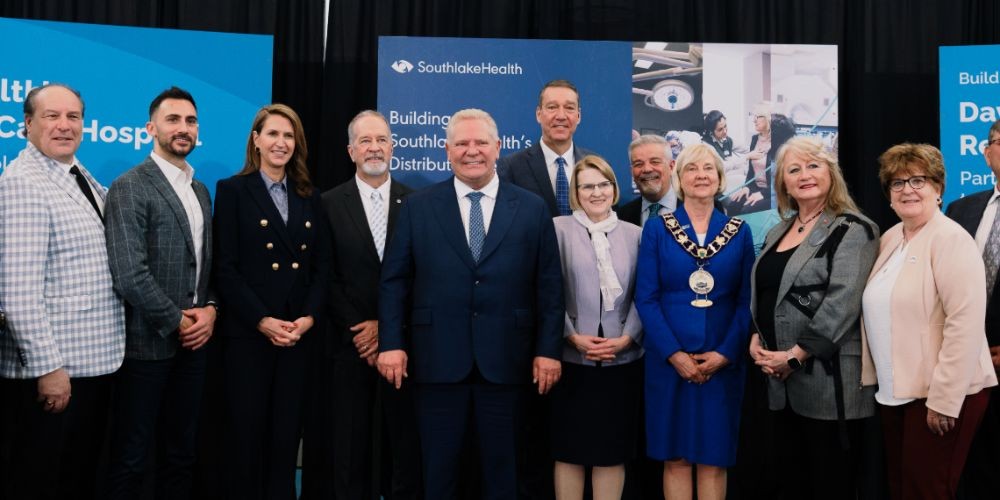
On Monday, April 27, 2026, officials came together as the province revealed a $10 million investment to kickstart early planning for the expansion of Southlake Health and a new hospital in East Gwillimbury.
The Ontario government is allocating $10 million to facilitate Southlake Health’s expansion of its current facility in Newmarket and to establish a new acute care hospital in East Gwillimbury.
This funding aims to support initial planning stages for these projects, which are expected to serve over 250,000 residents across northern York Region and southern Simcoe County.
“On behalf of the County of Simcoe, we thank the Government of Ontario for its investment in Southlake Health, helping to grow and modernize the care and services provided to residents in the southern part of our region, as well as specialized programs that improve health outcomes for so many of our communities,” stated County of Simcoe Warden Basil Clarke in a news release.
In a statement, Premier Doug Ford highlighted the hospital initiatives being backed by the province.
“Our government is delivering on our plan to protect Ontario’s health-care system by investing $64 billion to build and upgrade over 50 hospitals across the province. With today’s announcement of a new, state-of-the-art hospital in East Gwillimbury and the redevelopment of Southlake Health in Newmarket, we’re ensuring that people in York Region and Simcoe County have reliable access to world-class care for generations to come.”
Barrie’s News Delivered To Your Inbox
Stay informed with what Barrie’s talking about. Get the latest local news sent directly to your inbox every day. Never miss out on what’s happening..
Consent Info
By submitting this form, you are consenting to receive marketing emails from: Central Ontario Broadcasting, 431 Huronia Rd, Barrie, Ontario, CA, https://www. cobroadcasting. com. You can revoke your consent to receive emails at any time by using the Safe Unsubscribe® link found at the bottom of every email. Emails are serviced by Constant Contact
The planned hospital will be situated northwest of Queensville Sideroad and Leslie Street, close to the future Bradford Bypass corridor on land owned by Green Earth Village.
Once operational, this new East Gwillimbury hospital will offer expanded acute and post-acute care services including medicine, surgery, orthopedics, rehabilitation along with maternal and child health services as well as pediatric mental health support. It will also provide increased inpatient capacity along with a new emergency department equipped with diagnostic imaging facilities and enhanced infection prevention measures.
The existing Southlake Health facility in Newmarket will undergo renovations according to provincial plans that include adding more inpatient beds along with expanding emergency capacity.
“The new hospital in East Gwillimbury combined with significant upgrades at our Newmarket facility and increased access to services in Bradford and Georgina will make sure residents throughout our region get timely high-quality care close to home,” Bradford West Gwillimbury Mayor James Leduc mentioned in a statement.
The next step involves collaboration between the Ministry of Health and Southlake Health on completing early planning phases for this new hospital which includes defining bed counts and overall size. Once additional planning is finalized and contracts are awarded through tendering processes then construction timelines will be established.
Deputy Premier and Minister of Health Sylvia Jones expressed that this investment aims at enhancing access across the region’s healthcare system.
“This investment for a new hospital alongside redeveloped facilities at Southlake Health is another crucial step towards building a stronger healthcare framework within York Region and Simcoe County that links more individuals families directly with necessary medical attention.”
What do you think of this article?
Source link
Source link