



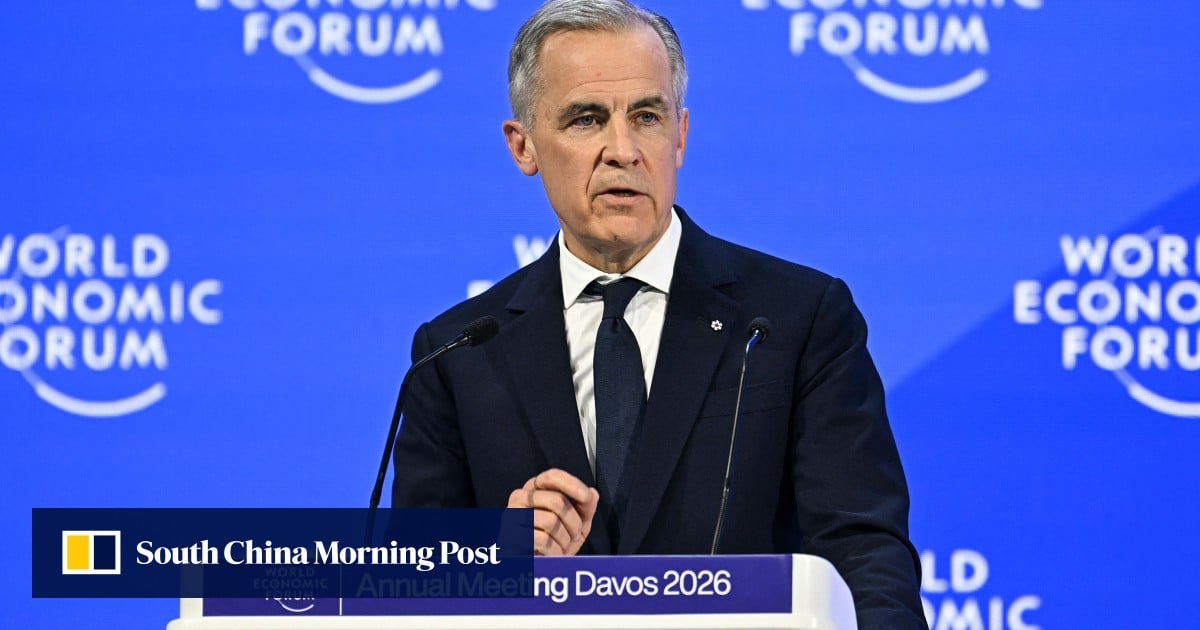
Canadian Prime Minister Mark Carney has called for middle powers to come together as the global order becomes more fragmented. Analysts say this idea resonates with many Asian countries, but there’s no clear plan to unite them all. While speaking in Switzerland last month, Carney encouraged mid-sized and smaller nations to stand against the economic pressure from major powers. He warned that countries that don’t collaborate could end up “on the menu” instead of “at the table”, which seemed like a direct criticism of the United States. During his address at the World Economic Forum in Davos on January 20, he received a standing ovation after calling for a “third path with impact”. He stressed that middle powers should resist using tariffs and supply chain manipulation as means of geopolitical influence. The implication was clear: US President Donald Trump has raised tariffs on Canadian products, dismissed Carney as Canada’s “governor”, and even suggested bringing Canada into the US as its 51st state. US President Donald Trump (left) meets with Canadian Prime Minister Mark Carney in the Oval Office in May 2025. Photo: TNS
‘Devil in the details’
Even though Carney’s speech at Davos was well-received, experts believe that middle powers in the Asia-Pacific – including Japan, South Korea, Australia, New Zealand, and Indonesia – face various political challenges and differing priorities. They also have security ties with either Washington or Beijing which makes it tough for them to act together.Source link


