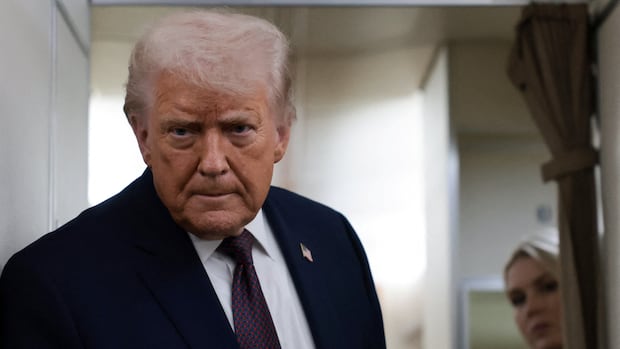
Tariffs – or the threat of tariffs – have been a frequent tactic for Trump
Why Trump keeps making big threats – then backing off
There is a clear pattern to U. S. President Donald Trump’s tariff negotiations. Andrew Chang explains four key steps to Trump’s playbook, to what extent they work – and at what cost. Plus, why Canada’s critical minerals are so attractive to the U. S.
Hey everyone! I’m Anya Zoledziowski, a senior writer with CBC’s news desk.
For almost a year now, Trump has relied on tariffs – or the threat of them – as a major strategy while negotiating with other countries, even those that are usually considered allies. So, today’s news probably doesn’t come as much of a surprise like similar headlines did back in 2025.
As CBC’s About That explains, Trump appears to be following a set approach: first, he makes an extreme threat – such as imposing 100 percent tariffs – then lets that threat linger to gain negotiation leverage. Afterward, he often backs off from the tariff threat by delaying or reducing it. Finally, he presents the outcome as a “historic win,” justifying his actions.
But could Trump’s method end up backfiring? After all, it’s likely this very tariff strategy prompted Carney to deliver his well-known speech in Davos, where he mentioned a “rupture” in global order. Officials worldwide have already shown concern over Trump’s tariffs, and recently various newspapers abroad have headlines and opinion pieces supporting Carney’s remarks including the New York Times, France’s Le Monde and Poland’s Gazeta Wyborcza.
Source link
Source link