



With new ward boundaries in play, London’s upcoming municipal election is shaping up to feature a mix of incumbents – but one former mayor warns that no sitting politician should assume they’ll easily win re-election.
“The election is probably the hardest job interview you’ll ever have,” said Matt Brown, who first joined London city council in 2010 before being elected mayor in 2014.
“Anyone who wants to run really has to look at whether or not it’s their time. Nobody owns these seats.”
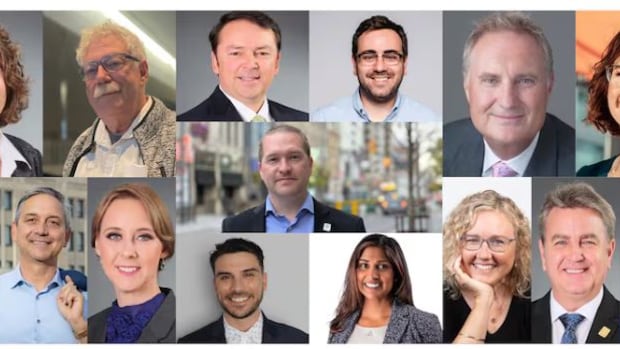
Mayor Josh Morgan is aiming for re-election on Oct. 26. Two councillors, Jerry Pribil in Ward 5 and Steven Hillier in Ward 14, have announced they won’t run again.
Of the 14 council members, the following 10 have confirmed with that they’re running again:
Ward 1: Hadleigh Mc Alister Ward 2: Shawn Lewis Ward 3: Peter Cuddy Ward 5: Corrine Rahman (currently representing Ward 7)Ward 6: Sam Trosow Ward 8: Steve Lehman Ward 10: Paul Van Meerbergen Ward 11: Skylar Franke Ward 12: Elizabeth Peloza Ward 13: David Ferreira
Rahman stated she will compete in Ward 5 since her home now falls under realigned ward boundaries.
Councillor Anna Hopkins plans to decide within weeks whether she’ll seek re-election in Ward 9.
Lehman and Stevenson both indicated to the that they are running again.
While having incumbents typically helps in municipal politics, former mayor Brown believes he’s proof that unknown candidates can pull off surprising victories.
Back in 2010 Brown ran for council in Ward 7 as a relative unknown. At that time he was a high-school teacher without any public profile facing incumbent Walter Loc and Phil Mc Leod, a well-known former newspaper editor.
Despite lacking name recognition, Brown managed to defeat both candidates but noted that success came from extensive effort.
“I knocked on doors for months and months,” said Brown. “I went around the entire ward twice and almost three times. I tell people that ask me about running, you really have to want it.”
This week the city hosted an information meeting for potential candidates. Much of what was discussed during that meeting can be found here.
.
“It would be a cheap vote if you could buy it for $1 ,200,” he remarked.
Election season officially begins on May First , with nominations closing Friday August Twenty-First.
Source link
Changes This Time Around
While some familiar faces are back, there will be significant changes this election compared to four years ago. A review of ward boundaries has resulted in adjustments – some quite substantial – across the electoral map. These changes were made to address large population disparities between wards and will be implemented for this election cycle. In certain cases, current councillors will find themselves campaigning in completely different wards than before. For instance, Ward 1 has expanded northward to include Old East Village while Ward 5 has shifted eastward at the city’s northern boundary. You can see how the wards have changed in this graphic: Andrew Sancton, a professor emeritus of political science at Western University, mentioned that these new ward boundaries may pose challenges for incumbents. “Where there have been changes, it might be a bit confusing for voters,” he said.Councillors Now Making More
An incentive encouraging incumbents to run again might stem from councillors voting themselves a pay increase of about thirty-five percent last term after an external review committee’s recommendations were considered. Councillors’ salaries currently sit at $94,000, which is up from $67,000 previously. Sancton indicated that this increase signifies an acknowledgment that being on city council has become a full-time role now. Brown noted while higher salaries could motivate councillors to keep their seats; it might also attract challengers looking to enter the race. The cost of campaigning also weighs heavily on prospective candidates’ minds according to Brown who often hears inquiries about campaign financing from them. The topic of campaign donations sparked heated debate during discussions last month among council members when Coun. Ferreira claimed they influenced votes favoring an application for constructing a thirty-story tower within North Talbot neighborhood. If someone aims for mayoral candidacy seriously should expect expenses around $150,000 according to Brown’s estimation. Sancton highlights individual contributions capped at $1,200 per candidate requiring transparency through disclosure practices followed during elections..
“It would be a cheap vote if you could buy it for $1 ,200,” he remarked.
Election season officially begins on May First , with nominations closing Friday August Twenty-First.
Source link