Ontario Construction News staff writer
OTTAWA – The rise of artificial intelligence in the architecture, engineering, and construction (AEC) industry seems unavoidable, yet it faces a distinct “trust deficit” and significant concerns about mentorship and professional responsibility here in Canada.
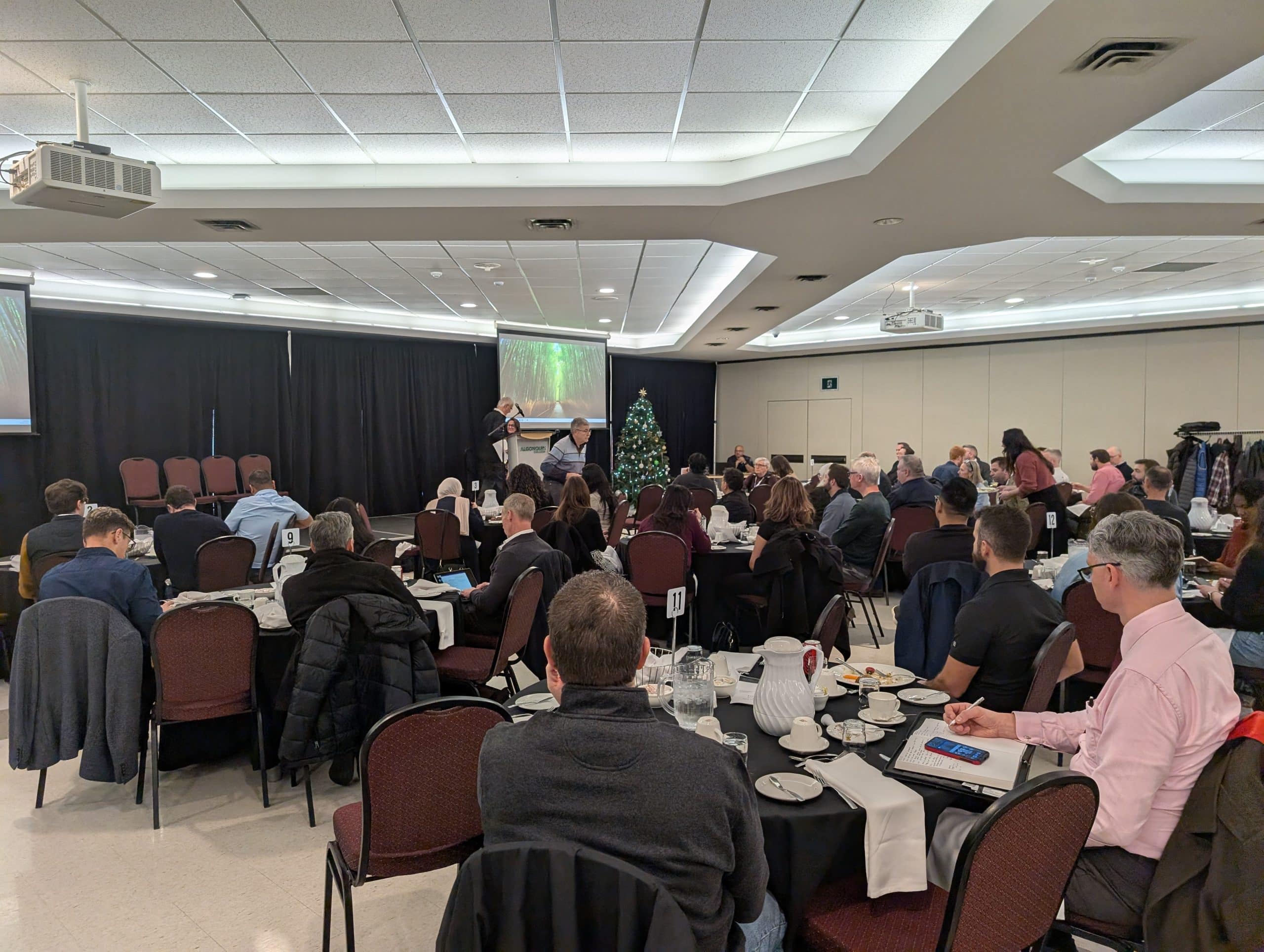
This tension was central to the conference titled “AI in AEC: From Promise to Practice,” held by the Ottawa Chapter of Construction Specifications Canada (CSC) at Algonquin College on Wednesday (Nov. 26).
While speakers called for a more aggressive approach to tackle Canada’s productivity issues, the most impactful parts of the event emerged during a frank Q& A session that laid bare the real-world challenges professionals are encountering.
The efficiency paradox: More work, not less
Victoria Ikede
Victoria Ikede, National AI Lead at Architecture49, provided a stark reminder about the idea that AI will make life easier for professionals.
She warned that rather than freeing up time, we might actually see an efficiency paradox where expectations for output simply increase.
“I thought, ‘Oh, this is so much more productive, I’ll do less work,’” Ikede shared with attendees. “It’s the opposite because now I feel like I can take on more work… I’m taking on more and more because I now have this assistant.”
Ikede pointed out that while AI helps create stunning websites or renderings quickly, it often takes away from the hard-earned lessons necessary to truly master one’s craft.
“I’ve done all this work, but I don’t feel like I know anything,” she quoted a student as saying. “You lose the process that makes you confident as a person.”
The “Killer Instinct” and independence
Karen Savoie
The event kicked off with an urgent call to action from Karen Savoie, president of Savoie Faire Consulting. She emphasized that Canadian companies tend to be cautious and are lagging behind international competitors who are rapidly adopting AI technology.
“There was a need for Canadians and Canadian businesses to adopt a ‘killer instinct,’ which kind of goes against our grain,” Savoie remarked while referencing points made at a recent University of Waterloo conference.
Emmanuel Florakas
Emmanuel Florakas from BDO Digital added weight to this idea with practical advice. He encouraged firms to focus less on flashy chatbots and instead establish a reliable data framework-a system that organizes information effectively so AI tools can utilize it properly.
Government regulation and initiatives
Jessica Wright
Jessica Wright, senior policy advisor at Innovation, Science and Economic Development Canada (ISED), confronted the issue of trust directly. Referencing the 2025 Edelman Trust Barometer findings, she noted that only 30 percent of Canadians currently have faith in AI technology.
Wright likened this situation to automobiles when discussing government involvement in fostering trust within this ecosystem.
“Cars get you from A to B faster… but in order to really benefit from that, you need roads,” she explained. “And in order to have roads, you need standards, you need rules-you need to understand what the guardrails are.”
The mentorship gap
The conversation shifted when attendee Cristina Ureche-Trifu posed an essential question regarding future professional development.
“How do we teach people how to think?” she asked panelists while highlighting how automation through AI could create gaps in learning opportunities for junior staff just starting out.
Jeff Halashewski
Jeff Halashewski from Dialog suggested mentoring needs adjustment into a collaborative review method moving forward.
“It’s more or less in mentorship-yes going through that AI process-but also returning back to basics about how we actually learn; just go line by line and validate,” Halashewski said.
The infrastructure challenge: Power demands of AI
An important point came up during discussions about software when John Jensen raised awareness about our physical power systems-which often gets overlooked:“It has been said that AI is going to require a lot of electrical power as it expands,” Jensen stated. “A concern is that our current infrastructure is not capable of providing the power that’s going be needed.”situation around energy supply.”,”Florakas acknowledged there could be serious adjustments required ahead including possibly reviving nuclear energy options along with reevaluating our grid structure overall.”,”
“,”Lessons learned from history: Change takes time”,”John Cooke-a seasoned structural engineer with John G Cooke & Associates Ltd.-urged patience based on historical patterns.”,”He corrected others’ expectations regarding change speed by comparing earlier transitions within their field.”,”
“,”The transition period toward implementing CAD versus hand drawings seen back then took longer than anticipated even after they were brought together around 1989.”],”similar situations arose previously relating specifically towards Building Information Modeling(BIM).”],”Cooke continued-highlighting frustrations felt regarding waiting processes involved since he recalled being gathered into meetings convened by governmental parties advocating their project aspirations surrounding BIM but noting progress remains elusive thus far..“It takes longer than we think it does,”, concluded Cooke while expressing practical worries connectedness involving massive electric grid infrastructures necessary supporting growing computational demands associated down-the-line usage concerning advancing developments linked directly addressing these emerging technologies respectively across industries today!”,”The event was sponsored by Certain Teed alongside Ontario Construction News.”,”
“]
Source link
“]
Source link