



Politicians in Ontario and the largest private sector union in Canada are criticizing the new trade deal with China, arguing it jeopardizes local auto jobs without ensuring any investments.
On Friday, Prime Minister Mark Carney revealed that Canada has agreed to cut its 100 percent tariff on Chinese electric vehicles (EVs) for as many as 49,000 vehicles annually.
In return, China will either eliminate or significantly lower its retaliatory tariffs on various Canadian agricultural products, such as canola seed and meal, pork, seafood, and peas.
Barrie’s News Delivered To Your Inbox
Stay informed about what’s happening in Barrie. Receive the latest local news directly in your inbox every day. Don’t miss out on important updates..
Consent Info
By submitting this form, you are consenting to receive marketing emails from: Central Ontario Broadcasting, 431 Huronia Rd, Barrie, Ontario, CA, https://www. cobroadcasting. com. You can revoke your consent to receive emails at any time by using the Safe Unsubscribe® link found at the bottom of every email. Emails are serviced by Constant Contact
Carney has described this agreement as a strategic partnership with China that brings significant opportunities for Canada.
“It’s a partnership that reflects the world as it is today, with an engagement that is realistic, respectful and interest-based,” Carney stated during a news conference held in Beijing.
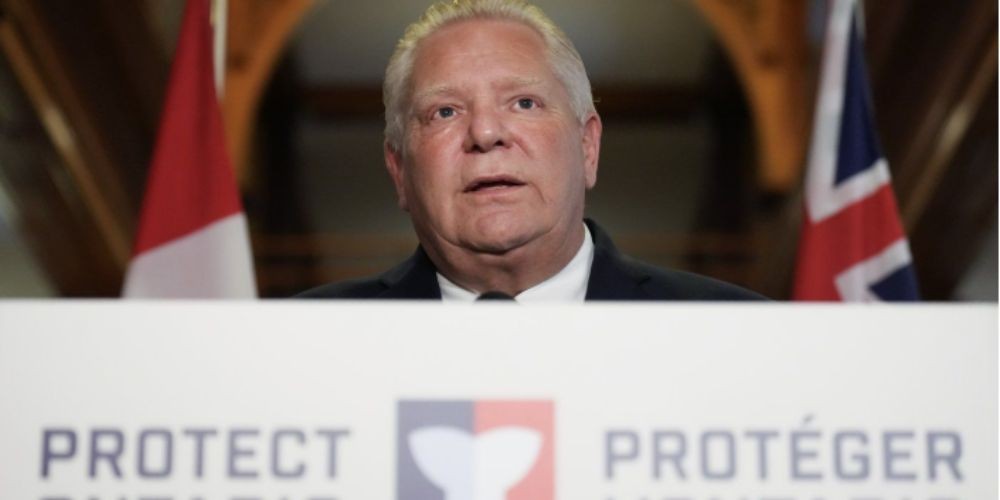
However, Ontario Premier Doug Ford and Unifor national president Lana Payne believe it’s allowing unfairly subsidized Chinese automakers to establish a presence in Canada that threatens the domestic industry.
“This is going to be terrible for not just all Ontarians but especially for auto manufacturers and the supply chain,” Ford said while speaking to reporters on Friday.
He labeled the agreement one-sided and cautioned that it might close off access to the U. S. market for Canadian automakers while also raising concerns over potential security risks posed by these vehicles.
“It’s just a terrible miscalculated decision by the Prime Minister.”
The deal endorses labor violations and unfair trade practices according to Unifor’s Payne in a press release.
“This is a self-inflicted wound to an already hurt Canadian auto industry,” she remarked.
“Finding a resolution regarding U. S. auto tariffs just became more difficult.”
The federal government pointed out that despite benefits for other sectors due to reduced tariffs, this deal covering 49,000 vehicles at a lower tariff of 6.1 percent represents less than three percent of Canada’s new vehicle sales market. It’s also equivalent to the number of EVs imported from China during 2023-2024 before Canada followed suit with higher tariffs aimed at protecting local producers.
🎧 Listen to today’s headlines that matter most
Subscribe on Spotify, Apple Podcasts or wherever you get your podcasts so you’re notified about new episodes daily.
The government anticipates that within three years this agreement will attract “considerable” joint-venture investment from China into Canada leading to new job creation in auto manufacturing; however both Ford and Ontario NDP Leader Marit Stiles criticized the absence of firm commitments.
“Let me be clear: Mark Carney is selling out our auto sector,” Stiles expressed via social media post. “Our workers deserve guarantees – you don’t protect an industry with maybes.”
Yet Greig Mordue from Mc Master University’s W Booth School of Engineering noted that given there’s currently little Chinese EV presence in Canada; it’s hard to picture how production guarantees could have been secured.
“It’s smart policy. Doesn’t give us a Chinese auto plant but I doubt anything would.” he mentioned previously serving as general manager of Toyota’s Canadian division.
Mordue explained how using quota systems was similarly employed by the federal government when facing increasing competition from Japanese makers like Toyota and Honda back in the early ’80s before leveraging their established sales numbers into building plants within Canada shortly thereafter.
He suggested although this limited quota may not sufficiently entice Chinese brands into entering Canada’s marketplace; we might see more Teslas , Polestars , and Volkswagens produced there instead. However he reiterated its minimal impact on domestic automotive production overall.
“This has virtually no impact on Canadian production.”
Looking ahead longer term , possibilities exist for cheaper options. The Canadian administration indicated it expects “it is anticipated” within five years fifty percent of incoming Chinese EVs will fall under import prices below $35 ,000. Additionally quotas set for low-tariff vehicles are expected raise up towards seventy thousand then too.
Ford commented even though present volumes appear small ; they still allow room where China gains entry into Canadian markets which could potentially exploit advantages harming local workers’ interests later down line.
“They start off claiming three percent. Ask those living Brazil what happens once something starts at three per cent ; usually becomes thirty-seven percent eventually! Just look across Europe!”
The EU witnessed electric cars manufactured in China surge from 3.9% market share back during twenty-twenty reaching twenty-five percentages September twenty-three last year prompting them impose several tariffs ranging up toward thirty-five point three percent following allegations concerning unfair trading methods utilized throughout process. Nowadays , however they seem inclined moving towards establishing minimum pricing structures related specifically targeted towards imports originating solely from nation itself instead !
European entities asserted companies operating within territory achieved impressive market footholds thanks largely assistance derived through subsidies across entire supply chains-ranging everything cheap land allocated factory construction provided regional governments right down below-market provisions lithium batteries produced state-controlled enterprises complemented tax incentives coupled ridiculously low-interest loans facilitated banks under governmental control !
Furthermore, Ford reiterated concerns surrounding security implications accompanying these foreign-made automobiles along their unsustainably low-cost production practices currently being implemented abroad! “They’re heavily subsidized completely undermining autoworkers here province!” concluded Ford stressing reality around present circumstances proving detrimental situation affecting overall automotive sector !”</</</A report issued by The Canadian Press was first January sixteenth two thousand twenty-six.
– With files contributed by Allison Jones located Toronto alongside information sourced The Associated Press.What do think regarding contents presented article ?
Source link

Related Posts


