



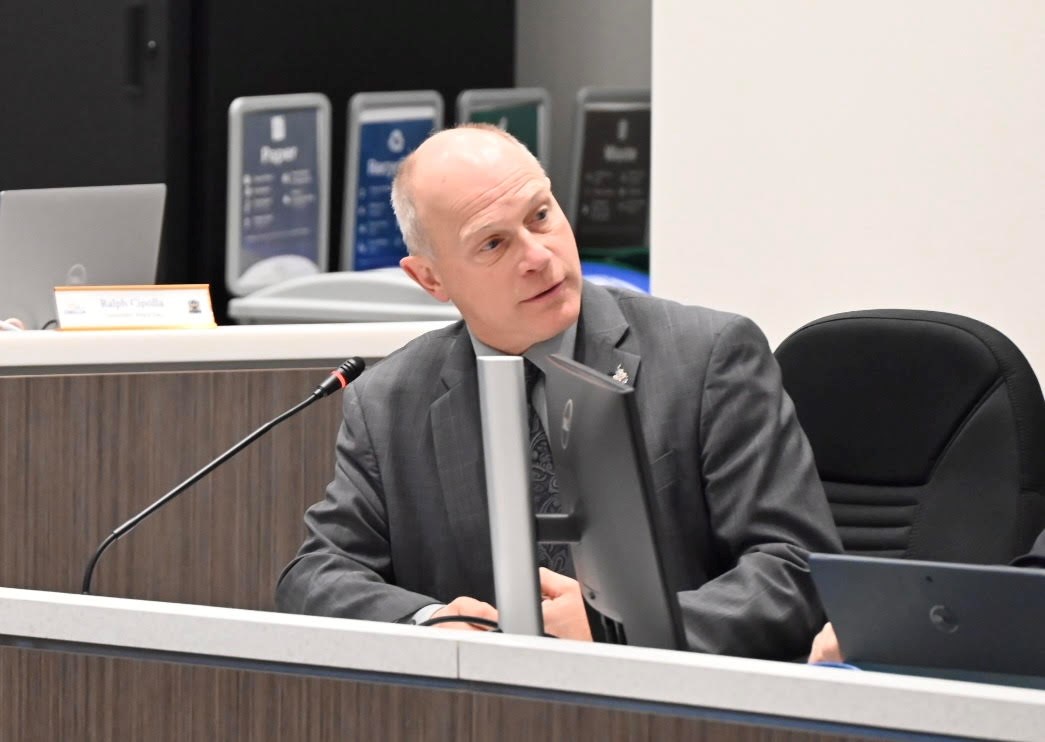
‘This program has tripled in size,’ county officials warn about the Canada-Wide Early Learning and Child Care system as they briefed Orillia council on mounting pressures
The leadership team from the County of Simcoe visited Orillia City Centre on Monday morning with a clear message shared throughout their presentations: the need for social services, housing support, child-care growth, and long-term care is increasing rapidly.
This means that the financial strain on municipalities is also rising, even as the county moves to a new funding model intended to ease this burden.
Trevor Wilcox, the county’s general manager of corporate performance, Warden Basil Clarke, Treasurer Lealand Sibbick, along with Mina Fayez-Bahgat and Jane Sinclair, general managers, explained what 2026 costs will look like for Orillia.
According to the county’s new amortization-based capital model, Orillia’s total contribution next year is expected to be $9.2 million, down from about $11 million in 2025. While it’s a decrease, it doesn’t stem from lower demand.
Instead, Wilcox clarified that this reduction comes from spreading capital charges over the lifespan of county-owned assets rather than billing municipalities through large fluctuations.
Wilcox mentioned that this new model aims to reflect responsible asset management practices while providing partners with more predictable contributions. He noted that this reduction occurs during a transition year and future increases will align with major asset lifespans such as long-term care redevelopment and new housing projects-costs that will be shared among all municipalities involved.
The updated capital model aims to offer predictability when almost every service area is experiencing both rising costs and increased demand, he stated.
“It’s a good way of reflecting things for our partners,” Wilcox said, emphasizing how the new structure smooths contributions and aligns with long-term planning. “We will have reporting that reflects that as well.”
He also cautioned that changes to provincial development charges have created a $90-million revenue gap in the county’s housing plan-a shortfall likely requiring additional borrowing unless there’s intervention from higher levels of government.
Much of Monday’s presentation focused on the significant increase in demand across five main social service areas within the county.
Fayez-Bahgat, general manager of social and community services, highlighted changes happening under Ontario Works modernization and rapid growth of the Canada-Wide Early Learning and Child Care system.
He reported that Ontario Works is seeing a notable rise in caseloads across the region-with an anticipated 917 new cases by 2026-though Orillia’s own caseload remains steady at just over 837 cases. The program now emphasizes income support and service navigation while employment services are handled by Employment Ontario.
“This is a funding-in, funding-out program,” he noted. Orillia’s portion of administrative costs is about $1.3 million while overall income support approaches $80 million.
Child-care administration has shifted focus from caseload numbers to taxable assessments and is quickly becoming one of the largest pressures for the county.
Through the Canada-wide $10-a-day system , this program has expanded from $50 million in 2023 to over $170 million by 2026. Fayez-Bahgat told council they’re using funds set aside during earlier years of this initiative to prevent sharp spikes for municipalities; however , the growth rate is unprecedented.
“This program has tripled in size in three years,” he said. With fee subsidies shrinking quickly as daily parent expenses drop to $10 , the previous funding model based on caseload isn’t sustainable anymore.
The team working on housing and homelessness issues has combined efforts under one department for better connection between “the problem and solution,” Fayez-Bahgat explained , is facing its own challenges.
Federalandprovincialprogramshaveincreasedin2026, butsohasdemandrelatedtoshelteruse, risingencampments, andhigherrentalcosts. Thecountyisexpandingitsmunicipalrentsupplementprogramstomatchfederalandprovincialofferings, citingthemasononeofthefastestwaystohelppeoplemovefromencampmentsandsheltersintopermanenthousing.
Thecountyalsoaimstogrowits Housing Partner Opportunities Fund, aprogrammeanttoassistsmalldevelopersincompletingaffordableprojects. Alow-interest, fundableloanfornon-profithousingproviderswilldistributeabout$1.9millionin2026tosupportcapitalrepairbacklogsandmaintainagingaffordablehousingstock.
Oncapitalprojects, thecountymadeitclearthatmajorinitiativesarecurrentlyunderwayin Collingwood, Barrie, and Penetanguishene. Theseincludea30-unitmodularhousingbuildin Collingwood, thefirsttowerofalargeredvelopmentin Barrie, andathird-flooradditiontoaseniorsbuildingin Penetanguishenewhichwillfeature Midland-Penetanguishene’scommunityhousingsystem’sfirstelevator. Fayez-Bahgatsaidthattheelevatorwillenablethecountytorelocateelderlyindividualswaitingforaccessibleunits.
Inlong-termcare, Sinclairspecifiedthatcountyhomeswillintroduce16newbedsin Penetanguishennextyear, resultingin560totalbeds. Orillia’ s cost-sharing amountfor2026isestimatedat$1.8millionbasedonacombinationofcaseloadthenumberof Orilliacommuntiymembersacrossfourhomesweightedassessment. Fewer Orilliacommunitymembersareoccupyingcountybedsa t present though Sinclairwarnedthatcost-shareisbasedonactualresidents whichcanfluctuateyear-to-year.
Source link
Th e Ministryof Long-Term Carehasalsolaunchedanewassessm ent-basedfundingprogramme requiringweeklydocumentationinstead ofteachingquarterly. Asar esult, countyhomesareaddingadditionalstafftomeetdemandswhilealsocontinuingtheirtransitiontowardsinhouserecreationaltherapyteams.
Simcoe Villageredevelopme ntwhich will broaden Simcoe Manorto150 beds, isontargettoopenbylate2026orearly2027said Sinclair.
Councilwillreviewthecounty’srequestaspartofthewiderbudgetdeliberations.
Source link


