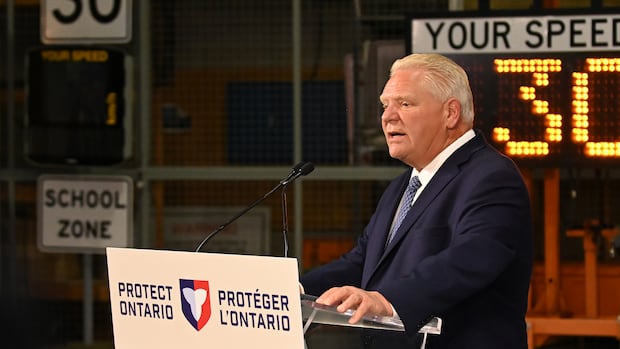
Ontario Premier Doug Ford announced Thursday morning that his government will introduce a law to ban speed cameras – which he has labeled an ineffective “tax grab.”
“In recent years, municipalities across the province have turned municipal speed cameras into little more than a cash grab,” he said during a news conference in Vaughan on Thursday morning. “People are fed up.”
Despite studies and opinions from police associations and municipalities suggesting otherwise, Ford stated that speed cameras do not effectively reduce speeding. The province intends to create a new fund to assist municipalities in implementing other “proactive traffic-calming initiatives that stop people from speeding in the first place.” This includes measures like speed bumps, roundabouts, raised crosswalks, and curb extensions.
He added that municipalities with existing speed cameras in school zones will be required to put up large signs with flashing lights aimed at slowing down drivers.
Ford did not clarify where the funding for this initiative would come from or what it might cost. Some provincial and municipal leaders criticized the decision shortly after it was made public.
![]() Premier Ford called speed cameras an ineffective ‘cash grab,’ while announcing his plan to ban the road safety tools in Ontario Thursday. (Jon Blacker/Canadian Press)
Premier Ford called speed cameras an ineffective ‘cash grab,’ while announcing his plan to ban the road safety tools in Ontario Thursday. (Jon Blacker/Canadian Press)
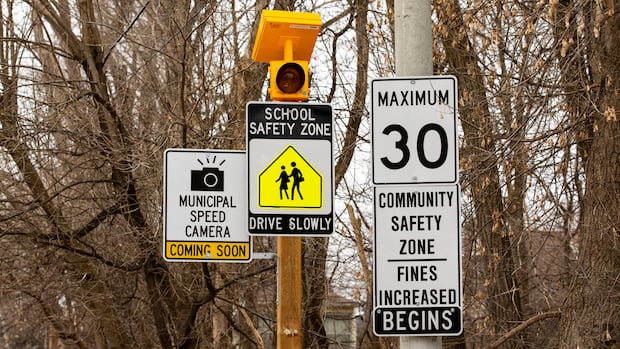 How speed cameras make streets safer for kids
A new study by Sick Kids hospital shows speed cameras make the streets safer for kids. The hospital’s head of orthopedic surgery, Andrew Howard, spoke to CBC’s Metro Morning about the study findings and how they can improve kids’ safety.
Ford expressed on Thursday that he respects both Sick Kids and police opinions but maintains that speed cameras aren’t effective, labeling the issue as “black-and-white.”
>
In Ottawa , compliance rates with posted speeds increased from 16 percent up to 81 percent three years after installing camera systems according to information shared on city websites.
A report earlier this month indicated Brampton saw an average decrease in speeds exceeding nine kilometers per hour at locations where these systems were used. Mississauga also reported similar trends. Five areas equipped with these technologies recorded drops exceeding 20 kilometers per hour as outlined in their staff report.
How speed cameras make streets safer for kids
A new study by Sick Kids hospital shows speed cameras make the streets safer for kids. The hospital’s head of orthopedic surgery, Andrew Howard, spoke to CBC’s Metro Morning about the study findings and how they can improve kids’ safety.
Ford expressed on Thursday that he respects both Sick Kids and police opinions but maintains that speed cameras aren’t effective, labeling the issue as “black-and-white.”
>
In Ottawa , compliance rates with posted speeds increased from 16 percent up to 81 percent three years after installing camera systems according to information shared on city websites.
A report earlier this month indicated Brampton saw an average decrease in speeds exceeding nine kilometers per hour at locations where these systems were used. Mississauga also reported similar trends. Five areas equipped with these technologies recorded drops exceeding 20 kilometers per hour as outlined in their staff report.
Announcement faces backlash
Following Ford’s announcement , statements were released opposing his decision by members of both the Ontario Liberal Caucus & NDP.
According Andrea Hazell , Liberal transportation critic who asserted while improvements are needed within camera programs ; removing them entirely is “reckless.”
“We shouldn’t throw out what works just because it may help boost poll numbers,” she noted.
“Speeding monitoring devices primarily aim towards ensuring safe conditions surrounding educational facilities,” emphasized John Fraser – education critic speaking on behalf Liberal party calling out Ford’s direction as heading backwards.
Jennie Stevens , NDP MPP remarked upon change implemented under Ford administration arguing they’re stripping essential safety measures away from communities despite expert advice against doing so.
Supporters argue for effectiveness of speed cameras
The Ontario Association of Chiefs of Police, the Association of Municipalities of Ontario, and Toronto’s mayor all voiced their support for speed cameras this month. The police chiefs’ association previously stated that using automated speed enforcement (ASE) cameras “has been proven to reduce speeding, change driver behaviour, and make our roads safer for everyone – drivers, cyclists, pedestrians, and especially children and other vulnerable road users.” This statement followed a Sick Kids study earlier this summer which found ASE cameras had reduced speeding near schools in Toronto by almost half. WATCH | Sick Kids head explains how speed cams around schools improve safety: How speed cameras make streets safer for kids
A new study by Sick Kids hospital shows speed cameras make the streets safer for kids. The hospital’s head of orthopedic surgery, Andrew Howard, spoke to CBC’s Metro Morning about the study findings and how they can improve kids’ safety.
Ford expressed on Thursday that he respects both Sick Kids and police opinions but maintains that speed cameras aren’t effective, labeling the issue as “black-and-white.”
>
In Ottawa , compliance rates with posted speeds increased from 16 percent up to 81 percent three years after installing camera systems according to information shared on city websites.
A report earlier this month indicated Brampton saw an average decrease in speeds exceeding nine kilometers per hour at locations where these systems were used. Mississauga also reported similar trends. Five areas equipped with these technologies recorded drops exceeding 20 kilometers per hour as outlined in their staff report.
How speed cameras make streets safer for kids
A new study by Sick Kids hospital shows speed cameras make the streets safer for kids. The hospital’s head of orthopedic surgery, Andrew Howard, spoke to CBC’s Metro Morning about the study findings and how they can improve kids’ safety.
Ford expressed on Thursday that he respects both Sick Kids and police opinions but maintains that speed cameras aren’t effective, labeling the issue as “black-and-white.”
>
In Ottawa , compliance rates with posted speeds increased from 16 percent up to 81 percent three years after installing camera systems according to information shared on city websites.
A report earlier this month indicated Brampton saw an average decrease in speeds exceeding nine kilometers per hour at locations where these systems were used. Mississauga also reported similar trends. Five areas equipped with these technologies recorded drops exceeding 20 kilometers per hour as outlined in their staff report.
 Mayor Olivia Chow criticized claims made regarding cash grabs stating fines collected contribute toward enhancing infrastructure such as traffic signals & crosswalks along sustaining vital services inclusive policing efforts & victim assistance programs too!