



This section is Presented This section was produced by the editorial department. The client was not given the opportunity to put restrictions on the content or review it prior to publication. by HAVEN HOME HEATING & AIR CONDITIONING Jan 12, 2026 • Last updated 14 hours ago • 1
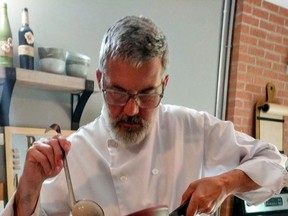
 Chef Marc Halverson prepares crepes in the test kitchen of his home basement in Kingston in 2020. (Photo supplied/Marc Halverson) Photo supplied
In the wake of St. Lawrence College suspending more than 50 of its programs, including its culinary arts program, educators, politicians and industry professionals are speaking out as the final months loom.
This has not loaded yet, but your article continues below.
Chef Marc Halverson prepares crepes in the test kitchen of his home basement in Kingston in 2020. (Photo supplied/Marc Halverson) Photo supplied
In the wake of St. Lawrence College suspending more than 50 of its programs, including its culinary arts program, educators, politicians and industry professionals are speaking out as the final months loom.
This has not loaded yet, but your article continues below.
 Subscribe now to read the latest news in your community.
Unlimited online access to all articles on thewhig.com.Access to subscriber-only content, including History: As We Saw It, a weekly newsletter that rips history from our archives, which span almost 190 years.Enjoy insights and behind-the-scenes analysis from our award-winning journalists.Support local journalism and the next generation of journalists.
Subscribe now to read the latest news in your community.
Unlimited online access to all articles on thewhig.com.Access to subscriber-only content, including History: As We Saw It, a weekly newsletter that rips history from our archives, which span almost 190 years.Enjoy insights and behind-the-scenes analysis from our award-winning journalists.Support local journalism and the next generation of journalists.
Access more articles from thewhig.com..Get email updates from your favourite journalists.
.
.
Access articles from across Canada with one accountShare your thoughts and join the conversation in the commentsEnjoy additional articles per monthGet email updates from your favourite authors
or
The news of the culinary arts program’s closure devastated Michaela Caxton, a graduate of SLC.
“Through its 26 years of operation, the program has taught hundreds, if not thousands, of students,” she said in a telephone interview. “It gives the students a chance to work in the industry and find their way.”
Subscribe now to read the latest news in your community.
Unlimited online access to all articles on thewhig.com.Access to subscriber-only content, including History: As We Saw It, a weekly newsletter that rips history from our archives, which span almost 190 years.Enjoy insights and behind-the-scenes analysis from our award-winning journalists.Support local journalism and the next generation of journalists.
Subscribe now to read the latest news in your community.
Unlimited online access to all articles on thewhig.com.Access to subscriber-only content, including History: As We Saw It, a weekly newsletter that rips history from our archives, which span almost 190 years.Enjoy insights and behind-the-scenes analysis from our award-winning journalists.Support local journalism and the next generation of journalists.
Access more articles from thewhig.com..Get email updates from your favourite journalists.
.
.
Access articles from across Canada with one accountShare your thoughts and join the conversation in the commentsEnjoy additional articles per monthGet email updates from your favourite authors
or
The news of the culinary arts program’s closure devastated Michaela Caxton, a graduate of SLC.
“Through its 26 years of operation, the program has taught hundreds, if not thousands, of students,” she said in a telephone interview. “It gives the students a chance to work in the industry and find their way.”
 Michaela Claxton cooks on the grill at the Med Supper Club in Ottawa in April 2025. (Photo Supplied/Michaela Claxton) Photo supplied
The opportunity goes beyond the classroom, according to Claxton.
“There are opportunities such as studying abroad in Barbados for a year and extending a year in Ireland. It’s an apprenticeship program to set you up in gaining the Red Seal (certification),” she said. “The program does as much as it possibly can to see students and graduates thrive.”
Claxton said her studies at St. Lawrence opened a door to Kingston’s Wooden Heads, a gourmet pizza restaurant on Ontario Street, where she worked for seven years.
This has not loaded yet, but your article continues below.
“The college program and my time at Wooden Heads led me to my current job as a sous chef at Med Supper Club in Ottawa,” she said. “Without them, I wouldn’t be where I am today in my professional career.”
Michaela Claxton cooks on the grill at the Med Supper Club in Ottawa in April 2025. (Photo Supplied/Michaela Claxton) Photo supplied
The opportunity goes beyond the classroom, according to Claxton.
“There are opportunities such as studying abroad in Barbados for a year and extending a year in Ireland. It’s an apprenticeship program to set you up in gaining the Red Seal (certification),” she said. “The program does as much as it possibly can to see students and graduates thrive.”
Claxton said her studies at St. Lawrence opened a door to Kingston’s Wooden Heads, a gourmet pizza restaurant on Ontario Street, where she worked for seven years.
This has not loaded yet, but your article continues below.
“The college program and my time at Wooden Heads led me to my current job as a sous chef at Med Supper Club in Ottawa,” she said. “Without them, I wouldn’t be where I am today in my professional career.”
 From top, Carhy Rosarion, Jeremy Stevens and Michaela Claxton prepare food at the Med Supper Club in Ottawa in Oct. 2025. (Photo Supplied/Michaela Claxton) Photo supplied
Claxton credited — in a big way — chef, teacher and mentor Mark Halverson for putting her on her culinary career path.
For Halverson, it was his love of cooking for others that sent him on his path.
“When I decided to start cooking for money, it was for a love of what cooking was: an experience to share,” Halverson said in a telephone interview. “When I found out how much work it was, I started to educate myself. I didn’t find a lot of help, just books and a few enthusiastic supporters who would be glad if I cooked for them.”
Once Halverson discovered that he could develop his skills to the point of calling it a trade, everything changed. It was then, in 1985, that he decided to work toward his Red Seal and become a certified chef.
The Kingston Whig-Standard’s Noon News Roundup
Your weekday lunchtime roundup of curated links, news highlights, analysis and features.
By signing up you consent to receive the above newsletter from Postmedia Network Inc.
!
A welcome email is on its way. If you don’t see it, please check your junk folder.
The next issue of The Kingston Whig-Standard’s Noon News Roundup will soon be in your inbox.
We encountered an issue signing you up. Please try again
This has not loaded yet, but your article continues below.
He left his job at the Pimblett, a British pub in Toronto, and took a job at a two-restaurant complex — The Whistling Oyster and Filet of Sole — in Toronto’s Kensington Market.
“It was busy and hard work,” he said.
School was a necessary part of the apprenticeship, and Halverson thrived as “Cook Level One” at George Brown College and on the job as lead cook.
According to Halverson, it all happened quickly.
“This happened shortly after my first 12 weeks of apprenticeship, but I still had lots to learn,” he said.
After five years of intense on-the-job training, Halverson decided to make a move.
“My situation was not good in Toronto: money was tight, my family was growing and happiness was elusive,” he said. “My wife and I had been visiting Kingston, where she grew up. There were also a few skilled, hardworking workmates that I had a lot of respect for who hailed from Kingston. It was the logical choice.”
This has not loaded yet, but your article continues below.
Therefore, in 1992, he accepted a job offer from Aunt Lucy’s and moved his wife and two children to the Limestone City, immersing himself in what he called “a strong, independent restaurant community.”
“It was mostly roadhouses and fast-food outlets,” he recalled. “There was only a small handful of gourmet restaurants and many family-run ethnic restaurants.”
He recalled several hotels and other institutions, like the military base and Corrections Canada, employing culinary workers as well.
Halverson described the talent pool as “thin, with many willing to work who had little depth of training,” when he landed in Kingston
He continued his regiment of self-education with a gluttony of culinary books and new responsibilities — an opportunity arose in March of 1994 to help open the now legendary Wooden Heads, what he called a “wood oven-based, pizza-forward restaurant.”
This has not loaded yet, but your article continues below.
He brought to the Wooden Head concept a wealth of experience and skill, tapping into different cultures to develop a fusion of food people wanted.
“I had experience with a wood oven, so I knew exactly what I was doing with it,” he said. “I knew what people liked and didn’t see a lot of it in Kingston.”
Halverson developed the gourmet pizza concept with complimentary salads and light appetizers amidst a menu of fusion foods — mixing Louisiana, Italian and Canadian standards — that had proven themselves in other markets.
Halverson hired as many well-trained cooks as did apply and head-hunted a few choice talents. One such talent was Matt Coghlan, who served as a right hand to Halverson. Coghlan had been through the emerging culinary program at St. Lawrence College, and Halverson knew that he could trust Coghlan’s knowledge of food and how the industry worked.
7
This has not loaded yet, but your article continues below.
That was in 1997, and Coghlan is now the head chef at Wooden Heads today.
“The business was a real hit, and I was making things work with a lot of raw talent and new-to-Kingston food concepts. Replacing cooks with reasonable talent was a struggle.”
The talent pool in Kingston was not as deep as Halverson had hoped for.
“When I was tasked with running the sister restaurant, Casa Domenico, under the same ownership group, my ambition was high — but the talent resources were not,” he said.
From top, Carhy Rosarion, Jeremy Stevens and Michaela Claxton prepare food at the Med Supper Club in Ottawa in Oct. 2025. (Photo Supplied/Michaela Claxton) Photo supplied
Claxton credited — in a big way — chef, teacher and mentor Mark Halverson for putting her on her culinary career path.
For Halverson, it was his love of cooking for others that sent him on his path.
“When I decided to start cooking for money, it was for a love of what cooking was: an experience to share,” Halverson said in a telephone interview. “When I found out how much work it was, I started to educate myself. I didn’t find a lot of help, just books and a few enthusiastic supporters who would be glad if I cooked for them.”
Once Halverson discovered that he could develop his skills to the point of calling it a trade, everything changed. It was then, in 1985, that he decided to work toward his Red Seal and become a certified chef.
The Kingston Whig-Standard’s Noon News Roundup
Your weekday lunchtime roundup of curated links, news highlights, analysis and features.
By signing up you consent to receive the above newsletter from Postmedia Network Inc.
!
A welcome email is on its way. If you don’t see it, please check your junk folder.
The next issue of The Kingston Whig-Standard’s Noon News Roundup will soon be in your inbox.
We encountered an issue signing you up. Please try again
This has not loaded yet, but your article continues below.
He left his job at the Pimblett, a British pub in Toronto, and took a job at a two-restaurant complex — The Whistling Oyster and Filet of Sole — in Toronto’s Kensington Market.
“It was busy and hard work,” he said.
School was a necessary part of the apprenticeship, and Halverson thrived as “Cook Level One” at George Brown College and on the job as lead cook.
According to Halverson, it all happened quickly.
“This happened shortly after my first 12 weeks of apprenticeship, but I still had lots to learn,” he said.
After five years of intense on-the-job training, Halverson decided to make a move.
“My situation was not good in Toronto: money was tight, my family was growing and happiness was elusive,” he said. “My wife and I had been visiting Kingston, where she grew up. There were also a few skilled, hardworking workmates that I had a lot of respect for who hailed from Kingston. It was the logical choice.”
This has not loaded yet, but your article continues below.
Therefore, in 1992, he accepted a job offer from Aunt Lucy’s and moved his wife and two children to the Limestone City, immersing himself in what he called “a strong, independent restaurant community.”
“It was mostly roadhouses and fast-food outlets,” he recalled. “There was only a small handful of gourmet restaurants and many family-run ethnic restaurants.”
He recalled several hotels and other institutions, like the military base and Corrections Canada, employing culinary workers as well.
Halverson described the talent pool as “thin, with many willing to work who had little depth of training,” when he landed in Kingston
He continued his regiment of self-education with a gluttony of culinary books and new responsibilities — an opportunity arose in March of 1994 to help open the now legendary Wooden Heads, what he called a “wood oven-based, pizza-forward restaurant.”
This has not loaded yet, but your article continues below.
He brought to the Wooden Head concept a wealth of experience and skill, tapping into different cultures to develop a fusion of food people wanted.
“I had experience with a wood oven, so I knew exactly what I was doing with it,” he said. “I knew what people liked and didn’t see a lot of it in Kingston.”
Halverson developed the gourmet pizza concept with complimentary salads and light appetizers amidst a menu of fusion foods — mixing Louisiana, Italian and Canadian standards — that had proven themselves in other markets.
Halverson hired as many well-trained cooks as did apply and head-hunted a few choice talents. One such talent was Matt Coghlan, who served as a right hand to Halverson. Coghlan had been through the emerging culinary program at St. Lawrence College, and Halverson knew that he could trust Coghlan’s knowledge of food and how the industry worked.
7
This has not loaded yet, but your article continues below.
That was in 1997, and Coghlan is now the head chef at Wooden Heads today.
“The business was a real hit, and I was making things work with a lot of raw talent and new-to-Kingston food concepts. Replacing cooks with reasonable talent was a struggle.”
The talent pool in Kingston was not as deep as Halverson had hoped for.
“When I was tasked with running the sister restaurant, Casa Domenico, under the same ownership group, my ambition was high — but the talent resources were not,” he said.
 Chef Marc Halverson in the Essence kitchen at St. Lawrence College in Kingston in April 2025. (Photo supplied/Marc Halverson) Photo supplied
Halverson found that as the restaurant scene expanded in the same direction that he had taken his kitchens, new foods required more talent.
With his exposure to Coghlan and other students from St. Lawrence, Halverson was able to see the “great strength” of the college’s culinary arts program.
8
This has not loaded yet, but your article continues below.
“Like Coghlan, the students understood what it was they were tasked with producing,” Halverson said. “I could continue to make foods from scratch and support local farms and businesses without worry.”
Halverson gradually stepped into teaching, as many Kingstonians were eager to learn how to cook professional recipes at home. A few community programs developed, and Halverson took part in some of those, including cooking demos at Loblaws.
Halveson explained that SLC soon opened three culinary programs geared toward different levels of student ambition.
“They needed more teachers, and I was approached to help part-time,” he said. “The programs were very popular and over-enrolled in some cases.”
According to Halverson, the curriculum “wasn’t organized as well as it needed to be,” so he, along with other faculty members, formed newer, better-organized systems of thorough culinary education delivery.
9
This has not loaded yet, but your article continues below.
As a result of this progress, Halverson stepped into a full-time position at SLC in 2009.
This “improved and streamlined” education plan had many students working in local restaurants while they attended school, expanding their opportunities, claimed Halverson.
In 2017, the demands of being a teacher and mentor pulled him out of the restaurants to focus on the chefs of tomorrow.
“I would still help with purchases and consulting and menus for those kitchens I was serving, but my main focus became teaching,” he said.
Halverson expressed his deep concern for the culinary arts program’s suspension, pointing to a demand for well-trained cooks beyond the walls of the restaurants and eateries.
“These students work as high-level cooks and chefs in retirement homes, the Canadian Forces, the Canadian Coast Guard, Corrections Canada, and the hospital systems, He said. “They are cooks, managers, chefs and owners in so many restaurants, catering companies, private clubs and so on, all around the country,” he exclaimed. “They are filling a need and demand that will not go away!”
10
This has not loaded yet, but your article continues below.
He spoke highly of his former colleagues.
“This very talented faculty of chefs from around the world has colluded to give students real-world experience that truly benefits people across Kingston, Ontario and beyond,” he said. “Our combined culinary experience exceeds 150 years as chefs and 75 years as educators.”
Halverson said he sees a bleak future for aspiring cooks, with the food-service industry holding the limited menu of choices.
“That will be corporations like McDonald’s or Tim Hortons, with their own agendas,” he claimed. “Does this look like a favourable scenario?”
Halverson said the situation will result in poor quality control and diminished health and safety standards within the industry.
11
This has not loaded yet, but your article continues below.
“Does a health department-issued, safe-food handler certificate from a one-day course make someone a future food expert?” he asked rhetorically. “Is the fact that the cardholder has successfully answered multiple-choice and true-or-false questions on a single examination to get a minimal passing grade sufficient to support your confidence?”
Halverson still works in the industry, for the Department of National Defence as a food services cook, level five, at the Royal Military College Cadet Mess, Yeo Hall. Even there, he claimed, a lot of those around him lack formal culinary education.
“On-the-job experience only goes so far,” he said. “It’s often insufficient for the entire job and only partially transferable to new situations and workplaces.”
12
This has not loaded yet, but your article continues below.
In an October 24 story in the Whig-Standard, Kingston restaurateur Tim Pater said that he anticipates a “long-term impact” from the closing of culinary classes at SLC.
“In a broader sense, nothing good can come about as a result of these cuts,” Pater said.
“We’re probably not feeling the full repercussion yet. However, we do have some employees who were in the St. Lawrence programs. Those students are being left without much direction,” Pater said. “It’s more, I think, a longer-term thing that we won’t have trained skilled employees in the pipeline to draw on as the years go by.
“In an industry that is hampered by a lack of available workers, this is certainly not going to help,” Pater continued. “We already struggle to find talented kitchen staff. Now this is going to make it even more difficult.”
13
This has not loaded yet, but your article continues below.
As a now former member of the SLC Culinary Arts Advisory Committee and owner of four highly successful restaurants in Kingston — The Black Dog Tavern, Atomica, Harper’s Burger Bar, and Diane’s Fish Shack and Smokehouse — Pater recognized the college as a crucial resource in re-staffing the region’s restaurants following the COVID pandemic.
“It was a lifesaver. A lot of workers left the industry during the pandemic, but we were fortunate to have a whole new crop of people entering the industry as we were able to open up again,” he said. “A lot of those recruits are still with us as full-time, long-term employees.”
Pater noted that the “talent drain” is likely to get worse.
“People that are interested in hospitality tend to migrate to the bigger cities, but now without a culinary program here, that gives them even more reason to leave Kingston to pursue that career,” he said.
14
This has not loaded yet, but your article continues below.
SLC isn’t alone in the suspension of culinary arts programs in Ontario. Sir Sanford Fleming Community College in Peterborough and Loyalist Community College in Belleville will see the last of their graduates exit this spring.
Last October, during Question Period at Queen’s Park, the Ontario Liberal critic for economic development and innovation called on the provincial government to take accountability for the cuts to college programs and to properly fund Ontario’s public colleges.
MPP Rob Cerjanec, who represents the riding of Ajax, specifically asked why Loyalist College in Belleville had its culinary programs suspended. The courses were among 24 programs suspended indefinitely by the college’s board as part of an ongoing cost-cutting process.
15
This has not loaded yet, but your article continues below.
Cerjanec called on the provincial government to take accountability for recent cuts and properly fund Ontario’s public colleges — namely, Loyalist’s culinary programs, “ones that train local talent for local jobs and have long nourished the Bay of Quinte’s hospitality sector.”
Chef Marc Halverson in the Essence kitchen at St. Lawrence College in Kingston in April 2025. (Photo supplied/Marc Halverson) Photo supplied
Halverson found that as the restaurant scene expanded in the same direction that he had taken his kitchens, new foods required more talent.
With his exposure to Coghlan and other students from St. Lawrence, Halverson was able to see the “great strength” of the college’s culinary arts program.
8
This has not loaded yet, but your article continues below.
“Like Coghlan, the students understood what it was they were tasked with producing,” Halverson said. “I could continue to make foods from scratch and support local farms and businesses without worry.”
Halverson gradually stepped into teaching, as many Kingstonians were eager to learn how to cook professional recipes at home. A few community programs developed, and Halverson took part in some of those, including cooking demos at Loblaws.
Halveson explained that SLC soon opened three culinary programs geared toward different levels of student ambition.
“They needed more teachers, and I was approached to help part-time,” he said. “The programs were very popular and over-enrolled in some cases.”
According to Halverson, the curriculum “wasn’t organized as well as it needed to be,” so he, along with other faculty members, formed newer, better-organized systems of thorough culinary education delivery.
9
This has not loaded yet, but your article continues below.
As a result of this progress, Halverson stepped into a full-time position at SLC in 2009.
This “improved and streamlined” education plan had many students working in local restaurants while they attended school, expanding their opportunities, claimed Halverson.
In 2017, the demands of being a teacher and mentor pulled him out of the restaurants to focus on the chefs of tomorrow.
“I would still help with purchases and consulting and menus for those kitchens I was serving, but my main focus became teaching,” he said.
Halverson expressed his deep concern for the culinary arts program’s suspension, pointing to a demand for well-trained cooks beyond the walls of the restaurants and eateries.
“These students work as high-level cooks and chefs in retirement homes, the Canadian Forces, the Canadian Coast Guard, Corrections Canada, and the hospital systems, He said. “They are cooks, managers, chefs and owners in so many restaurants, catering companies, private clubs and so on, all around the country,” he exclaimed. “They are filling a need and demand that will not go away!”
10
This has not loaded yet, but your article continues below.
He spoke highly of his former colleagues.
“This very talented faculty of chefs from around the world has colluded to give students real-world experience that truly benefits people across Kingston, Ontario and beyond,” he said. “Our combined culinary experience exceeds 150 years as chefs and 75 years as educators.”
Halverson said he sees a bleak future for aspiring cooks, with the food-service industry holding the limited menu of choices.
“That will be corporations like McDonald’s or Tim Hortons, with their own agendas,” he claimed. “Does this look like a favourable scenario?”
Halverson said the situation will result in poor quality control and diminished health and safety standards within the industry.
11
This has not loaded yet, but your article continues below.
“Does a health department-issued, safe-food handler certificate from a one-day course make someone a future food expert?” he asked rhetorically. “Is the fact that the cardholder has successfully answered multiple-choice and true-or-false questions on a single examination to get a minimal passing grade sufficient to support your confidence?”
Halverson still works in the industry, for the Department of National Defence as a food services cook, level five, at the Royal Military College Cadet Mess, Yeo Hall. Even there, he claimed, a lot of those around him lack formal culinary education.
“On-the-job experience only goes so far,” he said. “It’s often insufficient for the entire job and only partially transferable to new situations and workplaces.”
12
This has not loaded yet, but your article continues below.
In an October 24 story in the Whig-Standard, Kingston restaurateur Tim Pater said that he anticipates a “long-term impact” from the closing of culinary classes at SLC.
“In a broader sense, nothing good can come about as a result of these cuts,” Pater said.
“We’re probably not feeling the full repercussion yet. However, we do have some employees who were in the St. Lawrence programs. Those students are being left without much direction,” Pater said. “It’s more, I think, a longer-term thing that we won’t have trained skilled employees in the pipeline to draw on as the years go by.
“In an industry that is hampered by a lack of available workers, this is certainly not going to help,” Pater continued. “We already struggle to find talented kitchen staff. Now this is going to make it even more difficult.”
13
This has not loaded yet, but your article continues below.
As a now former member of the SLC Culinary Arts Advisory Committee and owner of four highly successful restaurants in Kingston — The Black Dog Tavern, Atomica, Harper’s Burger Bar, and Diane’s Fish Shack and Smokehouse — Pater recognized the college as a crucial resource in re-staffing the region’s restaurants following the COVID pandemic.
“It was a lifesaver. A lot of workers left the industry during the pandemic, but we were fortunate to have a whole new crop of people entering the industry as we were able to open up again,” he said. “A lot of those recruits are still with us as full-time, long-term employees.”
Pater noted that the “talent drain” is likely to get worse.
“People that are interested in hospitality tend to migrate to the bigger cities, but now without a culinary program here, that gives them even more reason to leave Kingston to pursue that career,” he said.
14
This has not loaded yet, but your article continues below.
SLC isn’t alone in the suspension of culinary arts programs in Ontario. Sir Sanford Fleming Community College in Peterborough and Loyalist Community College in Belleville will see the last of their graduates exit this spring.
Last October, during Question Period at Queen’s Park, the Ontario Liberal critic for economic development and innovation called on the provincial government to take accountability for the cuts to college programs and to properly fund Ontario’s public colleges.
MPP Rob Cerjanec, who represents the riding of Ajax, specifically asked why Loyalist College in Belleville had its culinary programs suspended. The courses were among 24 programs suspended indefinitely by the college’s board as part of an ongoing cost-cutting process.
15
This has not loaded yet, but your article continues below.
Cerjanec called on the provincial government to take accountability for recent cuts and properly fund Ontario’s public colleges — namely, Loyalist’s culinary programs, “ones that train local talent for local jobs and have long nourished the Bay of Quinte’s hospitality sector.”
 MPP Rob Cerjanec, Ontario Liberal critic for economic development and innovation, during Question Period last October, asked why Loyalist College in Belleville had its culinary programs suspended. Photo by Ontario Liberal Party /Ontario Liberal Party
Cerjanec stated that the board made the cuts “despite strong domestic enrollment, measurable economic impact, and recent multimillion-dollar investments in specialized equipment and state-of-the-art facilities.”
“The renovations to our culinary facilities over the last five years have been significant,” Desveaux said. “Learning of the suspension after this massive investment was nothing short of horrifying.”
16
This has not loaded yet, but your article continues below.
Cerjanec stated that the school’s suspension of curriculum is forcing domestic students in rural Ontario to leave their communities to pursue their dreams or abandon them altogether.
Desveaux, who has taught at Loyalist for 15 years and served as coordinator for 10, added that aspiring culinary students will now have to relocate to major cities far from home for their education and training, “a reality that many individuals and families simply cannot afford,” she said.
Desveaux also showed concern for the industries that rely on the graduates of the programs.
“Our local industry partners depend on our graduates. Access to public post-secondary education is vital for rural economic development, and the impacts of these cuts will be devastating,” Desveaux said.
17
This has not loaded yet, but your article continues below.
Cerjanec agreed.
“From restaurants and wineries to long-term care facilities and even the Canadian Armed Forces, Loyalist graduates are an integral part of the regional workforce,” he said.
Minister of Colleges, Universities, Research Excellence and Security Nolan Quinn blamed the federal government’s international student caps — limiting the number of international student visas.
In response, Cerjanec said that the students enrolled in the culinary programs were primarily domestic students, not international students. He asked Quinn what the students who can’t afford to relocate to other cities are supposed to do, citing the closest comparable culinary programs are in Toronto or Ottawa.
“Young people in rural Ontario shouldn’t have to move to Toronto to pursue their dreams,” Cerjanec said. “This isn’t just about Loyalist. Colleges right across Ontario are being forced to suspend programs that connect directly to local industries. When that happens, we all lose.”
18
This has not loaded yet, but your article continues below.
In the Oct. 24 Whig story, Liberal member of Provincial Parliament for Kingston and the Islands, Ted Hsu, pointed to St. Lawrence College as a “victim of underfunding” and claims interest for a culinary program is still strong.
“What’s happened at Loyalist College has already happened to St. Lawrence College, and I’ve talked to constituents, and I know there is a lot of interest for students in a culinary program,” Hsu said. “There are numerous opportunities, but due to government underfunding, which is the lowest per-student funding in the country, as confirmed today by the Financial Accountability Office, those opportunities are becoming harder and harder to find.”
MPP Rob Cerjanec, Ontario Liberal critic for economic development and innovation, during Question Period last October, asked why Loyalist College in Belleville had its culinary programs suspended. Photo by Ontario Liberal Party /Ontario Liberal Party
Cerjanec stated that the board made the cuts “despite strong domestic enrollment, measurable economic impact, and recent multimillion-dollar investments in specialized equipment and state-of-the-art facilities.”
“The renovations to our culinary facilities over the last five years have been significant,” Desveaux said. “Learning of the suspension after this massive investment was nothing short of horrifying.”
16
This has not loaded yet, but your article continues below.
Cerjanec stated that the school’s suspension of curriculum is forcing domestic students in rural Ontario to leave their communities to pursue their dreams or abandon them altogether.
Desveaux, who has taught at Loyalist for 15 years and served as coordinator for 10, added that aspiring culinary students will now have to relocate to major cities far from home for their education and training, “a reality that many individuals and families simply cannot afford,” she said.
Desveaux also showed concern for the industries that rely on the graduates of the programs.
“Our local industry partners depend on our graduates. Access to public post-secondary education is vital for rural economic development, and the impacts of these cuts will be devastating,” Desveaux said.
17
This has not loaded yet, but your article continues below.
Cerjanec agreed.
“From restaurants and wineries to long-term care facilities and even the Canadian Armed Forces, Loyalist graduates are an integral part of the regional workforce,” he said.
Minister of Colleges, Universities, Research Excellence and Security Nolan Quinn blamed the federal government’s international student caps — limiting the number of international student visas.
In response, Cerjanec said that the students enrolled in the culinary programs were primarily domestic students, not international students. He asked Quinn what the students who can’t afford to relocate to other cities are supposed to do, citing the closest comparable culinary programs are in Toronto or Ottawa.
“Young people in rural Ontario shouldn’t have to move to Toronto to pursue their dreams,” Cerjanec said. “This isn’t just about Loyalist. Colleges right across Ontario are being forced to suspend programs that connect directly to local industries. When that happens, we all lose.”
18
This has not loaded yet, but your article continues below.
In the Oct. 24 Whig story, Liberal member of Provincial Parliament for Kingston and the Islands, Ted Hsu, pointed to St. Lawrence College as a “victim of underfunding” and claims interest for a culinary program is still strong.
“What’s happened at Loyalist College has already happened to St. Lawrence College, and I’ve talked to constituents, and I know there is a lot of interest for students in a culinary program,” Hsu said. “There are numerous opportunities, but due to government underfunding, which is the lowest per-student funding in the country, as confirmed today by the Financial Accountability Office, those opportunities are becoming harder and harder to find.”
 Kingston and the Islands MPP Ted Hsu talks with striking support workers and student supporters at St. Lawrence College in Kingston, Ont., on Thursday, Sept. 18, 2025. Photo by Elliot Ferguson /The Whig-Standard
Following the Whig article on Oct. 24, Bianca Giacoboni, press secretary for the office of minister of Colleges, Universities, Research Excellents and Security Nolan Quinn, cited federal government changes to international student visa permitting process.
19
This has not loaded yet, but your article continues below.
“Our government continues to make record investments to support the delivery of world-class publicly assisted college education across Ontario, Giaboboni said. “Due to the federal government’s changes to the international student visa permitting process, our post-secondary institutions, including Loyalist College, are making some difficult decisions to ensure their long-term success and sustainability. We also continue to call on the federal government to apply a regional lens to their postgraduate work permit eligibility list, including for culinary and hospitality programs, to reflect the labour market needs of our communities.
“Funding for the publicly assisted postsecondary sector is the highest it’s ever been in the province’s history. In the last six months alone, our government has invested nearly a billion dollars into our colleges and universities to fund over 100,000 more seats in programs that produce graduates to meet Ontario’s labour market demands. This is on top of the $1.3 billion we invested last year, including funding for our colleges and universities to pursue third-party reviews to identify opportunities to improve operational efficiency, and the $5 billion we put into the sector every year.
“We are currently in the process of a funding model review with our postsecondary partners, including Loyalist College, to further update the model to allocate funding in a fair, predictable, and transparent manner.
“All decisions related to program offerings, staffing decisions, and course delivery locations lie solely with the institution.”
Bihall
Share this article in your social network
Kingston and the Islands MPP Ted Hsu talks with striking support workers and student supporters at St. Lawrence College in Kingston, Ont., on Thursday, Sept. 18, 2025. Photo by Elliot Ferguson /The Whig-Standard
Following the Whig article on Oct. 24, Bianca Giacoboni, press secretary for the office of minister of Colleges, Universities, Research Excellents and Security Nolan Quinn, cited federal government changes to international student visa permitting process.
19
This has not loaded yet, but your article continues below.
“Our government continues to make record investments to support the delivery of world-class publicly assisted college education across Ontario, Giaboboni said. “Due to the federal government’s changes to the international student visa permitting process, our post-secondary institutions, including Loyalist College, are making some difficult decisions to ensure their long-term success and sustainability. We also continue to call on the federal government to apply a regional lens to their postgraduate work permit eligibility list, including for culinary and hospitality programs, to reflect the labour market needs of our communities.
“Funding for the publicly assisted postsecondary sector is the highest it’s ever been in the province’s history. In the last six months alone, our government has invested nearly a billion dollars into our colleges and universities to fund over 100,000 more seats in programs that produce graduates to meet Ontario’s labour market demands. This is on top of the $1.3 billion we invested last year, including funding for our colleges and universities to pursue third-party reviews to identify opportunities to improve operational efficiency, and the $5 billion we put into the sector every year.
“We are currently in the process of a funding model review with our postsecondary partners, including Loyalist College, to further update the model to allocate funding in a fair, predictable, and transparent manner.
“All decisions related to program offerings, staffing decisions, and course delivery locations lie solely with the institution.”
Bihall
Share this article in your social network
Source link


