




Advocates worry that the impending closure of Niagara Region’s only safe drug consumption site will lead to an increase in overdose deaths and more cases of blood-borne infections like hepatitis C and HIV.
The Health Ministry notified Positive Living Niagara, which runs the Consumption and Treatment Services (CTS), that funding from the Ontario government for the St. Catharines location would cease in 90 days.
“There will be people who die because of this,” Talia Storm, program director of Positive Living’s Street Works program, said in an interview.
CTS is one of seven supervised drug consumption sites in Ontario set to lose their funding soon.
On Monday, Health Minister Sylvia Jones stated in a news release that the province is now prioritizing treatment and recovery from addiction through Homelessness and Addiction Recovery Treatment (HART) Hubs. The government “remains clear that the focus must be on treatment, recovery and safer communities,” according to the release.
Last year, 10 other sites, including Hamilton’s only facility, had to close due to a new rule introduced in 2024 banning these facilities within 200 metres of schools or daycares.
Storm mentioned that all of CTS’s funding comes from the province, so Positive Living plans to shut down the site.
The outcomes could mirror those seen in other Ontario communities where safe consumption sites have closed, which Storm described as grim.
“The outcome has been quite terrible in those communities in terms of public substance use, increased overdoses, increased deaths and increased syringes in the community.”
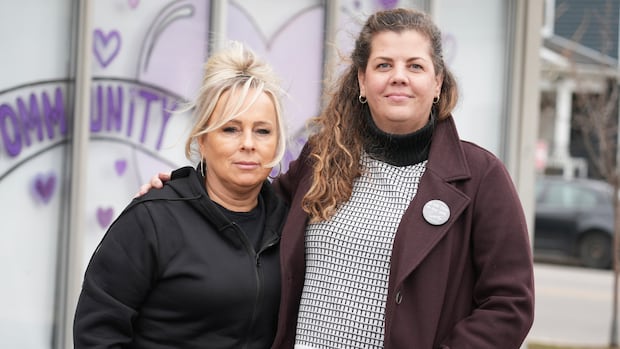
![]() Storm holds a poster decrying a decision by the province to end funding for Niagara’s sole safe drug consumption site. (Paul Forsyth/CBC)
At CTS Niagara, which operates daily, individuals bring their own supply of street drugs to inject or consume them under the supervision of trained paramedics from Niagara Emergency Medical Services who are ready to respond immediately if there’s an overdose.
Since CTS opened its doors in 2018, there have been 89,000 visits from individuals seeking a safer way to use drugs they say they need due to their addictions. During this period, at least 1,520 overdoses have been successfully reversed according to Positive Living Niagara.
Storm holds a poster decrying a decision by the province to end funding for Niagara’s sole safe drug consumption site. (Paul Forsyth/CBC)
At CTS Niagara, which operates daily, individuals bring their own supply of street drugs to inject or consume them under the supervision of trained paramedics from Niagara Emergency Medical Services who are ready to respond immediately if there’s an overdose.
Since CTS opened its doors in 2018, there have been 89,000 visits from individuals seeking a safer way to use drugs they say they need due to their addictions. During this period, at least 1,520 overdoses have been successfully reversed according to Positive Living Niagara.
“The hospitals are overwhelmed right now; this will certainly add pressure.” If funding cuts make it difficult for CTS operations moving forward,
Storm remains hopeful.
“We’re certainly exploring everything we can doto overturn this situation so we can keep offering our services.”.
<brSource link
Importance of screening drugs for safety
Harini Sivalingam, equity program director at the Canadian Civil Liberties Association, stated that cutting funding for safe consumption sites will hinder access for people with addictions who rely on “essential, life-saving” health services. Sivalingam emphasized that closing these sites during an ongoing opioid crisis is unwise. “The loss of funding for these services will disproportionately harm already marginalized communities, including Indigenous and racialized people as well as those experiencing poverty and homelessness who face systemic barriers to accessing health care and other supports.” The HIV Legal Network along with the HIV and AIDS Legal Clinic Ontario indicated that data show safe consumption sites lower the risk of HIV infection from contaminated needles while saving lives. “More people will die without access to the lifesaving care they receive at supervised consumption sites,” they said in a statement. CTS also offers referrals for addiction counseling alongside pathways to treatment options as well as peer support services. They provide housing support along with various on-site healthcare services while utilizing special technology designed to test clients’ drugs for safety purposes. This aspect is crucial since street drugs increasingly contain harmful additives that are “very toxic,” according to Storm.Hospitals are overwhelmed
Storm fears individuals unable to visit safe injection sites might resort instead to using drugs in places like stairwells or public restrooms-leaving behind used needles. She believes it’s likely there will be an uptick in overdoses burdening local paramedic services along with emergency rooms already strained by demand.“The hospitals are overwhelmed right now; this will certainly add pressure.” If funding cuts make it difficult for CTS operations moving forward,
Storm remains hopeful.
“We’re certainly exploring everything we can doto overturn this situation so we can keep offering our services.”.
<brSource link