




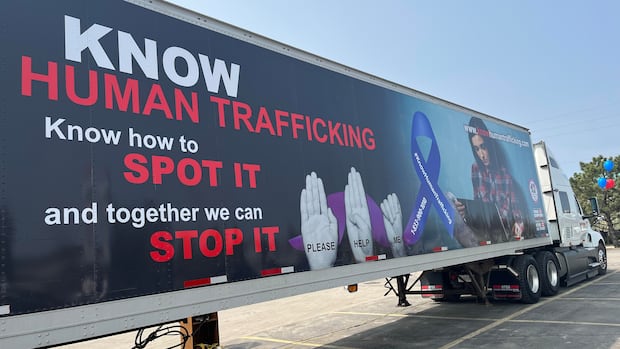
Many people think human trafficking is only a problem in big cities like Toronto, but the facts show it’s an issue everywhere.
Statistics Canada reveals that in 2024, Guelph and Thunder Bay reported the highest rates of police-reported human trafficking cases in Ontario.
“We all have to acknowledge this is a very real issue in all of our communities,” said Guelph Police Chief Gordon Cobey.
In 2024, Guelph police documented 11 incidents per 100,000 residents, while the national average for other cities was just 1.6 incidents.
Cobey believes these figures reflect not just the reality of trafficking here but also show that Guelph is dedicating more resources to find and handle these cases.
He recalls November 2023 when the city council unanimously recognized intimate partner violence as an epidemic. Since then, police have held extensive community consultations and ramped up training and resources significantly.
“We now have an integrated unit that represents almost four times more resources doing that work,” he said. “I think that number that’s being reported is a much more accurate measure of the magnitude that the issue is.”
Chief Cobey says Guelph police are collaborating with local organizations like Women in Crisis Victim Services and the Wellington Catholic District School Board to enhance prevention strategies and spread awareness about human trafficking. (Trina Koster Photography)
This Sunday marks National Human Trafficking Awareness Day, a moment to promote public understanding and honor survivors.
Cindy Mc Mann, a community educator with Guelph Wellington Women in Crisis, states that awareness around this issue is increasing, but misunderstandings about what it truly looks like continue to exist.
“A myth that I’m still running across is that somebody must be thrown into the back of an unmarked white van and then chained up into a shipping container,” she said.
![]() Mc Mann points out one major barrier survivors encounter when trying to escape trafficking situations is finding affordable housing. “A big reason people stay in trafficking situations is because they know where they’re sleeping at night and have a roof over their head even if it’s not safe,” she stated. (Cindy Mc Mann)
Cobey highlighted local partnerships with organizations such as Women in Crisis Victim Services and Wellington Catholic District School Board when discussing prevention efforts. Officers recently engaged nearly 900 teachers and staff across the board to educate them on human trafficking and online exploitation.
“We want to support our community,” Cobey said.
Mc Mann points out one major barrier survivors encounter when trying to escape trafficking situations is finding affordable housing. “A big reason people stay in trafficking situations is because they know where they’re sleeping at night and have a roof over their head even if it’s not safe,” she stated. (Cindy Mc Mann)
Cobey highlighted local partnerships with organizations such as Women in Crisis Victim Services and Wellington Catholic District School Board when discussing prevention efforts. Officers recently engaged nearly 900 teachers and staff across the board to educate them on human trafficking and online exploitation.
“We want to support our community,” Cobey said.
Source link
Trafficking often takes subtle forms
Det. Staff Sgt. Melanie Clark, who leads the Human Trafficking Unit for Guelph police, explained how trafficking can manifest in various ways within a mid-sized city like Guelph. “A lot of times it does start with online recruitment and then moves into person-on-person interactions, but we don’t ignore the fact that some level of organized crime exists,” she said. Clark emphasizes that trafficking isn’t always obvious or dramatic; subtle signs are equally crucial to recognize. She notes red flags might include someone suddenly receiving luxury items, being secretive about their relationship status, isolating from friends or family, having unexplained absences or displaying signs of fear or anxiety. “That may not necessarily mean they’re being human trafficked. But it could open up communications to kind of dive a little deeper into why these changes are happening,” she said. Mc Mann added traffickers frequently “love bomb” their victims by showering them with attention, gifts or access to lifestyles they might not usually afford. She mentioned even small shifts in behavior, mental health or academic performance deserve attention. “Even if it isn’t a trafficking situation, it’s always good to check in to make sure everything’s OK,” Mc Mann said.Challenges for survivors
Mc Mann shared many obstacles survivors face when trying to break free from trafficking circumstances including limited access to healthcare and job opportunities along with insufficient affordable housing. “A big reason people stay in trafficking situations is because they know where they’re sleeping at night and have a roof over their head even if it’s not safe,” she reiterated. She emphasized survivors are experts on their own experiences; thus support should focus on helping rather than attempting any sort of “rescue” against their will since pushing too hard may undermine their sense of control discouraging them from seeking help. “People get out of trafficking on their own all the time or they get out with support but they’re the ones who are doing that work,” she said. If you or someone you know needs assistance regarding human trafficking there are numerous options available for help including calling emergency services at 911. The Canadian Human Trafficking Hotline can be reached at 1-833-900-1010 or text message can be sent using 233733. For confidential support locally contact organizations such as Guelph-Wellington Women in Crisis , Women’s Crisis Services Of Waterloo Region Or YWCA Kitchener Waterloo. “The more we can stay connected then better we can care for each other so if someone feels like something’s off reaching out for support is always encouraged.” Mc Mann concluded.Source link