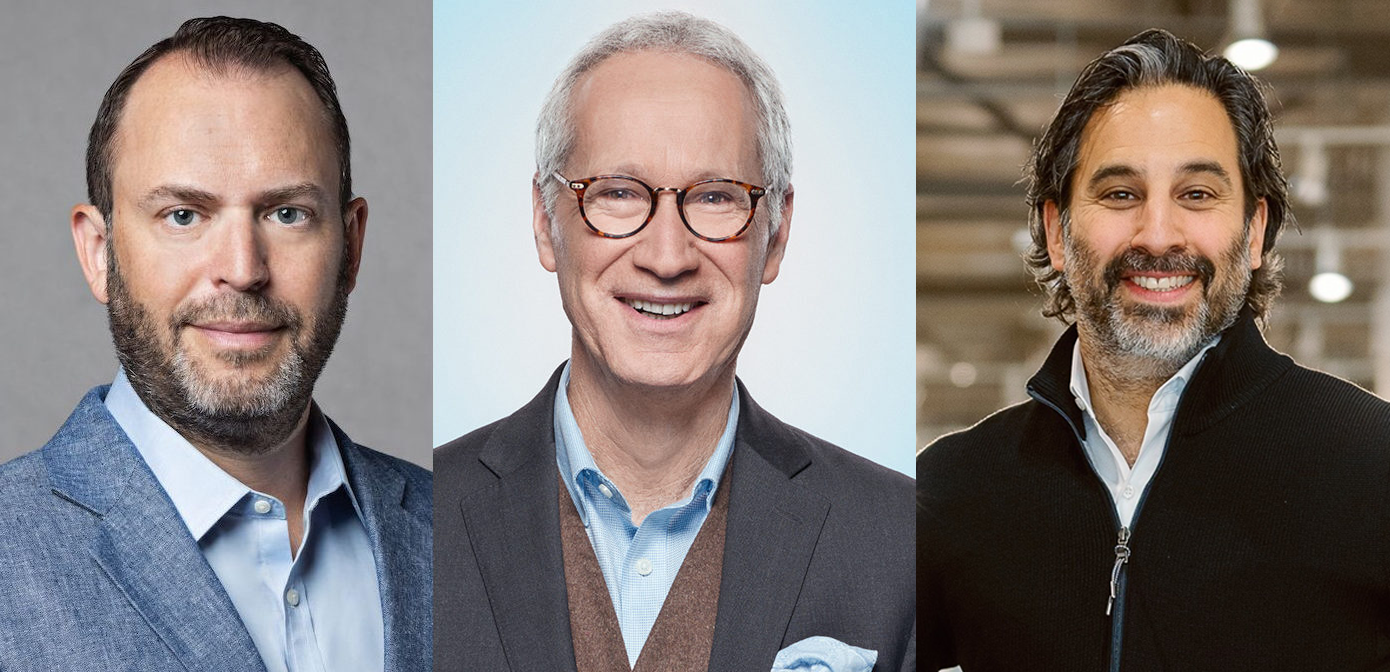
While the Canadian Parliament has been on winter break since mid-December, international politics have only heated up so far in 2026. Pro-democracy protests have rocked Iran; Russia’s war against Ukraine remains unresolved; and the United States stunningly bombed oil-rich Venezuela and captured its dictator, Nicolas Maduro. It’s all likely to overshadow domestic policy issues once Canadian federal politicians come back to work. But Canadian Jews have their own concerns at home, worrying about whether lawmakers will keep last year’s promises to fight antisemitism and remain proactive about hate-fuelled terrorism. And some federal policy is less clear: how will Canada change its relationship with Israel in the wake of recognizing Palestinian statehood? Will the federal New Democratic Party choose former broadcaster and anti-Israel activist Avi Lewis as their new leader? Is Pierre Poilievre, a staunch ally of Israel, going to survive his party’s leadership review in January? And what about the economic problems our country continues to face stemming from U.S. President Donald Trump’s trade war? On today’s episode of North Star, The CJN’s political panelists weigh in. Joining host Ellin Bessner today are Dan Mader, a Conservative strategist and a founder of Loyalist Public Affairs, who sits on CJPAC’s advisory board; David Birnbaum, a former Liberal member of the Quebec National Assembly for the riding of D’Arcy-McGee in Montreal; and Noah Tepperman, a past president of the Windsor-Tecumseh NDP riding association, also on CJPAC’s board, who has advised the federal and provincial NDP on Jewish issues. Watch our political panel weigh in on Bill C-9, a proposed law to combat antisemitism and hate speech. Watch the full interview on our YouTube channel.
Transcript
Ellin Bessner: Thats the voice of Rabbi Carnie Rose, senior clergy at Winnipeg’s Shaarey Zedek synagogue where the first Shabbat of 2026 was marred by the discovery that someone had spray painted red swastikas and hate messages on the doors of the city’s largest synagogue And while the Winnipeg police’s hate crimes unit was investigating, Sabbath services went ahead Saturday with renewed determination. As you heard the rabbi tell worshippers. It’s the latest in a current of Jew hatred thats didn’t go away over the New Year break. beginning with the shock of the Bondi Beach Hanukkah massacre, then more mezuzahs torn off a second apartment building in Toronto over Christmas, while in Montreal, on New Year’s Eve there are reports of some anti-Israel protesters holding signs glorifying Hamas and calling for murder of Jews. In Toronto the Solicitor General of Ontario a stern letter scolding the Toronto police for not doing a good enough job to handle “unacceptable” anti-Israel protests in the Eaton Centre and in jewish neighbourhoods of the city, and warned them to do better on New Year’s. As folks return to the office or to school or jump in to their New Year’s schedules, we’ve been busy taking a deep dive into what’s in store on the political front for Canada’s Jewish community. And while Parliament isn’t sitting now, (the House of Commons doesn’t return until Jan 26), the community is concerned about whether our country’s politicians will keep their promises from 2025 to tackle antisemitism, crack down on terrorism and hate crimes. I’m Ellin Bessner and this is what Jewish Canada sounds like for Monday January 5, 2026. Welcome back to a new year for the North Star podcast, the flagship news show of The Canadian Jewish News, and made possible thanks to the Ira Gluskin and Maxine Granovsky Gluskin Charitable Foundation. So what’s 2026 going to be like on the political front? We’ve convened The CNJ’s political panel for their take on both domestic issues and international ones.. Joining me is our trio of experts: Dan Mader is the founder of Loyalist Public Affairs, and a Conservative insider both in government in Ottawa, and before that in Ontario provincial politics. He’s active with CJPAC and Friends of JNF Canada.. David Birnbaum is a former Liberal Member of the Quebec NAtional assembly, for d’acry mcgee riding, He retired in 2022..and is now an active volunteer and political commentator. And Noah Tepperman is a businessman, the third generation of the Tepperman family behind Tepperman’s, a chain of 7 home furnishings stores across southwestern Ontario. He’s a Past president of the Windsor- Tecumseh NDP riding, he’s has advised the federal and provincial NDP on Jewish issues. He’s also on CJPAC’s advisory board, and was on the board of JSpace Canada. Here’s our conversation, and just a note: we spoke before the US’s stunning arrest of Venezuela’s dictator Nicolas Maduro on the weekend. So it’s great to have all three of you here. Welcome, thanks for being here. We have a great list of topics to talk about, and the last time we spoke was in April, the April 28th, 2025 election. I’m not sure if you followed the recent research of Robert Brym about Jewish votes in the election. That study literally just came out last week, where we thought all the Jewish voters were going to be so mad at Trudeau’s policies on Israel, they were gonna vote for the Conservatives. And that did not happen. In fact, it was the opposite. I’m wondering, how did we get it so wrong? Anyone can start. David Birnbaum: I think we always will get this wrong when we forget about Jewish Canadians being Canadians, voters, family members and taxpayers first. So I think, I frankly think we will always overestimate that likeliness of Jewish voters to vote on Jewish issues. I think it would be unfair not to add the context of this past election, which was all about Donald Trump. We would have had a different prime minister if we weren’t in that existentially difficult and absurd and surrealist situation. So I think that explains particularly why there was a disconnection from the Jewish issues that were so pressing and in the actual reasons now evident that so many Jews voted in the way they did. Dan Mader: agree there are very few single issue voters. And I’d say one of the things that being involved in politics and working a lot of campaigns teaches you is humility. That we all think as political hacks, as politicians, that we come up with these grand strategies and we’re going to come up with the slogan or the policy that’s going to drive votes. And I think honestly, the majority of voters vote for whoever they think is going to take care of things competently so that they don’t have to think about the government for the next few years. And I think this election was a great example of that. Where Prime Minister Carney really positioned himself that way. And I think a lot of people said, you know what, there is a big external threat. This guy’s taken over. He’s given us change from a PM we were done with and we’re relatively comfortable with him. And I think that’s as true for the Jewish community as it is for anyone. Noah Tepperman: And I think in addition to that, because I agree with what both Dan and David had said, I think Mr. Poilievre had sort of pitched his horse a little too closely to Trump’s horse in terms of style, and content, to a lesser degree. And if he hadn’t done that or if he had been able to sort of how he presented to Canadian voters more quickly, then maybe you would have seen that serve as a mitigating factor, but that didn’t happen. And so I don’t think that helped him either. Ellin Bessner: Well, we should talk to Dan since you’re the insider of this party. In January, there’s a leadership review for Mr. Poilievre. We’ve seen a couple of really unexpected floor crossings in the House, from the Liberals gaining a couple of seats up and Tories crossing the floor. Do you think that Poilievre will survive and continue to be the leader? Dan Mader: Yeah, I think Pierre will be fine. I think that the party activists are very united behind him. I think the other thing is, as much as people are, there’s lots of media speculation. Journalists love a leadership race even more than they love a cabinet shuffle. They love speculating about both. Pierre’s still polling above 40%, which is extremely high in historical terms. He’s still doing well.I think the liberals are trying to create as much uncertainty because they would love to see them go and they would love to see the party consumed by leadership race. There is no heir apparent, which means any leadership would probably be another 10, 12, 13 person leadership race like we had after Stephen Harper retired. And I just don’t think there’s a lot of appetite for that within the party. I think that this most recent floor crossing, we saw somebody who probably just was running thinking, running as a Conservative because he thought that that was the path to get into power. When he found it wasn’t, he switched to the party that was in power. That’s the best explanation I’ve heard for something otherwise is weird and doesn’t make a lot of sense. But I’m going to the convention in Calgary and I’m going to support Pierre and I expect that we’re going to see the party rally behind him. Ellin Bessner: I want to ask you all about where did the Jewish vote go? Where does the Jewish vote go that supported what Poilievre was saying about Israel, and his staunch support for fighting antisemitism? If there’s not going to be an election. Where did Jews who wanted to vote for Conservatives go now with four years of Carney? Noah Tepperman: I think that they don’t necessarily need to go anywhere else. I know Jews who want to continue to support the Conservative Party, who want to continue to support Pierre Poilievre because they find that meaningful. I don’t necessarily expect that to change, though I think how they present their opposition to Bill C-9 is going to be important to that. And that’s a whole conversation on itself. But I think, you know, looking at how you started this part of the conversation in terms of the Brym report and how Canadian Jews voted, it’s clear that Canadian Jews are going to continue to vote across a range of issues and that as the party leadership in any party, you know, addresses issues that are important to us, whether they’re Jewish issues or just Canadian issues is going to have us reflect on our past choices and whether we’re going to continue to follow them or not. David Birnbaum: I would just guess I’m not that close to the Conservative Party, but I would just guess that Jews again are caught in a dynamic like so many other Conservative supporters, which is waiting to see how the Conservative Party again becomes the kind of coalition it did between its more red Tory movements and its more traditional ones, which… and obviously that traditional more staunch wing, which is further to the right, is very much in control at this point. But I think there probably is a pretty good percentage of Jewish Conservative support that is impatient for the party to move closer to the centre, perhaps without calling for a leadership race. But I think there there remains some real impatience within our community like elsewhere with Poilievre’s leadership style. Dan Mader: Yeah, I have to say I disagree with that. I think the issues that are going to drive Conservative support are going to be the more hard right issues. They’re going to be issues like getting the immigration system under control. They’re going to be issues like going hard on law and order. And I think those are not centrist issues. If anything, the party is going to rally to the right, getting really tough on crime and really tough on terrorism and incitement. And I think that the party has room to grow that way. And I think the Prime Minister is, I think he’s chosen a smart strategy to sort of identify a number of these issues and try to do just enough that he thinks it will deal with the public demand for something to be done. But I don’t think that it is going to be seen to be done as we continue to see people arrested for terrorism being let out on bail almost immediately. That I think pressure is going to mount for more to be done. And I think that does provide an opening for probably even the Conservatives. Noah Tepperman: I think there are also two models of opposition that have been presented in the last couple of years. In the prior government, you certainly had the NDP presenting one model of opposition, you have the Conservatives presenting another model of opposition. In the first model, you see a party willing to accept compromise in order to advance key commitments that it’s made to its own constituency. In the other model, you have something that reminds me a little bit more of the Mitch McConnell Republican Party under Barack Obama, where it a default “No” to anything that the government was going to propose, whether or not it aligned with the values of your own party or not. And for a Conservative trending Liberal party, that puts a lot of pressure on the Conservative party the same way that a left leaning or left trending Liberal party puts a ton of pressure on the NDP. And that’s gonna be something that the Conservatives are gonna have to navigate very carefully, especially as things continue to play out as we continue to navigate a very different global economy that’s going to be with us in this government and the next government and the government after that, that you will see a range of political parties having to navigate when they get their turn at government. That’s going to be challenging. Dan Mader: There’s no avoiding that. I agree with Noah on that. That is one of the hardest decisions that opposition has to make. I think in the last government, you really did see an example of the NDP try to work collaboratively with the government, try to find some things they could get the government to do that were their objectives. It, electorally, did not work for them. It worked for them if you think of the NDP as more of a movement than a party, it achieved a lot of things that think NDP supporters wanted. But, electorally, it was disastrous! I think weirdly, you know, Canadians say they want the parties to work together, they want more collaboration, but they don’t reward it. They reward an opposition party that will attack the government. We think back to how Justin Trudeau was as an Opposition leader, he brought forward a bunch of new ideas, but he did not want to work with Stephen Harper, even when Stephen Harper was doing things that maybe Liberals might have liked. His job was to replace Stephen Harper. Pierre Poilievre then did a very good job of that with Justin Trudeau. We might say “too effective a job: and brought him down too early rather than getting to face him in election, but he did the same thing. And so I think the Conservatives are still trying to find out, figure out how best to tackle Mark Carney. But he is still very new. Canadians want to change. Carney has definitely given them change, definitely in tone, definitely in style, but also in substance. And so the Conservatives are gonna have to figure out how to deal with that. And, you know, I think a lot of it is going to be about trying to show a gap between talk and results. And a lot of it is going to be that saying, “Okay, you can talk. What are you actually achieving?” And so doing things like putting forward a motion to say, “Prime Minister, you just did a deal with Premier Smith of Alberta to build a pipeline. Let’s get a recorded vote. Let’s see your members vote that you support that pipeline.” Okay, you’re not going to. So do you really mean it?” And I think, you know, being in Opposition is tough. Being in Opposition to a new newly elected leader is tough. I think all of the Conservatives are still working to do it, but I think they’re figuring that out and they will figure it out. Ellin Bessner: I need to interrupt because there are so many things you guys have brought up that we need to go back before we continue. Sorry Noah. You mentioned Bill C-9. Let’s talk about it. Why do the Conservatives, I know why the Conservatives say they oppose it, but do most people understand this position when Conservatives have been screaming, “Protect the Jewish community, more protection for the Jewish community, crack down on hate speech.” And yet they’re opposing it. And so I’m not understanding how this is going to play out in terms of Jewish listeners and voters. Anyone can start on this. Noah Tepperman: Look, I’ll start here. My immediate reaction on this has been the Conservative Party, specifically the leader and his deputy, Ms. Lantsman, have been politicizing antisemitism and capitalizing on the fears of the Jewish community for their own political gain from Day One. That’s certainly my opinion. I will not try and present that as a fact, but that’s been my experience of it. I think we all would agree on the fact that it’s easier to be in opposition than it is to be in government. Because when you’re in government, yes, you have the priorities that put you in government that you have to look to, but you’re also responsible for governing the entire country, not just the people who voted for you. You’ve got to be responsible for a range of provinces and constituencies that have different needs. And that means you have to compromise. And nobody runs, very few people run for office on a point of compromise. So I look at this and say, “As a community, we have said that our minimum, and this is a generalization, but we as a community, we said that our minimum acceptable position is perfect. That you have to support everything that we want and any failure to do so means you’re the enemy.” I’m familiar with that kind of politics. I see that on the far left side of the NDP and I’m very worried to see that within the Jewish community because frankly, it means nobody will be able to meet that bar. Something like Bill C-9 would not have happened without the Trudeau government. Are you going to recognize that or not? The Trudeau government was not perfect, but that doesn’t mean that they were awful. They were certainly disappointing to probably potentially to everybody on this call, but that does it. That’s not a binary lens and. Ellin Bessner: You mean the current government or you mean the Trudeau government? On Bill C-9. Noah Tepperman: I mean, the Trudeau government and certainly the Carney government again is [not] perfect. But if we make unconditional support for Israel, for the Israeli government, rather a litmus test for Jewish identity, we ourselves are inflicting harm on the Jewish future. And that’s a point by Rabbi Cosgrove from New York, somebody who was very outspoken against the Far Left, who was looking at our response to this and saying, “We have to work for this and we have a range of Jewish issues, of which Israel is one of them.” Ellin Bessner: David, you want to go here? From the epicentre of hate speech and religious protection for people who say hate things under the guise of religion? Because that’s where it all came from, Adil Charkaoui? David Birnbaum: Yeah, without a doubt. Well, look, I think it starts with this law being like so many laws. Good And the enemy of good is the search for perfection. So I agree on that score with Noah. You have here something that, first of all, quite properly and urgently, involves legislators and all Canadians in understanding that a problem that has most clearly and tragically manifested itself within Jewish communities across Canada gets dealt with by all Canadians. So I think you have here a response that is probably a good one. Some of the opposition to it that’s come from those who would be characterized on the left, I think is always worth paying attention to. I think our Jewish sense of justice through history has been so credible and profound because of our insistence on worrying about freedom of speech in the worst of times. So I think the debate in some ways has been healthy, but I think we have before us a law that is so necessary. It’s not going to fix everything by any means, but it’s the right place to get moving on this. Melissa Lantsman from the House of Commons on Bill C-9. Ellin Bessner: We’re talking about Melissa Lantsman and you said there’s no challengers to potential replacements for Poilievre, but she’s deputy prime minister and a firebrand. So I’m just wondering, she’s one of the ones who is active, with Roman Baber, in trying to kill this bill for many reasons, or amend it at least. So why do the Conservatives want this bill to not go? Dan Mader: I think for a couple of reasons. I think it really comes down to three things. One, the Conservatives become more the champions of free speech these days, and they’re very concerned and very skeptical on government action against speech. Second is they feel that we already have lots of laws. They’re not being enforced. And if we can tackle this with the existing laws, we actually just enforce them. And I think third, one of the concerns among Conservatives, and I think a lot of concerns among those in the Jewish community are concerned about this is, it’s gonna be used against us more than it’s gonna be used against our opponents. And that’s a real worry that you’re gonna start having people charged under this for criticizing terrorist groups, for criticizing Palestinian and Arab extremism. And we’re still gonna see people walking around through Jewish neighbourhoods calling for the Intifada and they’re not gonna be touched. And it just can be our people. And the Conservatives really have learned the skepticism the last 20, 25, 30 years, where in places like universities and other public institutions, Conservatives are consistently punished for their speech. But then when it comes to a pro-terrorist hate group, suddenly, “No, no, no, Free speech. We can’t do anything.” And I think, therefore, Conservatives are very skeptical about this. So the belief is it’s not necessary. We’ll be used against us. And let’s get it done under existing laws. Ellin Bessner: The Bloc was part of this whole delay issue that we talked about where they wanted to remove the religious protection for imams and people who say bad things from being charged. That’s a Quebec, it comes out of Quebec. Is that sort of now smoothed over and it’s now moving ahead? Where does this bill go now? Where is it at? Are we close to passing it now? Do anyone know? David Birnbaum: I wouldn’t be prepared to comment on the trajectory. I’ll share my frustration, not my surprise at the Bloc’s opposition, which is so tirelessly tied up in the wrong-headed and what I consider continuously destructive debate about identity in Quebec, about our own Bill 21, which will be going to the Supreme Court, and the notion of a neutral society, meaning the suppression of other points of view and so on. So the Bloc take on this, I think, is all wrapped up in that identity debate in Quebec, which hurts our community and I think is destructive of cohabitation across the country. Ellin Bessner: Look, we’re going to be talking about the NDP. I wanted to bring it up earlier when we were discussing how you were saying it was disastrous in terms of how their tactics were, politically. Noah, this is your time here. We’re having a leaders race and I’m not sure how closely involved you are in this. But so before you answer, maybe tell us your sort of disclosure. Noah Tepperman: I have nothing to disclose in this particular race. I am not attached to any campaign. I certainly have my personal priorities or preferences or internal rankings, but. Ellin Bessner: All right. Okay, okay. Let me ask you about that. Because what I say is, who is the best of the worst for Jews? Do you hear that when you’re looking at the slate of candidates, you know, Avi Lewis, the scion of the Lewis family? Who do you think from the party perspective would be the best leader? And then who would be the best or the least worst for the Jewish community? Noah Tepperman: Interesting perspective or interesting questions. You know, technically there are, there are five people in the race, though I think everybody agrees that it’s either a two person race or a three person race. If this were first past the post, it would be probably a two person race. If, because it’s a ranked ballot, it’s going to be a three person race and continue to be that way. So in terms of which candidate would be best for the NDP, you know, I think you have to look at that from a couple of different perspectives because, obviously, anybody who’s been paying attention to politics for through at least one cycle of a national election and a leadership campaign knows that when you’re running for leader, you should also be running for prime minister. That it’s not strategically sound to only be running for the leadership without keeping your eye on the big prize here. And despite the fact that the NDP is in a fourth place position, that doesn’t mean that they should not still be thinking about this. So one perspective is for the NDP, which of the candidates could best present themselves as a possible prime minister? So that’s one side to the question. The other side of the question is from the perspective of engagement and membership signups and fundraising, in a leadership campaign, which of these people in the campaign is best for the NDP? And I don’t know that those answers are necessarily the same person. You certainly see that there is a very competitive race going on from a fundraising perspective. I am not privy to any of the campaign information of any particular campaign. I’m not affiliated with any particular campaign. people within the party are certainly not sharing that information with anybody who hasn’t sort of been sworn in on the conversation.
But I believe that from a membership signups perspective, that Avi Lewis is in the lead with Heather McPherson and Rob Ashton very close behind him and very close to each other. I believe from a fundraising perspective, they’re all doing pretty well, but that Heather McPherson, I believe, has the edge. But again, that’s more or less hearsay. But this race is really stirring up things from an activist perspective. That’s where the leadership race puts a lot of pressure on who could potentially be the prime minister, because you’ve got to be able to paint a picture of somebody who’s not only going to excite New Democrats, but somebody who’s also going to be able to connect with Canadians at large. Avi Lewis, from a place of the nature of his rhetoric, I think has really tried to moderate some of the style part, the vocabulary, the emotion with which he approaches it, but the arguments that he’s making, the policies that he’s advocating for, the free, free, free, traditional things that social democrat politics often push for, I think that those are things which aren’t going to resonate with a lot of Canadians, especially at this particular moment in time when Canada, like so many other economies, is really walling itself off from the American economy, reinvesting in our own capacity, whether it’s capacity for manufacturing, whether it’s defence capacity, regardless, we are headed into a very expensive period. And what that means is the chances for somebody like Avi Lewis to be able to make good and deliver on those promises as a potential prime minister is very, very low. So I don’t see Avi Lewis being the best candidate for the NDP. I also think Avi Lewis is the worst candidate for the Canadian Jewish community because although… Ellin Bessner: You mentioned free free free. So one of the things we have to talk about, of course, is Avi Lewis’s stance on Israel and Free Palestine and Heather McPherson. They’re very well known in the progressive left community, very hard critics of Israel and by IJV member. Noah Tepperman: Here’s the thing with because there’s actually a third issue, which or sort of a close, tangentially connected issue to that, which is the his relationship with the Canadian Jewish community. Now, that is a relationship which is largely predicated on his stance on Israel and his approach on Israel. But it’s a separate issue. And it’s an issue that really only exists for him in this particular way, because he’s the only Jew. And you and I both know that Jewish identity is not built on a single thing. Jewish identity is not built on religion. Jewish identity is not simply built on culture. Jewish identity is not simply built on peoplehood. There are a couple of different models with which people look at this. But the fact of the matter is, and I really want to be cautious here because I’m not interested in getting involved in anything like character assassination here. I know a number of people who are close with Avi personally. He seems like a really nice, well-intentioned person. And we also know that there’s that cliche that the road to hell is paved with good intentions. The way Avi Lewis dismisses the concerns of the Jewish community writ large, the way he presents his approach as being not only better, certainly different, but also sort of more correct and more righteous, is really an issue of concern to me, because it says to me that he doesn’t either understand and/or place a lot of value in sort of concepts of community, of Jewish community, that I don’t really have a sense, sort of beyond his family and maybe, some friends, what connection he has to to the Jewish community, whether it’s the Jewish community in Canada, whether it’s global Jewish community, whether it’s the Jewish community in Israel. I certainly know that he comes from a Bundist background. And that background has produced really a range of perspectives. There are people who come from that tradition who said, “Okay, we essentially lost the vote. So we’re gonna move on with our lives. Israel exists. That’s where the second biggest Jewish community in the world is. And that’s meaningful for us.” There are a group of people who say, “Okay, I see that that country over there and I’m not going to take position on it, but I’m not neither for it or against it. It exists and I’ve got no issue with that.” And that’s somebody who I would sort of consider to be a non-Zionist. And then you’ve got people, who describe themselves to be anti-Zionist, which most of us understand to mean the elimination of the State of Israel in its current state, as the homeland for the Jewish community and the democratic country for all of its citizens. And, you know, if you’re an anti-Zionist and you believe in changing that structure, you’re essentially agreeing to change that structure against the will of the majority of the inhabitants, which comes across as a pretty violent thing. And so I think one of the things we really have to look at is the way in which, you know, Mr. Lewis talks to or doesn’t talk to the Jewish community and the way he talks about the Jewish community to Canadians. And I think that that’s something which not only the Jewish community should be paying attention to. That’s something which I think all Canadians really want to pay attention to. Ellin Bessner: Do any of you want to weigh in on the NDP and what the future is for them? Dan Mader: I mean, look, I think the NDP should have a bright future right now. We have a Liberal leader who, at the very least, comes from the right side of the Liberals, who has walked back so many of the environmental policies that Prime Minister Trudeau had championed. That should create an opening for the NDP. But unfortunately, I think the NDP have been in this debate for years as to whether they’re a party of labour and the environment, whether they’re a party of activists and protests. And it seems like more and more they’re the latter. And it seems like they’re giving up blue collar labour to the Conservatives. It seems that they, at the same time, aren’t really able to seize on the green environment issue to kind of peel off votes from the left of the Liberals. Now maybe some of that vote is sticking with the Liberals because of the external threat of President Trump. But that means there should be an opportunity for the NDP if they have a reasonable leader who can appeal to those voters who switch between the NDP and the Liberals. But it seems like they’re not going to go that way. So that just great for the Liberals. It makes it much, much, much easier for them. David Birnbaum: Yeah, Canada works better when the spectrums are properly represented. So I think all Canadians have an interest in the NDP getting its act together. I frankly, I’m not seeing all that much evidence of that happening, but we all have an interest in that. You’re watching the United States where Donald Trump is beyond all his other bizarre bits of behaviour profiting from a lack of discipline, pragmatism or realism within the Democratic party. So I think that same dynamic, less forcefully, is happening here and is not good for Canadians. Ellin Bessner: All right, on the NDP, you know, we’ve seen as we’re taping this, in recent days, many members of parliament went to try to get into the West Bank and, you know, crying that they they’ve been blocked by Israel. And that’s a whole other thing on who sponsored them. So we need to talk about how does the Canadian government get it right? Is the Liberal government getting it right for the Jewish community (and that’s a broad spectrum) on Israel? Is Carney getting it right? And what if he’s not? What’s he not getting right? David Birnbaum: I think he’s getting it as right as he can, as any elected Prime Minister of Canada can get it right. We talked earlier about seeking perfection. That’s woefully unrealistic in this current situation where Canadians have views that are not necessarily reflective of the majority view in the Jewish community. In fact, they’re not. So it’s straddling a line that’s deeply difficult. This would be politically incorrect to say, but I do find it surprising that we have so much to worry about in the Jewish community, but we allow ourselves to take a pass on what many would see as our obligation to comment on the leadership of Bibi Netanyahu and everything that the Israeli government has done. Now that fuels certain points of view in Canada without a doubt and across the world and many views that some would suggest are credible but that are not helpful to the Jewish community. So in that kind of terribly difficult environment where tIsrael’s behaviour is under a microscope and often looked at with a moral relativism that I deplore, we are stuck with our government having to reconcile all those views and all those realities with all Canadians. So it’s a tough course to manage and I think I would say that Carney’s government has done reasonably well at that unhappy task. Dan Mader: There’s a lot going on there. I mean, I think on the subject of Bibi, I think people use Bibi as an excuse. In some ways, it would be better for us in the Diaspora if Bibi wasn’t there and there was a different leader, because I think a different leader would have fought the war exactly the same. If anything, I think a different leader would have fought the war in a much more aggressive way, because Bibi, if anything, is very tentative. But maybe people wouldn’t have had an excuse. But five minutes later, they would have come up with some other excuses as to why they’re against Israel. I think Carney’s been extremely disappointing in this regard. I wasn’t shocked. I mean, I think Carney is a European technocrat. That was sort of his sales pitch. And I think if you want to wonder what he’s going to do, you think what would an EU official do in that scenario? And that’s probably what he’s going to do. And so it’s not a surprise that he’s bad on this issue, but I do think he’s terrible. I think he’s siding with Canada’s enemies and against Canada’s allies. I think Israel is one of Canada’s strongest allies. When people question me on that, I say, “Look at the enemies of Israel. They’re also the enemies of Canada. The people attacking Israel would allow, you know, the terrorist groups, the Iranian axis, they’d love to hurt Canadians also.” Israel is on the front line of that civilizational fight between Western democratic government, governance and, and totalitarian Islamism. And that is a fight that we’re into. And I think, the Liberals back when I worked in the Harper government, Liberals took the easy way out on that similar fight in Afghanistan and always wanted us to run away. And I think, you’re seeing that again, where we have a lot of Liberals pretending that we are not in this kind of a civilizational fight and that there is not a clash of values between those who believe in Western pluralism and those who believe it should be stamped out and replaced by a theocratic religious regime. And I think that what I will say to him is I think Carney is very fixated on the economy. That is his priority. He doesn’t want to really think much about foreign affairs and foreign policy. That isn’t what interests him. And he sees that, I think, as a distraction from fixing the economy and defending our economy. So we’d rather kind of push that away and just sort of do what’s politically easy. But I think that that is a horrible mistake. And I think Canada is threatened long term by the same people who are threatening Israel. And if we don’t wake up and realize that now, we’re going to be dealing with it when we get more things like Bondi Beach come into our cities. Ellin Bessner: Noah, what do you think? Is the current current government getting it right on Israel? Noah Tepperman: The first thing I would say is, Israel is not Canada’s most important relationship, under the best of times. And we are not operating under the best of times. So for me, you know, there are some people who are really upset about the fact that the our Prime Minister has not gone to Israel–has not, you know, had that kind of a conversation there with their Prime Minister. I don’t think that’s a problem. I think that the Prime Minister here has had his hands full managing both internal politics and the restructuring of the Canadian economy in a new version of a global economy that isn’t going to include the United States. That’s a pretty big deal to be working on for less than a year. And the fact of the matter is, we can look at the last number of elections, successive elections, all of which point to the fact that foreign policy (United States aside), that foreign policy is not the most important thing in the world to most Canadians and that Canada doesn’t currently hold the international position, the moral international position that it used to hold. So, you know, if he had gone there, I don’t know what it would have done for anybody. It wouldn’t have changed conditions in the Middle East. It likely wouldn’t have changed the way most Canadians are for him or against him as far as his participation in the conversation about Israel and Palestine. I don’t think that would have really changed anything. Maybe I look at that and say, “He’s smart enough not to waste his time.” And I think that that’s a pretty good thing. I think that as somebody who is not a Trump supporter, which you may have picked up for me. I’m still willing to give Trump credit for things that I believe he got right. And in his first administration, for example, I think there were two things that he got right. One was the Abraham Accords, which still stands. The other was his executive order, outlying bump stocks, which turned semi-automatic weapons into automatic weapons, which his Supreme Court later overturned and overruled. I’m willing to give Carney the benefit of the doubt in a really weird way when it comes to this conversation about recognition of Palestine. The state of affairs between Israel and Palestine has been stuck, just stuck, for at least a decade and probably closer to two decades at this point. Anything is too big a word. But I will be open to many, many things that will change the current stew, that will add something new and unexpected, to see what that can produce beyond stuck, because stuck is not tenable. Minimizing the conflict is not tenable. Returning to the status quo is not tenable. So if this recognition, which, you know, Canada was like, “Yeah, me too!” on something that much bigger players like France and the UK and others were really the drivers of. If this produces something new that is better for Israelis and better for Palestinians, then I’d love to give it that opportunity. I think that given what his original statements were about the preconditions and the fact that those are still present, I think he needs to speak more vociferously, specifically about the de-arming and sort of demilitarizing of Hamas, because right now that seems to be the biggest immediate problem that unfortunately seems likely to reassert itself. Ellin Bessner: Okay, so we’re going to finally end and I’ll ask if you’ve had time to put together your wish list for the next year in politics? Can I start? Speaking of Poilievre and speaking of Carney, my Number 1 or 2 wish, (either one would be fine), wish would be that they would finally give an interview one-on-one to The CJN. David, what’s your wish? David Birnbaum: I mean, I can’t help but wish because I think we’re in such an existential situation that things south of the border change. There’ll be midterms. in 2026. I think there’ll be, must be, at least one step to starting to crumble this dictatorial empire we have to the south of us that pervasively affects us every single day, not only on tariffs, on the quality of debate, on the permissibility of looking at the rule of law as something relative. I think that’s absolutely existential crisis we’re facing to the south of us. So I would wish for midterm elections in the states that change the dynamics over there a bit. I mean, how can we not simply wish that there be a total absence of the terrible antisemitic tragedies we’ve seen over the past year? It just has to happen. We have to get to a place where we can feel secure and normal in our lives in every corner of the world. And I’m sorry, I would say that I think Bibi is a huge part of the problem. So I hope for change in government in Israel. Ellin Bessner: Okay, thank you. Noah, did you have time to make a quick wish list of what you hope to see in the new 2026 politically? Noah Tepperman: Yeah, and my top two points, I think, are pretty straightforward. The first is that we end up in the NDP, that the NDP ends up with a quality, responsible leader who is able to revitalize a strong, responsible, professional New Democratic Party for Canada that is focused on standards of life and quality of life and security for middle income, middle class Canadians and working class Canadians. I am also, I guess the other close second or probably a first place item for me is that we address the issues of political polarization and the underlying issues that are driving political polarization in this country. And one of the things that concerns me is to see people who feel Right, Left, Centre, people who feel that our political structures are failing them personally, that they cannot look to political structures, to government, to politicians to drive the kinds of changes that are important to them fundamentally every day of their life. Because when voters feel that frustrated with government across the board, when the disappointment really starts to bottom out, you have to look at that as a precondition to the kinds of things that drive the dangerous populist politics that we are seeing in the United States, to some degree in Israel and elsewhere. But we can’t have those outcomes in our near to mid range future. So I think that would be the wishlist item for me that we find a way of doing that. And thirdly, from the perspective of the Jewish community, my wish would be that we remember that the issues that are important to us as Jews, that our goal is for there to be no air between political parties on those issues, that they should be issues that any political party should be able to support. And that is the responsibility both of politicians to not turn us into footballs, but also for ourselves to not offer ourselves up as a political football. And that we have to play a role in that. And if our minimum acceptable target or a minimum acceptable deliverable is perfection, then we will be disappointed by everyone. And it is very, very dangerous to put all of your hopes in a single basket. As a retailer, I cannot count on a single manufacturer or supplier to drive my business. And the same is true with politics. I have learned too many times the hard way that you cannot fall in love with politicians. You cannot fall in love with political parties. And given enough time, everyone will disappoint you, including the party or team you’ll continue to root for and you have to keep that in mind. Ellin Bessner: Dan, you know, one of the slogans that the conservatives started the campaign with, and continued the campaign in April was “Canada is broken”. So what are your wishes? Dan Mader: Yeah, my Canadian wish is that governments start taking antisemitism seriously. And this is not a partisan thing. This is every government is failing, of all stripes, at all levels of government. And I agree, we shouldn’t ask for perfection. But I think what we ask for is we want our community to be protected the way you would treat any other minority community. If you would not tolerate this against any other minority, you should not tolerate it against us. And that means things like, premiers, including the premier here in Ontario, saying to universities and colleges and elementary and secondary schools, “Stop the hate or we stop the funding.” And it means saying, our municipal, provincial and federal leaders saying to police chiefs, “Start making arrests, start charging people for promoting hate. And if you won’t do that, we’ll find another police chief who will.” And it means our federal government start deporting people. Any foreigner who’s arrested for these kinds of hate, so these hate marchers, should be deported. And so this is something that needs all three levels of government to start taking this seriously. And again, I think our ask is just simply, “If you would not tolerate people going to a Muslim neighbourhood, a Chinese Canadian neighbourhood, a Vietnamese Canadian neighbourhood, a black Canadian neighbourhood, and expressing this kind of hate, or expressing this kind of hate against students of those minority groups, you should not tolerate it against us. So that’s my wish domestically. On a global level, I’d love to see the Abraham Accords continue. I think that was a massive achievement. If I had one wish on the global front, it would be that. Ellin Bessner: Thank for being on The CJN’s political panel and thank you, Noah, for joining and being part of it for this round. Good to see you all.
Show Notes
Related links Read more about Canada recognizing the State of Palestine in Sept. 2025, in The CJN.Hear federal Liberal cabinet minister Evan Solomon on how his government is taking antisemitism seriously, as well as the safety of Jews, in The CJN.How Toronto’s Jewish community gave a warm welcome to Opposition Leader Pierre Poilievre at a synagogue in December, in The CJN. Credits Host and writer: Ellin Bessner (@ebessner)Production team: Zachary Kauffman (senior producer), Michael Fraiman (executive producer)Music: Bret Higgins Support our showSource link