




WARNING: This story contains references to missing and murdered Indigenous people. Resources can be found at the bottom of this story.
First Nation leaders in northern Ontario are urging the creation of an Indigenous-led search-and-rescue pilot program after five missing individuals – three from Nishnawbe Aski Nation (NAN) communities – were discovered dead in Thunder Bay this spring.
At their annual Keewaywin Conference on Thursday, chiefs from NAN, which represents 49 First Nations across Treaties 9 and 5, voted in favor of a NAN search-and-rescue pilot project.
The proposed program, named NAN SAR, aims to offer search coordination, trained personnel and volunteers, family support, crisis response, and other help when NAN members go missing in the area.
NAN can’t run such a program itself due to its role as a political-territorial organization; however, it has pledged support for an appointed operator to take charge of this initiative.
Nishnawbe Aski Nation Grand Chief Alvin Fiddler emphasizes the need for an Indigenous-led search unit that respects culturally safe methods. (Sarah Law/CBC)
“We can no longer just 100 percent rely on the Thunder Bay police or other bodies that are out there,” said NAN Grand Chief Alvin Fiddler before Thursday’s vote. “We need to create our own body to do this work.
“The system as it currently exists is not respectful to the family, it’s not respectful to our communities, it’s not respectful to the volunteers who come from our communities to assist in these search efforts.”
There’s no set timeline for when NAN SAR might become operational.
![]() Ashlynn Bottle, Nodin Skunk and Kelsey Anderson are shown left to right. They went missing separately in Thunder Bay but were later found deceased. (Thunder Bay Police Service)
Bottle and Skunk were last seen together at the old Pool 8 grain elevator on April 26. The TBPS confirmed they were no longer considered missing on May 15.
Leaders from First Nations have informed that searchers from Cat Lake First Nation discovered both deceased inside the grain elevator.
Kelsey Anderson was last spotted on May 9 in the Thunder Centre shopping area. He was originally from Kasabonika Lake First Nation but had ties with Webequie First Nation and Nibinamik First Nation as well.
Ashlynn Bottle, Nodin Skunk and Kelsey Anderson are shown left to right. They went missing separately in Thunder Bay but were later found deceased. (Thunder Bay Police Service)
Bottle and Skunk were last seen together at the old Pool 8 grain elevator on April 26. The TBPS confirmed they were no longer considered missing on May 15.
Leaders from First Nations have informed that searchers from Cat Lake First Nation discovered both deceased inside the grain elevator.
Kelsey Anderson was last spotted on May 9 in the Thunder Centre shopping area. He was originally from Kasabonika Lake First Nation but had ties with Webequie First Nation and Nibinamik First Nation as well.
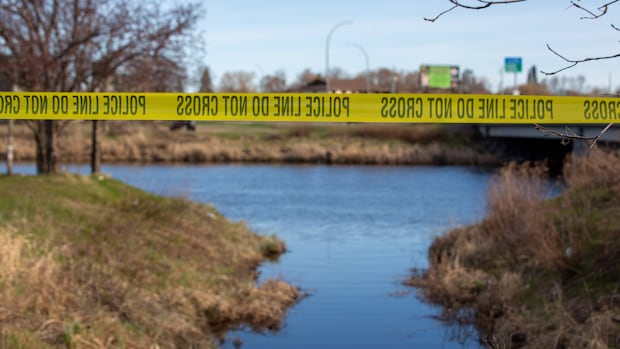
![]() Thunder Bay police officers are seen near a scene taped off by police close to Neebing-Mc Intyre Floodway on May 21. (Sarah Law/CBC)
The TBPS announced on May 25 that Anderson was no longer considered missing and later revealed that a man aged 33 from Thunder Bay was charged with manslaughter regarding his death.
Durning community-led searches for Anderson’s case, they uncovered remains belonging to Richard Graham, a resident of Thunder Bay who went missing during summer 2024.
Chief Matthias Anderson of Kasabonika Lake First Nation expressed his concerns during Thursday’s Keewaywin Conference.
“There are so many players involved when it comes to finding a missing person and there’s a lot of miscommunication going around,” he stated.
Thunder Bay police officers are seen near a scene taped off by police close to Neebing-Mc Intyre Floodway on May 21. (Sarah Law/CBC)
The TBPS announced on May 25 that Anderson was no longer considered missing and later revealed that a man aged 33 from Thunder Bay was charged with manslaughter regarding his death.
Durning community-led searches for Anderson’s case, they uncovered remains belonging to Richard Graham, a resident of Thunder Bay who went missing during summer 2024.
Chief Matthias Anderson of Kasabonika Lake First Nation expressed his concerns during Thursday’s Keewaywin Conference.
“There are so many players involved when it comes to finding a missing person and there’s a lot of miscommunication going around,” he stated.
![]() Police Chief Darcy Fleury is shown in a file photo stating his support for a NAN search-and-rescue program. (Marc Doucette/CBC)
Fleury noted he had discussions with NAN leaders over summer regarding their worries about communication issues between police forces and community groups involved in searches.
He emphasized how vital it is for all parties involved-police departments alongside community groups-to share clear expectations about roles along with responsibilities while also discussing what information may be released publicly during ongoing investigations-especially those involving criminal matters.
“They’ve identified it-we’ve identified it-that lack of communication.”
A report titled Broken Trust issued by Ontario’s Office of Independent Police Review Director back in 2018 highlighted systemic racism existing within their force.
Since then,the department has been working towards strengthening ties with local Indigenous leaders while incorporating feedback into procedures related directly toward handling cases surrounding missing persons,.
Police Chief Darcy Fleury is shown in a file photo stating his support for a NAN search-and-rescue program. (Marc Doucette/CBC)
Fleury noted he had discussions with NAN leaders over summer regarding their worries about communication issues between police forces and community groups involved in searches.
He emphasized how vital it is for all parties involved-police departments alongside community groups-to share clear expectations about roles along with responsibilities while also discussing what information may be released publicly during ongoing investigations-especially those involving criminal matters.
“They’ve identified it-we’ve identified it-that lack of communication.”
A report titled Broken Trust issued by Ontario’s Office of Independent Police Review Director back in 2018 highlighted systemic racism existing within their force.
Since then,the department has been working towards strengthening ties with local Indigenous leaders while incorporating feedback into procedures related directly toward handling cases surrounding missing persons,.
Source link
Cases of Disappearance and Deaths
NAN communities are still grieving the losses of Ashlynn Bottle, 23; Nodin Skunk, 25; and Kelsey Anderson, 36. The Thunder Bay Police Service faced significant criticism over these cases as First Nation searchers claimed their insights and traditional practices were overlooked by law enforcement.NAN SAR Concept Welcomed by Police Chief
Thunder Bay police Chief Darcy Fleury mentioned to on Friday that he’d be supportive of a NAN SAR pilot program within the city while recognizing how crucial Indigenous knowledge is during searches for those who go missing. <p“That's great to have that as another resource for the community,” Fleury commented. “The Thunder Bay Police Service handles search and rescue operations in the city so we welcome this approach where trained volunteers can assist us.”Status Update: Provincial Review Ongoing
Around two years ago,Ontario’s inspector general Ryan Teschner declared plans evaluating how TBPS manages investigations involving deaths along with disappearances while assessing adherence towards provincial policing regulations.. This evaluation came after receiving several complaints against TBPS filed through provincial Inspectorate Policing,Teschner shared with CBC’s Up North news outlet.. A spokesperson representing Inspectorate Policing communicated via email saying,“The inspector general is currently reviewing findings stemming from inspections aimed at determining whether any non-compliance occurred under Community Safety & Policing Act(CSPA).”. If non-compliance happens,the inspector general could issue directions addressing those shortcomings. Upon completion review process results report along with directions given will then be made public via Inspectorate Policing website,” Rima Amri detailed further regarding compliance monitoring measures applied concerning both service boards ensuring persistent attention being paid toward outstanding issues needing resolution.. If you’re affected by issues surrounding Missing & Murdered Indigenous Peoples resources offering emotional assistance plus crisis support remain accessible anytime through national hotline number:(1-844-413-6649)..Source link