




Prime Minister Mark Carney described the last-minute discussions with the U. S. aimed at preventing new tariffs set to begin this week as “delicate” and “intense.” He plans to reach out to his American counterpart within the next 48 hours to negotiate a deal that works for both sides.
During a press conference in St. John’s on Monday, where he announced a significant hydroelectric agreement with Quebec and Newfoundland and Labrador, Carney expressed hesitation about revealing details of the ongoing negotiations intended to counter U. S. President Donald Trump’s proposed Section 338 tariffs affecting billions of dollars’ worth of Canadian products.
“We are involved in very delicate and intense negotiations, this is not the time to negotiate in public,” Carney said in French.
“We are in the middle of a negotiation, and we are coming into those negotiations from a position of strength.”
WATCH | Carney on the state of negotiations: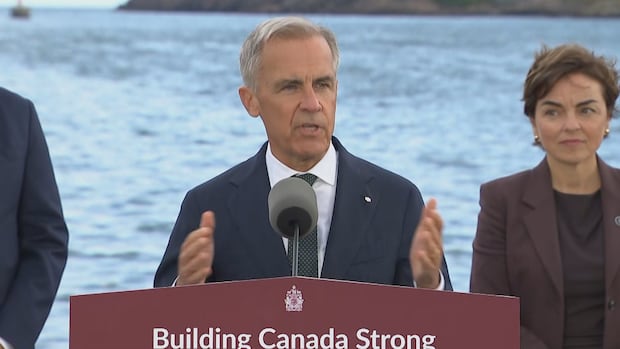
Carney expects to speak with Trump before Aug. 19 tariff deadline
Prime Minister Mark Carney mentioned he’ll have ‘opportunities over the next 48 hours’ to talk with U. S. President Donald Trump before his threat to increase tariffs on several Canadian goods takes effect. Carney spoke to reporters after announcing $10 billion in federal funding for the Churchill Falls hydroelectric project between Quebec and Newfoundland and Labrador.
When asked if he plans a response against Trump should an agreement fail, Carney stated he’s prepared for any outcome.
“I have plans for any situation that may arise,” Carney said.
The Canada-U. S. Trade Minister Dominic Le Blanc along with Canada’s chief trade negotiator, Janice Charette, have been engaged in several discussions with U. S. Trade Representative Jamieson Greer over the past three weeks not only aiming to prevent these planned Section 338 tariffs but also looking to reduce existing Section 232 tariffs on industrial products like steel, aluminum, autos, and lumber in exchange for certain concessions from Canada.
Le Blanc and Charette met with Greer and U. S. Commerce Secretary Howard Lutnick on Monday afternoon for what turned out to be their longest meeting yet, lasting approximately an hour and 45 minutes.
A source familiar with the negotiations indicated that this might be their final ministerial meeting.
Following this discussion, it’s anticipated that there will be conversations between Carney and Trump regarding subsequent steps.
The has chosen not to identify this source because they were not authorized to publicly discuss these talks.
Speaking briefly outside Greer’s Washington office after their talks concluded, Le Blanc remarked: “We’re going to continue working; our job is not yet done.”
After their bilateral meeting, a White House official told that President Trump has committed to “put a stop to foreign cheating and put American workers, farmers and businesses first.”
“The administration continues its efforts alongside our trading partners towards fair trade arrangements,” added the official.
The main focus of these discussions involves how much Canada can secure from the U. S. in return for various concessions on its side.
The Americans want access for U. S. liquor back onto shelves at provincially run stores. The Trump administration is also advocating for removal of Canada’s retaliatory tariffs on U. S. automobiles along with changes in how quotas are allocated within Canada’s supply-managed dairy sector.
On Canada’s part, there’s a push for Trump to eliminate his threatened Section 338 tariffs which could impose hefty levies on numerous new products starting August 19th. Additionally, Carney’s team seeks considerable tariff relief for sectors severely impacted by Trump’s duties imposed over more than a year now.
Greer has repeatedly indicated that the U. S. isn’t inclined towards completely abolishing its tariff structure at this time.
WATCH | Inside details of the tariff talks:
Canada-U. S. trade talks stuck as Washington provinces refuse to budge
Sources inform that Canadian negotiators worry impending new U. S. tariiffs might become unavoidable as Washington insists upon lifting provincial bans concerning American alcohol – something provinces remain unwilling to do.
Canada’s demand for increased tariff relief targeting crucial sectors such as lumber also remains stalled.
This said however Erin O’Toole, a member of prime minister’s Canada-U. S. advisory committee shared some insights during an interview pointing out some “progress” made during discussions so far between Canada and America.”
The question really lies whether or not Trump will agree upon any lowered tariff rates negotiated by Greer while ensuring those imposed levies meet acceptance amongst affected Canadian industries,” he noted
“We’re not just gonna take what they throw at us. We have to forge an equitable deal benefiting both Canadians workers & overall economy,” O’Toole explained further
The former Conservative leader warned though should Trump’s planned aggressive additional duty rates indeed materialize later week , Canada would inevitably need respond correspondingly. O’Toole suggested preparations were already underway crafting responses towards these assertive actions if necessary</PP
“What’s so short-sighted about tariffs is it leads into tit-for-tat wars resulting harms inflicted each nation’s economies plus people employed therein lets sincerely hope we avoid heading down such route instead,” he concluded.
Source link